An American and a French national who have returned to their home countries, having left a cruise ship hit by a deadly outbreak of hantavirus, have tested positive, authorities say.
The US health department said a second American national on the repatriation flight had also shown mild symptoms, adding that both passengers had travelled back in “biocontainment units out of an abundance of caution”.

French Health Minister Stéphanie Rist said a woman was isolating in Paris and her health was deteriorating, with 22 contact cases traced.
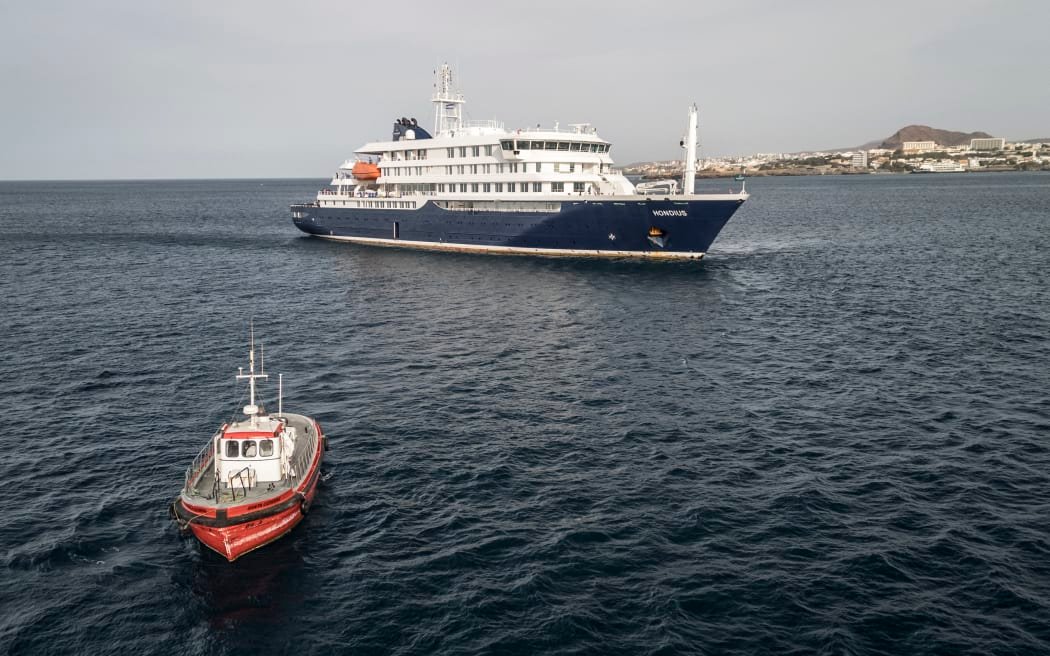
More than 90 passengers of the MV Hondius ship, currently docked in Spain’s Canary Islands, are being repatriated.
Three passengers, a Dutch couple and a German woman, have died after travelling on the vessel. Two of them are confirmed to have had the virus.
Hantaviruses are usually carried by rodents, but human transmission of the Andes strain, which the World Health Organization (WHO) believes was contracted by some of the Dutch ship’s passengers while in South America, is possible.
Symptoms can include fever, extreme fatigue, muscle aches, stomach pain, vomiting, diarrhea, and shortness of breath.
Officials say the risk of a major outbreak is very low.
In its statement early on Monday, the US Department of Health and Human Services said all 17 US citizens on the flight “will undergo clinical assessment” at a medical facility in Nebraska.
Key Highlights:
- Two Americans and one French national tested positive for hantavirus after leaving the cruise ship MV Hondius.
- Three passengers died during the outbreak: a Dutch couple and a German woman.
- The virus involved is believed to be the Andes strain, which can rarely spread between humans.
- More than 90 passengers are being repatriated from the ship docked in Spain’s Canary Islands.
- Symptoms include fever, fatigue, muscle aches, vomiting, diarrhea, and breathing problems.
- The WHO recommended 42 days of isolation for passengers, warning about possible transmission risks.
- US health officials said the risk of a major outbreak is low and unlike COVID-19, human-to-human spread is uncommon.
Seven other US passengers had already returned and are being monitored in their home states.
A British national who resides in the US was evacuated along with the 17 American passengers.
Before the American case was confirmed, WHO head Tedros Adhanom Ghebreyesus warned that the decision by the US not to follow his organisation’s guidelines over the hantavirus outbreak “may have risks.”
Read also:
- 3 dead in suspected virus outbreak on Atlantic cruise ship
- Nipah virus outbreak in India triggers airport screenings in Asia
- PAN trains 300 immunization champions to combat Human Papillomavirus
The WHO has recommended 42 days of isolation for those leaving the MV Hondius.
But Dr Jay Bhattacharya, the acting head of the US Centers for Disease Control (CDC), said he did not want to cause public panic, insisting that human-to-human transmission was rare and it should not be treated like the COVID-19 virus.
Cruise ship passengers were pictured wearing blue gowns, bouffant caps, and medical face masks as they disembarked on Sunday at the port of Grandilla de Abona in Tenerife.