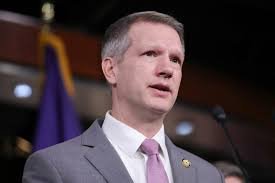
United States Congressman Riley Moore has strongly condemned recent killings in Plateau State, Nigeria, calling for urgent action to improve security for Christian communities affected by repeated violent attacks.
Key Highlights:
- US Congressman condemns Plateau State killings in Nigeria
- Calls for stronger protection of Christian communities in Middle Belt
- Criticises Nigerian government’s security response
- Links attacks to broader terrorism concerns
- Urges increased US attention to Nigeria’s security situation
- References mass burial attack in Plateau community
- Highlights renewed debate on religious violence in Nigeria
In a statement shared on his official X account, Moore criticised what he described as a weak response by Nigerian authorities to ongoing violence in the region. He contrasted Nigeria’s swift reaction to political instability in neighbouring Benin with what he called inadequate protection for citizens facing attacks at home.

He alleged that Christians who had gathered for a mass burial of victims of a previous attack were killed in a fresh assault, describing the attackers as “radical Islamic terrorists.” He also claimed that security warnings had been issued ahead of the incident, but were not effectively acted upon by authorities.
Read Also:
- Iran opens Strait of Hormuz following suspension of US ships escort mission
- FG bans honorary degree holders from using ‘Dr’ title, declares it academic fraud
- Cross River imposes 7-day dusk-to-dawn curfew in 2 communities
Moore urged the Nigerian government to intensify counterterrorism efforts and strengthen protection for vulnerable communities, particularly in the Middle Belt, an area that has experienced recurring episodes of communal violence and insecurity.
In his statement, he said Nigeria’s willingness to respond quickly to external crises compared with domestic security challenges raises serious concerns about priorities in national security management.
The congressman also referenced former United States President Donald Trump’s administration, noting that the protection of Christians in Nigeria had been included in a broader US counterterrorism framework. He called for stronger international response measures, describing the situation in Plateau State as both a humanitarian and security crisis.
The remarks add to ongoing international attention on Nigeria’s internal security challenges, particularly in regions affected by farmer-herder clashes, banditry, and religiously framed violence.
Nigerian authorities have continued to maintain that security agencies are working to address violence across affected states, while urging global partners to support ongoing counterinsurgency and peacebuilding efforts.