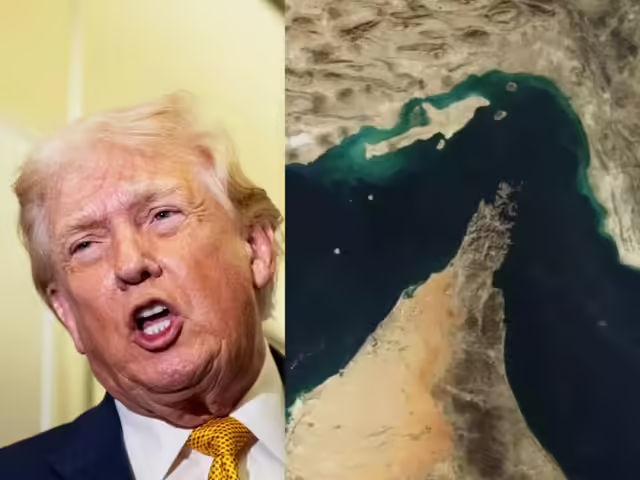
In a move that has stirred global attention, U.S. President Donald Trump has suggested renaming the strategic Strait of Hormuz as the “Strait of Trump,” amid heightened tensions between the United States and Iran.
Trump made the remark in a repost on his social media platform, Truth Social, where he shared an edited map labeling the vital waterway with his name.
The post comes at a time when the U.S. naval blockade around the strait continues to escalate geopolitical friction in the region.

The US president also praised the blockade, describing it as “genius” and asserting that it had been “100% foolproof.”
He claimed the move demonstrated the strength and superiority of the U.S. military, adding that Iran would eventually be forced to concede, particularly if it continues pursuing nuclear ambitions.
Trump further used the moment to criticize the North Atlantic Treaty Organization, calling it ineffective during the crisis.
He accused allied nations of failing to act decisively and suggested their interests were limited to oil access rather than regional stability.
The Strait of Hormuz remains one of the world’s most critical oil transit routes, with a significant percentage of global crude shipments passing through it daily.
Any disruption in the area has immediate implications for global energy markets, often triggering price volatility.
Read also:
- Iran proposes new deal to ease tensions, reopen Strait of Hormuz
- Trump orders U.S. Navy to target suspected mine-laying boats in Strait of Hormuz
- 2 ships attacked in Strait of Hormuz after Trump extends Iran ceasefire
Iran, meanwhile, has dismissed U.S. claims of control over the waterway and warned that continued escalation could push oil prices sharply higher, intensifying economic pressure worldwide.
The symbolic renaming proposal has not been formally adopted and carries no legal standing.
However, it reflects the ongoing war of narratives between Washington and Tehran, as both sides continue to assert dominance over one of the most strategically important corridors in global trade.