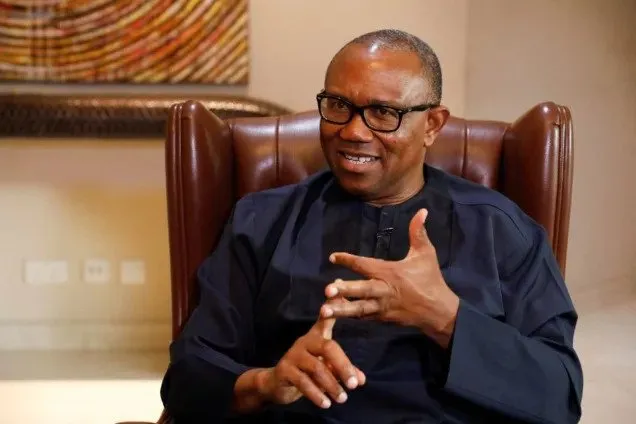
Former Labour Party presidential candidate, Peter Obi, has warned that Nigeria may be sitting on what he described as a “moral and systemic breakdown,” following claims by the Economic and Financial Crimes Commission (EFCC) that as many as 60 percent of Nigerian university students are allegedly involved in internet fraud.
Obi, reacting in a statement on Wednesday, said the figure—if accurate—signals far more than a rise in cybercrime, insisting it reflects a deeper failure of leadership, values, and institutions.
“The worrisome statement by the Chairman of the Economic and Financial Crimes Commission that six out of every 10 Nigerian university students are involved in ‘419’ is deeply troubling and must not be taken lightly,” Obi said.

The former Anambra State governor warned that with Nigeria’s estimated 2 to 2.5 million university students, the implication would be that about 1.4 million young people could be engaged in fraud-related activities, describing it as a national emergency rather than a routine security concern.
“If indeed about 60% of them… are involved in fraud, then we are not just facing a crime issue; we are confronting a serious moral and systemic failure,” he said.
Obi linked the alleged trend to what he called a “collapse of value systems,” arguing that young Nigerians are reflecting the conduct they observe from leadership circles and public institutions.
“When a system appears to reward wrongdoing, when integrity is not upheld, and when those in leadership are associated with allegations of forgery and dishonesty without consequence, it sends a dangerous message,” he added.
He further stressed that Nigeria’s leadership structure bears responsibility for shaping societal behaviour, warning that impunity at the top filters down to the youth.
Read also:
- NDC disowns fake X account linking Peter Obi, Kwankwaso to 2027 bid, reaffirms open-door policy
- How low ADC membership registration in South East could jeopardize Peter Obi’s 2027 ambitions
- Peter Obi meets Bala Mohammed in Bauchi as defection speculation deepens
“If we do not demonstrate integrity at the top, we cannot expect it at the bottom,” Obi said.
The politician called for urgent national introspection and reforms aimed at rebuilding ethical standards in governance and public life, insisting that accountability must be enforced without bias.
He maintained that the country must urgently rebuild a system that rewards honesty, discipline, and hard work, rather than corruption and shortcuts.
The EFCC had earlier raised concerns over rising cases of internet fraud among undergraduates, describing the trend as a growing national security threat requiring immediate institutional reforms.