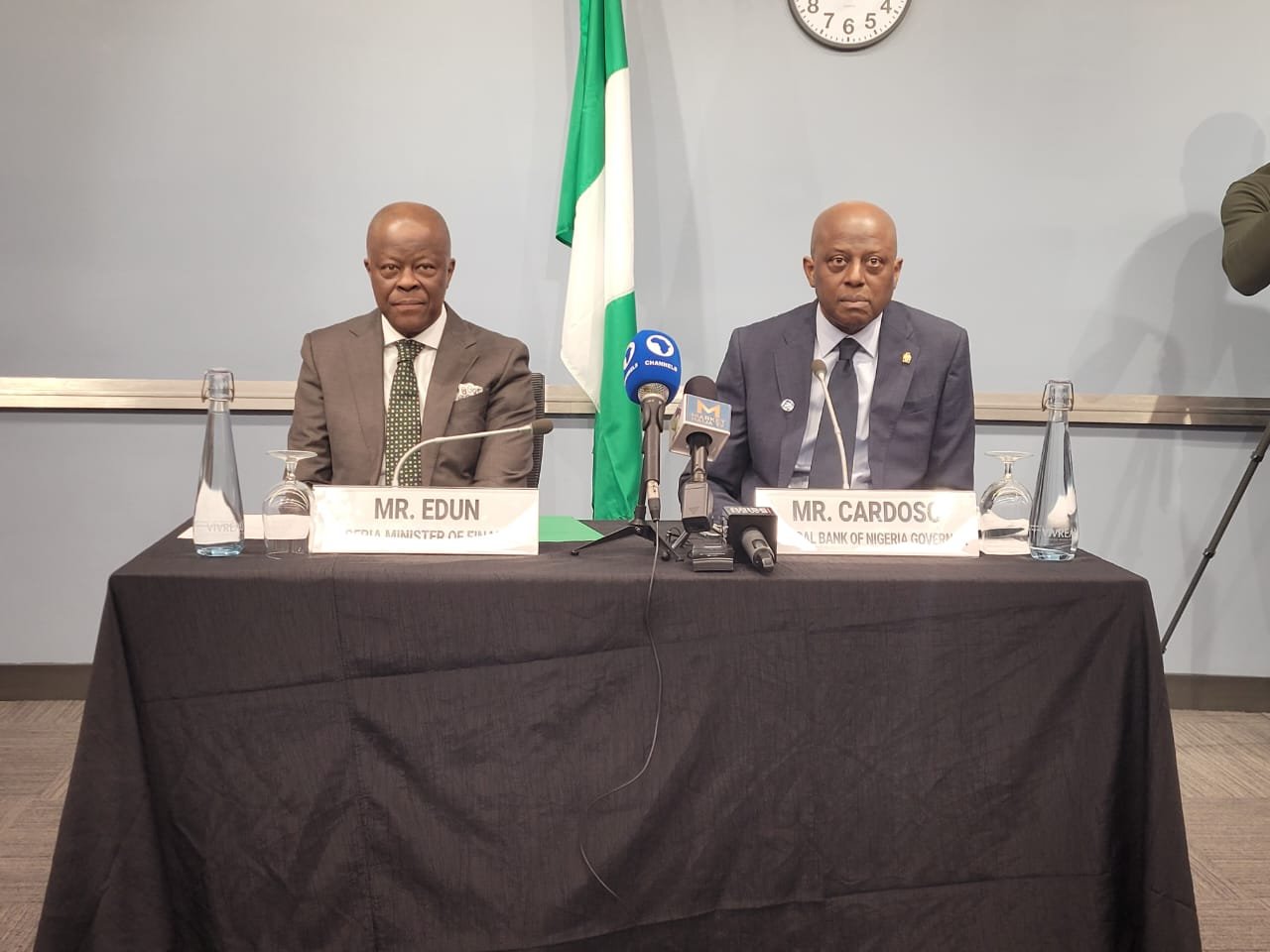
Minister of Finance and Coordinating Minister of the Economy, Wale Edun, has declared that the Tinubu administration’s economic reform agenda is gradually steering the country away from a cycle of vulnerability towards a more stable and growth-oriented trajectory.
Edun made this known during a press briefing on the sidelines of the IMF/World Bank Spring Meetings in Washington, D.C., where global economic uncertainties dominated discussions.

He explained that the reforms introduced since mid-2023 were designed as long-term structural adjustments rather than short-term fixes, that will strengthen Nigeria’s resilience to external shocks and will ensure sustainable economic growth.
The minister noted that the global economic environment remains fragile, citing ongoing trade tensions, supply disruptions, and tightening financial conditions as major risks facing economies worldwide.
Against this backdrop, he said Nigeria’s strategy is centered on disciplined macroeconomic management and credible policy direction aimed at fostering long-term stability.
Edun highlighted key policy measures, including the transition to a market-reflective foreign exchange regime and the removal of fuel subsidies, noting that these steps are helping to correct longstanding imbalances in the economy.
According to him, the reforms are already improving Nigeria’s ability to withstand external shocks while restoring investor confidence.
On inflation, the minister acknowledged persistent pressures driven by high energy costs, rising food prices, and logistical constraints.
However, he said the government is mitigating the impact through targeted social protection programmes and agricultural interventions.
He stressed that fiscal discipline remains a cornerstone of the reform agenda, pointing to the elimination of costly subsidy regimes and a renewed focus on efficient public spending.
Providing an update on economic indicators, Edun disclosed that Nigeria’s growth rate has surpassed four percent, external reserves have climbed to approximately $50 billion, and inflation is beginning to show signs of gradual easing.
He added that public debt levels remain within sustainable thresholds.
Read also:
- Tinubu signs ₦68.32tn 2026 budget into law, extends 2025 budget implementation deadline
- Fayose knocks Tinubu, says hardship emptying Lagos roads
- Tinubu convenes emergency security meeting as insecurity worsens nationwide
Beyond macroeconomic figures, he said the reforms are stimulating domestic production and revitalising private sector confidence.
Edun cited major investments, including the Dangote Refinery, as evidence of renewed investor interest, while noting that small and medium-sized enterprises are benefiting from improved business incentives.
He added that Nigeria is transitioning from a stabilisation phase to a period of accelerated growth and job creation, with sectors such as power, agriculture, infrastructure, and digital innovation expected to drive expansion.
The minister also revealed that development partners at the meetings reaffirmed their support for Nigeria’s reform agenda, while investor interest continues to grow across key sectors including energy, agribusiness, and infrastructure.
He further noted that Nigeria is advocating for global financial reforms to reduce the high cost of capital for developing economies, which remains a major barrier to growth.
Edun expressed confidence that Nigeria’s global economic standing is improving as its reform efforts gain recognition, adding that the policies will ultimately deliver inclusive growth and reduce poverty.
In a related development, the Governor of the Central Bank of Nigeria (CBN), Olayemi Cardoso, reiterated the apex bank’s commitment to sustaining reforms and maintaining macroeconomic stability.
Cardoso said the Spring Meetings provided an opportunity to assess Nigeria’s progress and reinforce institutional capacity needed to support long-term economic resilience.
He noted that despite global challenges such as geopolitical tensions and inflationary pressures, Nigeria has managed to cushion external shocks through improved exchange rate stability and stronger foreign reserves.
The CBN governor emphasised that consistency in policy implementation is essential for sustaining investor confidence over the long term.