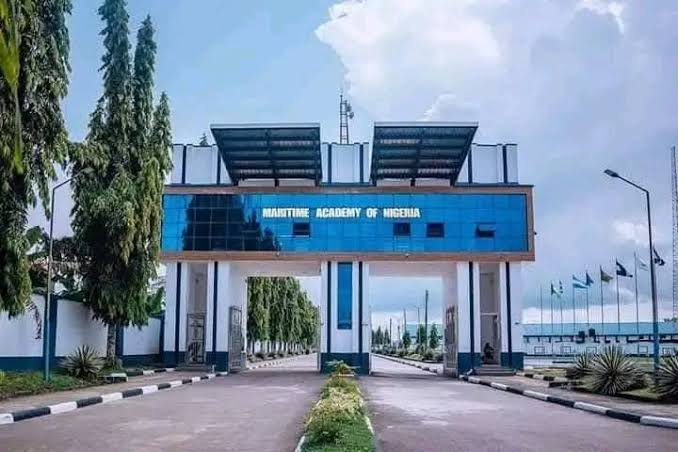
A lecturer at the University of Uyo, Emmanuel Onwioduokit, has dismissed concerns that upgrading the Maritime Academy of Nigeria, Oron, to a full-fledged university would weaken its training standards.
Speaking in Uyo, Prof. Onwioduokit described such fears as unfounded, insisting that the transition would instead strengthen Nigeria’s maritime capacity and enhance its role in the global maritime industry.

The proposed University of Maritime Studies, Oron, was approved in 2022 when former President Muhammadu Buhari signed the establishment bill into law.
However, the institution has yet to fully assume university status due to lingering concerns from some stakeholders.
Among those raising objections is the Chairman of the academy’s Governing Council, Kehinde Akinola, who warned that converting the academy into a university could dilute its specialised training focus, weaken industry ties, and affect compliance with international standards such as the Standards of Training, Certification and Watchkeeping for Seafarers (STCW).
Read Also:
- Police arrest UNIUYO graduate for running arms factory, selling drug-laced snacks in Uyo
- Peller compares Uyo roads to Lagos, ignites online debate
- First Lady calls for compassion for Elderly as She launches Senior Citizens Centre in Uyo
Akinola emphasized that the academy’s strength lies in its hands-on training, global recognition, and industry connections, urging caution to ensure these are not compromised.
But Prof. Onwioduokit disagrees, arguing that global best practices show otherwise.
He noted that leading maritime institutions worldwide successfully combine academic programmes with professional training without sacrificing standards.
According to him, countries with advanced maritime systems operate hybrid institutions that integrate degree programmes with industry-based training, leading to stronger capacity, improved global relevance, and wider opportunities for students and researchers.
He stressed that Nigeria, as a major maritime nation with strategic interests in the Gulf of Guinea and a growing blue economy, needs a specialised maritime university to drive development.
“A country of Nigeria’s size and importance cannot afford to operate without dedicated maritime universities at the centre of its development strategy,” he said.
He also pointed out that the current academy structure limits growth, particularly in areas such as research funding, postgraduate studies, and international collaborations.
“The university framework will unlock new opportunities, attract global partnerships, and support advanced academic and technical programmes,” he added.
He further assured that professional training would not only continue but improve under the new system, with better facilities, enhanced laboratories, upgraded simulators, and stronger industry linkages.
Describing the transition as a natural evolution, Prof. Onwioduokit maintained that upgrading the academy would expand its capacity while preserving its core mandate.
“This is not just an academic upgrade; it is an economic investment that will create jobs, drive innovation, and position Nigeria as a maritime knowledge hub in Africa,” he said.