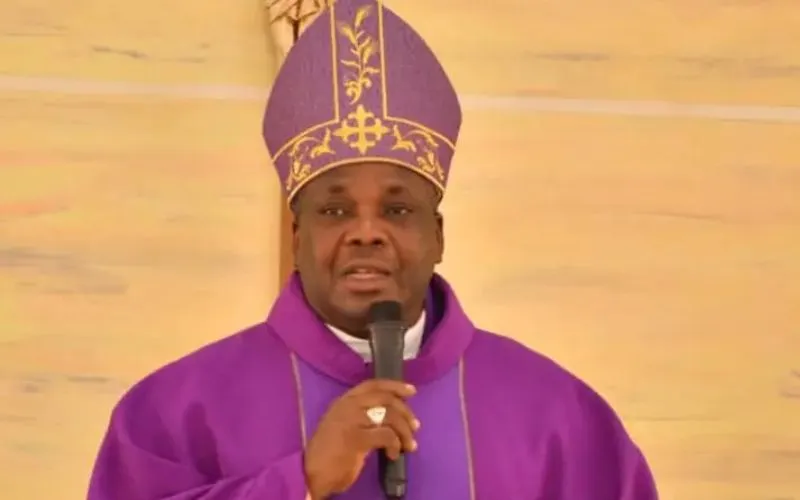
The Rt. Rev. Christian Onyia, Bishop of the Anglican Diocese of Nike in Enug State, says forgiveness remains a vital tool for peace, unity and progress.
In an Easter message delivered on Saturday in Enugu, the bishop made the call for unconditional forgiveness as exemplified by Jesus Christ’s death and resurrection to reconcile all mankind to God Almighty.

The bishop, who spoke on the theme: “The Forgiven Must Be Forgiving”, urged Nigerians to embrace forgiveness as a moral, spiritual and civic imperative essential for national renewal.
The cleric emphasised that Easter is not merely a historical remembrance but a living proclamation of hope, reconciliation, and societal transformation.
He said that “as we celebrate the resurrection of Christ this Easter, we are reminded that forgiveness is not optional.
“Christ’s triumph over death calls us to rise above bitterness, resentment, and division, embodying His compassion in our families, communities, and nation.”
Bishop Onyia said that “forgiveness is a moral and civic necessity in a nation burdened by poverty, violence, mistrust, and unresolved grievances.”
According to him, forgiveness interrupts cycles of retaliation, restores dignity, opens pathways to dialogue and enables reconciliation.
The cleric said: “It is moral courage, not weakness. Forgiveness begins at home, in neighborhoods, workplaces, and local communities.
“Each citizen has a role in breaking cycles of mistrust, violence, and corruption through deliberate acts of reconciliation and ethical conduct.
Read also:
- Gov. Okpebholo reflects on Oshiomhole’s journey, hails his leadership legacy
- NRM chieftain faults Tinubu’s CCTV plan, says it won’t curb insecurity
- Police rescue mentally challenged woman, baby after giving birth in FCT
“Globally, unforgiveness, which is direct opposite of forgiveness, has exacted a heavy toll – violent conflicts affect more than 78 countries. These crises reflect unresolved grievances and revenge-driven politics.”
The bishop noted that forgiveness joined with justice, accountability, and reform could break the cycle of violence, restore institutional trust and renew social bonds.
He called on the church, traditional institutions, civil society, and government to model forgiveness publicly through mediation, advocacy, trauma healing, and ethical leadership.
“Nigeria’s future will not be secured by weapons, policies, or elections alone. It will be secured when a forgiven people (through Christ’s death) become a forgiving people.
“Forgiveness is the covenantal soil from which justice, peace, unity and national renewal can grow.
“As we celebrate the risen Christ, may His resurrection power inspire us to forgive, reconcile, and rebuild our nation on the enduring foundations of truth, justice and love,” he added.