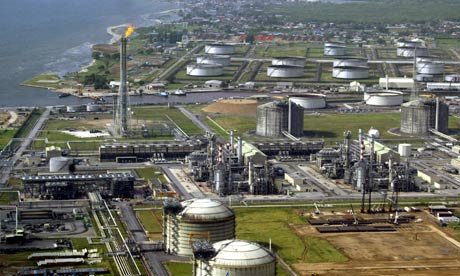
Nigeria’s crude oil production has climbed to about 1.84 million barrels per day, according to the Nigerian Upstream Petroleum Regulatory Commission (NUPRC), marking a notable rebound from previous output levels.
The Minister of Finance and Coordinating Minister of the Economy, Wale Edun, commended the development, describing it as a positive step aligned with the directive of President Bola Tinubu to boost national oil production.

Edun gave the commendation on Thursday in Abuja, when he received the Chief Executive of NUPRC, Oritsemeyiwa Eyesan, at the Federal Ministry of Finance headquarters.
“It is heartening that you can tell us that you are doing 1.84 million barrels per day. That is fantastic news.
“That is totally in line with the mandate of the President,” Edun said, urging the commission not to lose momentum.
Read also:
- Afreximbank underwrites $2.5bn of Dangote Refinery’s landmark $4bn loan deal
- CBN issues banking licence to Flutterwave as digital payments surge to $40bn
- Edun meets IMF director in Abuja, pushes for stronger ECOWAS economic coordination
He stressed that while the increase is commendable, sustaining the growth trajectory remains critical, adding that the federal government is targeting a production threshold of two million barrels per day.
“What matters is not just reaching certain heights but sustaining it. We don’t want any stopping along the way,” he said.
The minister also referenced the ongoing conflict in the Middle East, describing it as unfortunate, but noted that Nigeria’s push to ramp up oil production predates the crisis.
Earlier, Eyesan confirmed that output had reached 1.84mbpd, attributing previous declines in February to disruptions on key infrastructure and scheduled maintenance activities.
“But all that has been fixed, and we are seeing production ramping up,” she said.
She further disclosed that the commission is advancing the 2025 licensing round, now in its technical and financial evaluation stage, expressing optimism that new acreages could begin yielding production within a year.
Eyesan pointed to the “drill or drop” provision in the Petroleum Industry Act as a key driver of efficiency, warning that dormant oil blocks risk revocation if operators fail to develop them.
The NUPRC boss also confirmed compliance with Executive Order 9 of 2026, which mandates the suspension of the 30 percent frontier exploration fund deduction and directs full remittance of proceeds to the federation account.
Data from the commission indicates that Nigeria’s oil output rose sharply from 1.48 million barrels per day recorded in February to 1.84 million barrels per day in March, reflecting improved operational stability across key production assets.