The Democratic Republic of the Congo has declared a nationwide public holiday to mark a landmark achievement in its football history qualification for the 2026 FIFA World Cup.
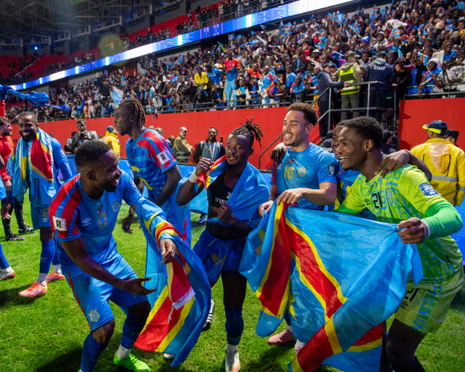
The national team, famously known as the Leopards, sealed their place at the tournament after a decisive intercontinental play-off victory over Jamaica on Wednesday.
The triumph ends a 52-year absence from football’s biggest stage, with their last appearance dating back to 1974, when the country competed as Zaire.

In an official memo released shortly after the win, the Ministry of Employment and Labour confirmed that Wednesday would be observed as a paid public holiday.
The move, endorsed by President Félix Tshisekedi and Prime Minister Judith Suminwa Tuluka, is intended to allow citizens celebrate what authorities described as a moment of “unity, fervour, and national pride.”
Celebrations have since erupted across the country, with fans taking to the streets in jubilation, hailing the qualification as a symbol of resilience and renewed strength in Congolese football.
The journey to qualification was not without controversy.
Read also:
- FIFA Sanctions Nigeria and DR Congo Over Fan Misconduct: Its impact on local leagues, need for reform
- FIFA sanctions Nigeria, DR Congo over fan misconduct in 2026 World Cup play-off
- 2026 FIFA World Cup: Nigeria misses out as FIFA confirms DR Congo for Inter-Confederation play-off
The Nigeria Football Federation had earlier challenged DR Congo’s eligibility, raising concerns with FIFA over player status following a penalty shootout win against Nigeria in the African play-off final in November 2025.
FIFA dismissed the complaint, though Nigerian officials have indicated plans to appeal the ruling.
Looking ahead, DR Congo will compete in Group K of the tournament, which will be jointly hosted by the United States, Mexico, and Canada.
The Leopards are set to face Portugal, Colombia, and Uzbekistan in what promises to be a challenging group stage campaign.