The Federal Government has said ongoing reforms in Nigeria’s power sector are beginning to deliver measurable gains, with over $2 billion in fresh investments attracted and liabilities reduced significantly.
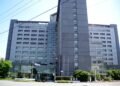
Minister of Power, Adebayo Adelabu, disclosed this on Thursday in Abuja during the inauguration of the new headquarters of the Nigeria Electricity Liability Management Company.

He described the development as a major step in strengthening the financial and institutional foundations of the electricity sector.
According to Adelabu, the reforms, driven by policy changes, market liberalisation, and institutional restructuring, are positioning the industry for sustainability and increased private sector participation.
He noted that the commissioning of NELMCO’s new headquarters represents more than a physical structure, but a symbol of renewed efforts to stabilise the sector.
The minister commended the agency for reducing inherited liabilities from N2.303 trillion to about N146.76 billion, while also generating savings exceeding N700 billion for the Federal Government through verification and reconciliation processes.
He added that NELMCO also cut disputed ground rent claims from N644 billion to N41.8 billion and reduced post-privatisation debts owed by Ministries, Departments and Agencies to electricity distribution companies by 45 per cent.
Adelabu said these interventions have improved liquidity within the sector and strengthened investor confidence.
He attributed much of the progress to the implementation of the Electricity Act 2023, which decentralises the electricity market and allows states to participate more actively.
The minister revealed that 16 state electricity markets have already been activated, fostering competition and innovation across the industry.
He also highlighted the introduction of a National Integrated Electricity Policy, the first in over two decades, which provides a coordinated framework for implementing reforms across federal and state levels.
Adelabu disclosed that the reform programme has so far attracted more than $2 billion in investment, alongside a 70 per cent increase in sector revenue in 2024.
He noted that government liabilities have also dropped by about N700 billion, indicating improvements in efficiency and cost recovery.
On operational performance, the minister said generation capacity has risen from 13 gigawatts to 14 gigawatts, with peak generation reaching 5,801.44 megawatts.
He further outlined efforts to bridge Nigeria’s metering gap through the Presidential Metering Initiative, supported by N700 billion mobilised through the Federal Account Allocation Committee and an additional $500 million facility from the World Bank.
Adelabu added that procurement processes are already underway to deploy millions of meters nationwide.
The minister also disclosed that Nigeria recently synchronised its national grid with those of other ECOWAS countries following a successful four-hour test run, a development he said signals improved system stability and readiness for regional electricity trade.
He maintained that the reforms are focused on building a transparent, commercially viable, and sustainable power sector capable of driving economic growth.
Read also:
- FG sets new timeline to improve power supply amid heat wave
- FG targets cooperative sector reform to boost jobs, food security
- Nigeria’s capital importation surges 88% to $23.2bn in 2025 – NBS Report
Despite the progress, Nigeria’s electricity sector continues to face long-standing challenges, including liquidity constraints, infrastructure deficits, and weak revenue collection—issues that have persisted since the 2013 privatisation of generation and distribution assets.
While recent gains are encouraging, Adelabu stressed that consistent policies, improved gas supply, and sustained investment will be critical to achieving stable electricity supply nationwide.
The update comes amid growing public concern over persistent power outages across the country.
The minister recently apologised to Nigerians for the disruptions, acknowledging the hardship caused to households, businesses, and critical sectors.
He attributed the outages largely to gas supply constraints and infrastructure challenges, particularly during the dry season when electricity demand typically increases.
Adelabu, however, expressed optimism that ongoing interventions will lead to noticeable improvements in power supply in the coming weeks.