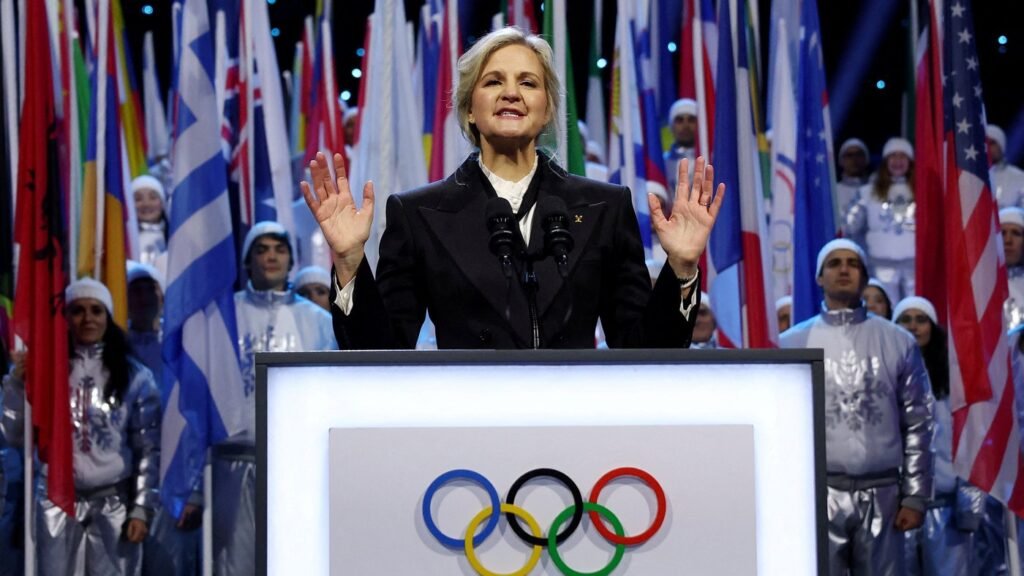
The International Olympic Committee (IOC) has introduced a new eligibility policy that limits participation in women’s events at the Olympic Games to biological females, beginning with the Los Angeles 2028 Olympic Games.
The decision, approved by the IOC Executive Board, will apply across all sports on the Olympic programme. The committee noted that the policy will not be applied retroactively.

In a statement released on Thursday, the IOC said eligibility for the female category in both individual and team events would now be restricted to biological females.
To implement the rule, the committee said athletes’ eligibility would be determined through screening for the SRY gene, which it described as a key biological marker associated with male sex development.
Read Also:
- Olympic Champion Lin Yu-ting cleared for Women’s boxing return after eligibility review
- Olympic Champion Sha’Carri Richardson arrested in Florida over alleged 104mph speeding
- Outrage in Italy as US plans to deploy ICE Agents for Winter Olympics security
According to the IOC, the presence of the SRY gene, typically located on the Y chromosome, remains constant throughout a person’s life and provides a reliable indicator of male biological development.
The organisation explained that testing could be conducted using saliva, cheek swabs, or blood samples, noting that the process is less invasive than alternative methods.
Under the new guidelines, athletes who test negative for the SRY gene will be considered permanently eligible to compete in the female category, with the screening expected to be conducted only once in a lifetime.
However, the IOC acknowledged limited exceptions. Athletes diagnosed with Complete Androgen Insensitivity Syndrome (CAIS) or certain differences in sex development (DSDs) that do not confer performance advantages may still qualify for the female category despite a positive SRY result.
For others who test positive, eligibility will be restricted to alternative classifications, including male, mixed, or open categories.
IOC President Kirsty Coventry said the policy was guided by scientific evidence and aimed at preserving fairness and safety in competition.
She emphasised that even marginal physical differences can significantly influence outcomes at elite sporting levels, adding that the policy seeks to ensure a level playing field.
Coventry also stressed the importance of treating all athletes with dignity and respect, noting that the screening process would be accompanied by appropriate counselling and education.
The IOC said the policy followed an extensive review conducted between September 2024 and March 2026, involving input from scientists, medical experts, legal professionals, sports federations, and athletes worldwide.
According to the committee, the review found broad agreement that male biological characteristics can offer advantages in sports requiring strength, endurance, and power, reinforcing the need for clear, science-based eligibility criteria.
The new framework replaces earlier IOC guidance on gender identity and sex variations in sport. While it applies directly to IOC events, international sports federations and national Olympic committees are expected to align their own regulations with the updated policy.