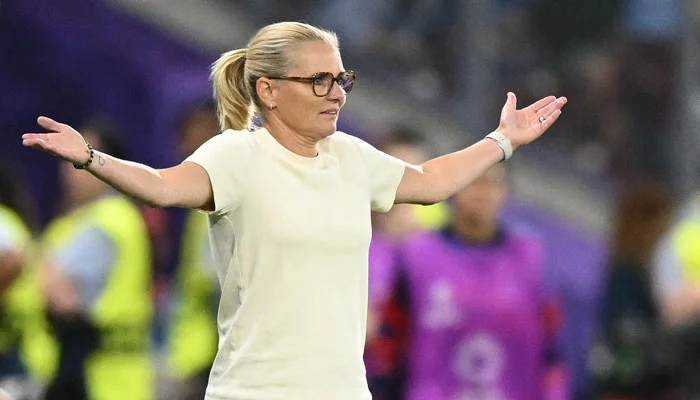
The Federation of International Football Association (FIFA) has unveiled a landmark policy requiring all teams in its women’s competitions to include female coaches on their technical benches. The decision, ratified by the FIFA Council on Friday, mandates that every participating team appoint at least one female head or assistant coach, alongside a minimum of two additional female staff members present during matches.
The initiative, set to debut at the upcoming Under-17 and Under-20 Women’s World Cups as well as the Women’s Champions Cup, will expand to the 2027 FIFA Women’s World Cup. FIFA says the policy aims to address long-standing gender imbalances in coaching roles and accelerate pathways for women in technical leadership positions, an area where progress has lagged despite the sport’s rapid global growth.

The urgency of the reform is highlighted by statistics from the 2023 FIFA Women’s World Cup, where only 12 of 32 teams were led by female head coaches, dwindling to just one by the quarter-finals. Jill Ellis, FIFA’s Chief Football Officer, described the move as structural rather than symbolic. “This is about creating clear, visible pathways for women in coaching,” she said, stressing that representation at the technical level is critical for the sport’s credibility and inclusiveness.
Read Also:
- NFF appeals FIFA ruling on DR Congo World Cup playoff eligibility dispute
- FIFA appears to rule out moving Iran’s matches to Mexico
- Iran in talks with FIFA to move World Cup matches over security concerns
Unlike previous diversity initiatives, FIFA’s directive ties tournament eligibility to compliance, effectively compelling national associations to invest in female coaching talent through grassroots certification, mentorship, and elite-level development programs. Analysts suggest the mandate could accelerate professional opportunities for women in football, though critics caution that systemic barriers such as unequal access to training, funding, and professional networks remain a challenge.
As women’s football continues its global rise in popularity and commercial value, FIFA’s policy signals a shift from mere expansion to governance reform. By enforcing gender inclusion on the sidelines, the organization aims to ensure that the future of the women’s game is not only played by women but increasingly led and directed by them.