


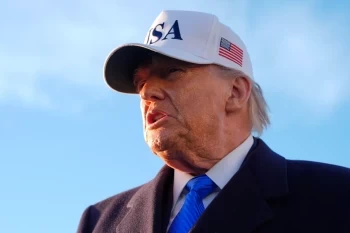
United States President Donald Trump has urged world powers to deploy naval forces to the Strait of Hormuz to ensure the strategic waterway remains open amid rising tensions with Iran.
Trump made the call in a post on his social media platform, Truth Social, on Saturday, saying countries whose economies depend on oil shipments through the strait should work alongside the United States to guarantee safe passage for international vessels.
According to him, nations most affected by potential disruptions in the route should actively participate in safeguarding the corridor.

The US president specifically mentioned China, France, Japan, South Korea and the United Kingdom as countries that could contribute warships to help secure the maritime channel.
Trump, however, did not indicate whether any of the countries had formally agreed to send naval forces to the region.
The Strait of Hormuz is one of the world’s most critical maritime routes, linking the Persian Gulf to global shipping lanes and serving as a key passage for international oil exports.
Any disruption in the narrow waterway could significantly impact global energy markets and international trade.
Trump warned that although Iran’s military capabilities had been weakened, the country could still pose threats to vessels passing through the strait through the deployment of drones, sea mines or short-range missiles.
Read also:
- Iran threatens Strait of Hormuz Oil blockade as global prices risk surge to $200 per barrel
- Oil prices jump following attacks on ships near Strait of Hormuz
- US asks China to stop Iran from closing Strait of Hormuz
The remarks come amid heightened tensions in the Middle East following threats by Tehran to restrict oil shipments moving through the channel.
Security analysts say such a move could trigger major economic consequences globally, given the volume of crude oil transported through the strategic waterway.
Trump added that the United States would continue military operations aimed at ensuring the strait remains open and secure for commercial shipping.
The development has raised concerns among global leaders and shipping operators as the security situation in the Gulf region continues to evolve.

