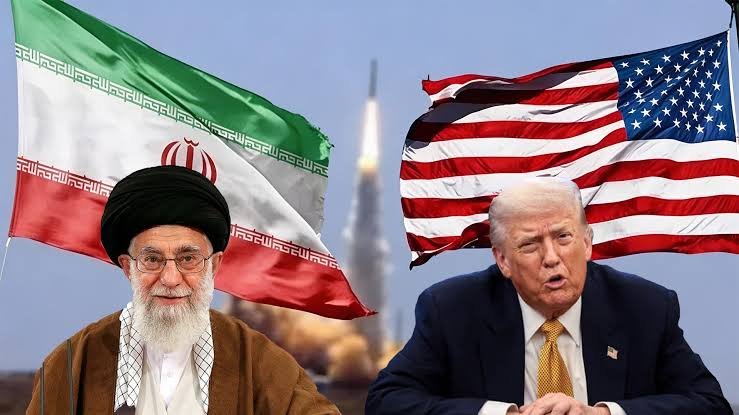
On a quiet weekend in late February, global markets were jolted by a geopolitical shock that quickly reverberated far beyond the deserts and coastlines of the Middle East.
In a dramatic escalation of tensions, coordinated military strikes involving the United States and Israel reportedly targeted Iranian leadership and strategic military installations. Within hours, Iran responded with retaliatory missile launches and warnings of broader regional confrontation.

Airspace closures spread across the Gulf. Security alerts flashed across aviation systems. Cargo vessels slowed or rerouted near sensitive maritime corridors. Yet the consequences of the conflict are not confined to military theatres.
Across financial markets, shipping networks, airline routes and energy exchanges, the world began recalibrating its economic expectations. Oil prices surged sharply, investors rushed toward safe assets, airlines scrambled to reroute flights, and maritime insurers reassessed risks along critical global shipping lanes.
Thousands of kilometres away from the conflict zone, Nigeria — Africa’s largest oil producer — is already feeling the economic shockwaves. The crisis presents a paradox for the country: higher oil prices promise increased government revenue, but the same surge threatens to worsen inflation, deepen the cost-of-living crisis and place further strain on households and businesses.
In effect, Nigeria stands to gain and suffer simultaneously. The unfolding war underscores a familiar reality: the global energy system remains deeply intertwined with geopolitics. And when tensions flare in the Gulf, the consequences often reach petrol stations, markets and household budgets across the world.
When Missiles Move Markets
The most immediate economic consequence of the escalating conflict has been felt in global oil markets.
Energy traders reacted swiftly after the first reports of strikes emerged. Prices surged as investors began factoring in the possibility of disruptions to one of the world’s most critical energy corridors: the Strait of Hormuz.
Roughly one-fifth of the world’s oil supply flows through the narrow maritime passage connecting the Persian Gulf to international markets. Any threat to the waterway can trigger panic across energy markets.
Even before any confirmed damage to oil infrastructure, crude prices spiked sharply during early trading sessions. At one point, benchmark oil prices climbed close to $120 per barrel before retreating slightly amid speculation that major economies might release emergency reserves.
For global energy markets, perception often moves faster than actual supply disruptions. Insurance firms quickly raise premiums when geopolitical risk increases. Tanker operators reconsider sailing through vulnerable routes. Cargo vessels sometimes delay departures until security conditions improve.
When shipping slows, markets interpret the situation as a potential shortage. That perception alone can drive prices higher. Maritime tracking services reported that dozens of oil tankers and liquefied natural gas carriers paused or altered routes near the Strait of Hormuz while insurers reassessed the risk environment.
Energy traders, fearing a worst-case scenario that could involve attacks on shipping infrastructure or an attempted blockade of the waterway, began bidding prices upward.
A Familiar Pattern In Energy History
The relationship between geopolitical crises and oil prices is not new. The oil embargo of 1973 triggered one of the most severe global energy shocks in modern history. Prices quadrupled within months, sending Western economies into recession and reshaping energy policy for decades.
Similarly, the Gulf War in 1991 caused sudden spikes in crude prices, while the Iraq invasion in 2003 once again demonstrated how geopolitical tensions can rapidly reshape global energy markets. The difference today lies in the speed and scale of financial reaction.
Modern oil markets operate in a digital trading environment driven by algorithmic systems, satellite intelligence and real-time geopolitical analysis.
Within hours of the first reports of the US–Israel strikes and Iranian retaliation, energy markets had already begun repricing global risk. For countries heavily dependent on oil revenues — including Nigeria — such shifts can have profound fiscal implications.
A Potential Windfall For Nigeria
Rising oil prices typically translate into increased export earnings for Nigeria. Crude oil remains the backbone of the country’s external revenue. It accounts for the majority of foreign exchange inflows and a substantial share of government income.
Nigeria’s 2026 federal budget was built on relatively conservative oil assumptions. The benchmark price for crude was projected at about $64.85 per barrel, while production was estimated at roughly 1.84 million barrels per day.
When global oil prices climb significantly above those assumptions, government revenues automatically rise — at least in theory. Every additional dollar in the price of crude can translate into billions of naira in additional revenue over time.
Higher oil prices strengthen export earnings, improve foreign reserves and expand fiscal space for government spending.
State governments also benefit through increased allocations from the federation account, which distributes oil-derived revenue across Nigeria’s federal structure.
In times of high oil prices, oil-dependent economies often experience temporary financial relief. However, the magnitude of the benefit depends heavily on production capacity.
Nigeria’s Production Constraints
Nigeria’s ability to fully capitalise on rising oil prices is constrained by longstanding structural challenges within its petroleum sector.
Despite possessing some of Africa’s largest hydrocarbon reserves, the country has struggled in recent years to maintain stable production levels.
Pipeline vandalism, crude oil theft, ageing infrastructure and underinvestment in upstream exploration have repeatedly reduced output.
Production has fluctuated between 1.4 million and 1.6 million barrels per day — well below the levels projected in government budgets. This means that even when oil prices surge globally, Nigeria may still earn less revenue than expected if production remains below capacity.
The situation highlights a structural weakness within the country’s energy economy. Nigeria benefits when oil prices rise, but it often lacks the production stability necessary to fully capture those gains.
The Downstream Paradox
Even when rising oil prices strengthen government finances, the domestic economy often experiences the opposite effect.
Nigeria’s petroleum sector is characterised by a paradox: it is a major exporter of crude oil but still relies heavily on imported refined petroleum products. When crude prices rise globally, the cost of refined fuels — including petrol, diesel and aviation fuel — typically rises as well.
For Nigerian consumers, this translates directly into higher pump prices. Recent market developments illustrate this dynamic clearly. Following the escalation of the Middle East conflict, petrol prices in Nigeria climbed to around N1,300 per litre in several locations across the country.
This increase followed a sharp upward adjustment in the gantry price of petrol at the Dangote Petroleum Refinery, which raised the wholesale price from N995 to N1,175 per litre within days.
Several filling stations quickly adjusted their pump prices to reflect the higher cost environment, with some outlets selling petrol for between N1,250 and N1,400 per litre.
The adjustment highlights the degree to which global energy dynamics influence domestic fuel markets.
Inflation Pressures Build
Fuel costs sit at the centre of Nigeria’s economic structure. Transportation, agriculture, manufacturing and small-scale businesses all rely heavily on petroleum products.
Many companies operate diesel-powered generators because of unreliable electricity supply. Farmers depend on fuel for tractors, irrigation pumps and logistics. Truck drivers move goods across vast distances using diesel-powered vehicles.
When fuel prices rise, the cost structure of the entire economy shifts upward; Transport fares increase; Food distribution costs rise; Manufacturing expenses grow; Small businesses face higher operating costs.
Economists warn that sustained crude prices above $100 per barrel could trigger a fresh wave of inflationary pressure in Nigeria. Transportation costs often respond first. Food prices follow soon after, as logistics expenses increase.
Given that food inflation has already been a major economic challenge in Nigeria, further pressure on supply chains could deepen the cost-of-living crisis.
Aviation And Travel Disruptions
Beyond energy markets, the conflict has also disrupted global aviation networks. Several Middle Eastern countries temporarily restricted airspace following missile alerts and security concerns. Major aviation hubs — including Dubai, Doha and Abu Dhabi — reduced flight operations while airlines reassessed safety risks.
Thousands of flights were cancelled or rerouted across international networks. For airlines, rerouting aircraft around conflict zones significantly increases operational costs. Flights become longer, fuel consumption rises and crew schedules require adjustments. These additional expenses are typically passed on to passengers through higher ticket prices.
Read also:
- Israel accuses Iran of sponsoring Terrorism in Nigeria, warns of growing extremist influence in West Africa
- Trump issues fresh warning, vows to hit Iran “very hard”
- How gas can propel Nigeria towards industrialisation – Shell
For Nigerians, the implications are immediate. Many international travel routes connecting Nigeria to Europe, Asia and North America pass through Middle Eastern transit hubs.
Students, pilgrims, business travellers and diaspora passengers frequently rely on these routes.
When major hubs experience disruption, ticket prices rise and travel schedules become unpredictable. Cargo shipments also slow, increasing the cost of air freight for high-value goods.
The Remittance Connection
Nigeria’s exposure to Middle Eastern developments also extends through its diaspora population. Millions of Nigerians live and work across Gulf economies, particularly in countries such as the United Arab Emirates, Saudi Arabia, Qatar, Kuwait and Oman. These workers send billions of dollars home every year.
Remittances remain one of Nigeria’s most stable sources of foreign exchange. However, geopolitical instability can weaken labour markets in host countries. Construction projects slow. Tourism declines. Service-sector employment shrinks. Foreign workers often feel the impact first.
If remittance flows decline, Nigerian households that rely on money sent by relatives abroad may face immediate financial strain. For many families, remittances play a more direct role in household welfare than government oil revenues.
Investor Caution And Capital Flows
Financial markets have also reacted sharply to the escalating crisis. Periods of geopolitical uncertainty typically trigger shifts in global capital flows. Investors move funds away from emerging markets and toward perceived safe-haven assets such as gold and US Treasury bonds. For frontier economies like Nigeria, this shift can create additional pressure. Foreign portfolio investors may withdraw funds from local bond and equity markets, reducing liquidity and weakening currencies.
Nigeria’s currency, the naira, has historically been sensitive to such changes in investor sentiment. Even if oil revenues increase, capital outflows could offset some of the benefits by placing downward pressure on the exchange rate.
The Dangote Refinery Factor
One of the most significant structural developments in Nigeria’s energy sector is the emergence of large-scale domestic refining capacity. The Dangote Petroleum Refinery, one of the largest single-train refineries in the world, has begun reshaping the country’s downstream petroleum landscape.
With a nameplate capacity of around 650,000 barrels per day, the facility has the potential to significantly reduce Nigeria’s reliance on imported refined fuels. However, domestic refining does not completely insulate the country from global price movements. Crude oil — the primary feedstock for refineries — is traded on international markets.
Even if refining occurs domestically, refineries must still purchase crude at global benchmark prices. If global oil prices surge, local refining costs rise accordingly. Nevertheless, expanded refining capacity could improve supply reliability and reduce exposure to international shipping disruptions.
Lessons From Past Crises
Energy shocks triggered by Middle East conflicts have repeatedly reshaped the global economic landscape. Each crisis has reinforced the vulnerability of oil-dependent economies to external shocks.
Nigeria’s experience reflects this pattern. When oil prices fall, government revenue declines sharply. When oil prices rise, fiscal pressure eases but domestic inflation increases.
Breaking this cycle requires structural economic diversification. Yet despite decades of policy discussions, oil continues to dominate Nigeria’s export earnings. Non-oil sectors remain underdeveloped relative to their potential.
Managing A Potential Windfall
If oil prices remain elevated for several months, Nigeria could experience a temporary fiscal windfall. However, economists caution that such windfalls have historically been poorly managed.
During previous oil booms, higher revenues often translated into increased government spending rather than long-term investment. When oil prices eventually fell, fiscal deficits widened again.
Economic analysts argue that any additional revenue generated by rising oil prices should be partially saved. Strengthening fiscal buffers could help Nigeria weather future downturns. Strategic investments in infrastructure, energy transition and industrial development could transform temporary gains into long-term resilience.
Global Energy Crisis Looms
Ultimately, the most immediate impact of the US–Israel–Iran conflict is economic rather than military. Energy markets have become the frontline of global reaction. When oil prices surge, the effects cascade through transportation, manufacturing, agriculture and consumer markets.
In many countries — including Nigeria — the consequences are felt at petrol stations, markets and transport terminals long before they appear in official economic statistics.
The Global Economy Is Deeply Interconnected.
A missile strike in the Gulf can raise the price of bread in Lagos. A shipping delay near the Strait of Hormuz can increase transport fares in Abuja. For Nigeria, the crisis embodies a complex contradiction.
Higher oil prices offer fiscal relief at a time when government finances remain under pressure. Yet the same price surge threatens to worsen inflation and deepen the cost-of-living crisis for millions of Nigerians.
This dual reality reflects the structure of Nigeria’s oil-dependent economy. Global turbulence can bring both windfalls and hardship. The outcome ultimately depends on how effectively policymakers manage the moment. If Nigeria can stabilise production, strengthen fiscal buffers and accelerate diversification, the crisis could provide an opportunity for long-term economic resilience.
If structural challenges persist, however, the windfall may prove temporary. The missiles may be falling in the Middle East. But the economic shockwaves are already reaching Nigerian households — at the fuel pump, in the marketplace and within the nation’s fragile economic balance.