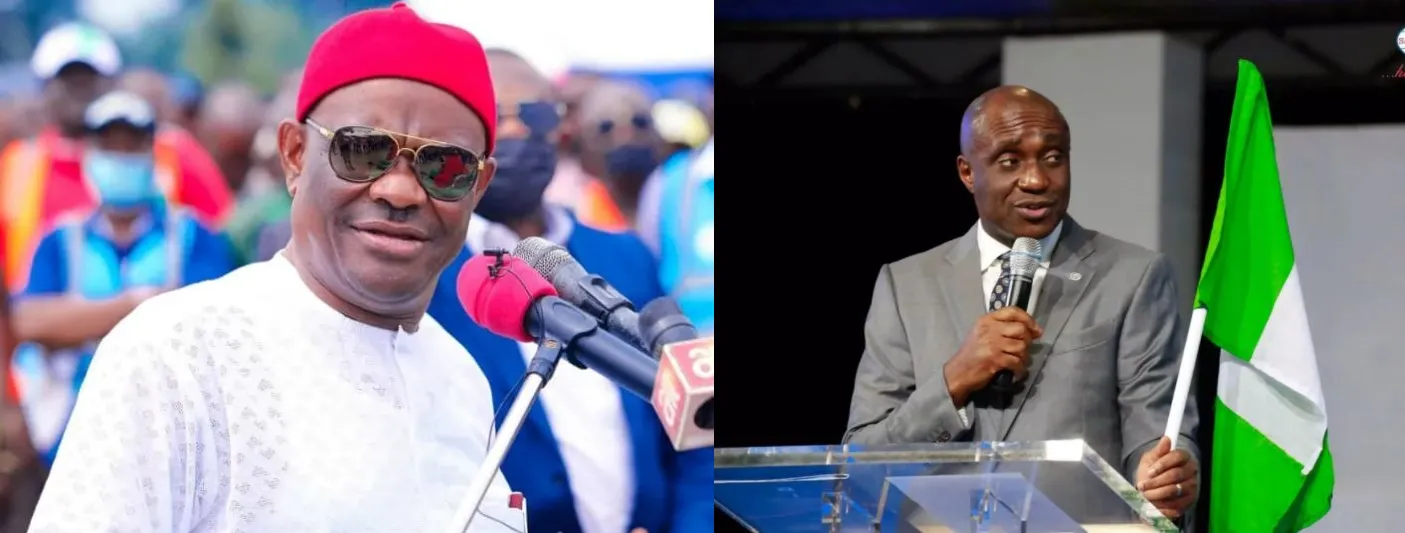
Comments by David Ibiyeomie, founder of Salvation Ministries, claiming his prayers played a major role in the political victories of Nyesom Wike have sparked a wave of reactions across Nigeria, igniting renewed debate about the relationship between religion and politics.

The cleric made the remarks during a church service while recounting his relationship with the former Rivers State governor, who currently serves as Minister of the Federal Capital Territory.
According to Ibiyeomie, Wike had reached out to him during difficult moments in his political career, including legal battles and election challenges.
The pastor claimed that after Wike lost at both the High Court and the Court of Appeal in a major legal dispute, he assured the politician that the situation would be reversed through prayer before the final judgment at the Supreme Court.
He said he prayed intensely and even sowed a financial “seed” on Wike’s behalf without informing him at the time.
Ibiyeomie also stated that similar spiritual interventions helped Wike during a tense election period when there were fears that the results might be manipulated against him. According to the pastor, divine intervention ensured the outcome favoured the politician.
The remarks quickly went viral online, sparking widespread debate among Nigerians and drawing reactions from celebrities, activists, and social commentators.
Popular social media activist VeryDarkMan questioned the implications of the pastor’s claims, suggesting that statements implying spiritual influence over court rulings or election outcomes raise concerns about transparency in democratic institutions.
Read also:
- Pastor David Ibiyeomie claims his prayers led to divine intervention in Wike’s Supreme Court victory, re-election
- Wike approves confirmation of 1,659 FCTA workers employed in 2016, 2019
- Wike unleashes on ‘Roadside Politicians’ after FCT polls, says area council elections exposed pretenders
Media personality Daddy Freeze also joined the conversation, urging Nigerians to critically examine claims by religious leaders, particularly when such statements appear to link spiritual authority with political power.
Across social media platforms, reactions have been divided. Supporters of the cleric described his remarks as a simple testimony of faith, noting that many politicians seek prayers and spiritual guidance from religious leaders.
Critics, however, argued that suggesting divine influence over judicial decisions or electoral processes could undermine public confidence in Nigeria’s democratic institutions.
The controversy has once again highlighted the powerful role religious leaders play in Nigeria’s political landscape. Politicians often maintain close relationships with influential pastors and clerics who command large followings, particularly during election periods.
For many observers, Ibiyeomie’s comments have reopened an important national conversation about where the line should be drawn between spiritual support and political influence in a democratic society.