
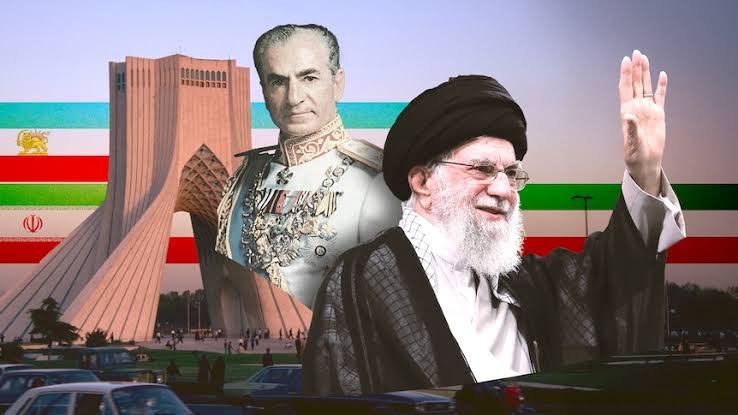
The modern political history of Iran was dramatically transformed in 1979 when a powerful popular uprising toppled the country’s monarch, Mohammad Reza Shah Pahlavi, replacing his rule with an Islamic republic led by Ruhollah Khomeini.
The upheaval, widely known as the Iranian Revolution, ended more than two millennia of monarchy in Iran and reshaped the political landscape of the Middle East.

Mohammad Reza Shah Pahlavi ruled Iran from 1941 and presented himself as a modernizing leader closely aligned with Western powers, particularly the United States and United Kingdom.
His government launched sweeping reforms aimed at transforming Iran’s economy and society through a program known as the White Revolution. The initiative included land redistribution, large infrastructure projects and expanded rights for women.
While these reforms accelerated modernization in some sectors, they also triggered widespread opposition. Religious leaders, traditional elites and many ordinary citizens argued that the changes were overly Westernized and unevenly distributed.
By the 1970s, economic challenges, rising inflation and restrictions on political freedoms intensified public frustration. Critics also accused the Shah’s government of suppressing dissent through powerful security services and strict political control.
The situation reached a boiling point in 1978 as protests spread across Iran. Demonstrations, strikes and mass rallies were organized by a broad coalition of religious groups, students, workers and political activists demanding the end of the monarchy.
One of the most pivotal moments came during Black Friday (1978 Iran protests), when security forces opened fire on demonstrators in Tehran. The incident intensified nationwide protests and further weakened the Shah’s authority.
Mass strikes soon crippled key industries, including the oil sector, which was vital to the country’s economy.
At the center of the opposition movement was Ayatollah Ruhollah Khomeini, a Shiite cleric who had been living in exile after criticizing the Shah’s rule. From abroad, he delivered speeches and messages calling for the monarchy to be replaced with an Islamic government.
As protests intensified, the Shah’s position became increasingly untenable. In January 1979, facing widespread unrest and political collapse, he left Iran.
Just weeks later, Khomeini returned to Tehran after 14 years in exile, welcomed by massive crowds. Within days, the military declared neutrality, effectively ending the Shah’s regime and clearing the way for the revolutionaries to seize power.
Following the collapse of the monarchy, Khomeini established the Islamic Republic of Iran, combining elements of republican governance with religious authority.
The new constitution created the powerful position of Supreme Leader, granting the country’s top cleric ultimate authority over political and military affairs.
The revolution not only transformed Iran internally but also dramatically reshaped its relationship with Western nations. Tensions with the United States escalated later in 1979 during the Iran hostage crisis, when militants seized the American embassy in Tehran, triggering a prolonged diplomatic standoff.
More than four decades later, the legacy of the revolution continues to shape Iran’s politics and society.
In recent years, the government led by Supreme Leader Ali Khamenei has faced repeated waves of unrest fueled by economic hardship, social restrictions and forceful crackdowns on dissent.
Analysts say a combination of economic pressure, political repression and limits on personal freedoms has contributed to periodic protests across the country, particularly among younger Iranians and urban populations.
One major source of tension has been the country’s economic situation. Iran has struggled with high inflation, unemployment and the impact of international sanctions, placing heavy pressure on households.
Government policies promoting what officials call a “resistance economy” were intended to reduce reliance on foreign markets and shield the country from sanctions. Critics, however, argue that the strategy has failed to prevent widespread economic hardship.
Social policies have also fueled public anger. Iran enforces strict regulations on personal conduct, including mandatory dress codes for women and morality policing by security authorities.
Activists and civil society groups say these restrictions have alienated large segments of the population, especially younger Iranians who are increasingly demanding greater social freedoms.
Iranian authorities have frequently relied on security forces to suppress demonstrations. Units linked to the Islamic Revolutionary Guard Corps and the Basij paramilitary have been deployed during major protests.
Large-scale demonstrations were reported during the disputed 2009 presidential election and again during nationwide protests in 2022. Human rights groups say security forces used force to disperse crowds, leading to casualties and arrests.
Authorities have also imposed temporary internet shutdowns during periods of unrest. Officials say the measures are necessary to maintain security, while critics argue they limit the flow of information and conceal the scale of crackdowns.
Reports in early 2026 indicated that renewed protests erupted in several Iranian cities following economic difficulties and political tensions. Some accounts from activists and international media suggested significant casualties and mass detentions during the crackdown, although official figures remain unclear.
Supporters of the government argue that strict security measures are necessary to preserve national stability amid external pressure and regional conflicts.
Read also:
- Massive explosions in Tehran as Iran rejects Trump’s “unconditional surrender’ demand
- Trump honors fallen Soldiers as first US Troops killed in Iran War return home
- Trump issues fresh warning, vows to hit Iran “very hard”
Critics, however, say continuing economic challenges and political restrictions have deepened dissatisfaction among many Iranians.
Amid the escalating crisis, the administration of Donald Trump has framed recent United States actions as an effort to support Iranian citizens against what Washington describes as a repressive government.
According to US officials, measures including military strikes and increased political pressure are intended to weaken the ruling structure and potentially open the door to political change in Iran.
American leaders say one objective is to protect Iranian protesters from violent crackdowns by security forces. President Trump has publicly urged Iranians to challenge their leadership, encouraging citizens to “take over your institutions.”
Washington also argues that weakening the ruling structure could help separate the survival of the political leadership from the well-being of ordinary citizens, pointing to inflation, currency instability and economic hardship in the country.
Some policymakers say the long-term goal is to encourage a political transition that could eventually lead to a more representative system of government.
Military planners have also indicated that strikes targeting certain security and military infrastructure are designed to limit the government’s ability to suppress dissent or destabilize the region.
However, the intervention has drawn criticism from international observers and humanitarian organizations.
Some experts linked to the United Nations warn that military escalation could put civilian lives at risk and worsen humanitarian conditions inside Iran.
Critics also argue that sanctions and military pressure have had unintended consequences for ordinary citizens, contributing to unemployment, inflation and declining living standards.
Regional analysts caution that foreign intervention can sometimes strengthen domestic support for governments under pressure, as citizens rally around national leaders when facing external threats.
As tensions continue between the United States and Iran, analysts say the impact of outside intervention remains highly uncertain.
While Washington insists its actions are intended to support the Iranian people and encourage political change, critics warn that the long-term consequences could further complicate an already volatile situation in the Middle East.
For many observers, the unfolding crisis reflects the enduring legacy of the 1979 revolution, a political transformation whose consequences continue to shape Iran and the wider region more than four decades later.