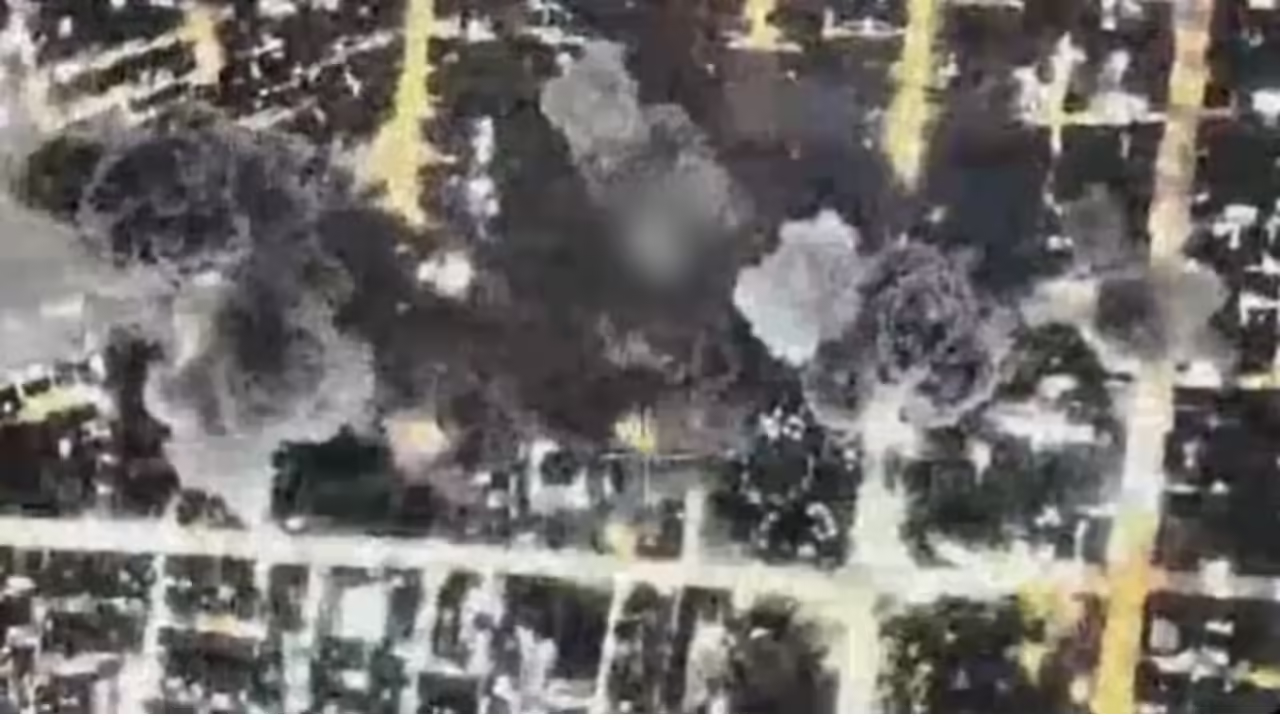
The Israeli military has carried out a large-scale airstrike targeting an underground bunker in central Tehran believed to have been built to protect Iran’s Supreme Leader during wartime, marking a sharp escalation in the ongoing confrontation involving Israel, the United States and Iran.
According to a report by Sky News, about 50 Israeli fighter jets participated in the early Friday operation, striking the fortified underground structure located beneath a leadership compound used by Iran’s top political and religious authorities.
The Israel Defence Forces confirmed the attack, explaining that the facility was specifically constructed to shield Iran’s leadership in the event of military conflict. In a message shared on its official X account, the military released footage of the operation and stated that Israeli Air Force jets had dismantled the underground bunker associated with Ali Khamenei.

Authorities have not yet confirmed the extent of damage to the facility or whether there were casualties at the site as of the time of filing this report.
The strike comes amid intensifying hostilities between Iran and the alliance of Israel and the United States following a series of coordinated attacks across Iranian territory in recent days.
Iranian officials earlier reported that at least 555 people had been killed in the wave of bombardments carried out by U.S. and Israeli forces. The Iranian Red Crescent Society said the attacks affected 131 cities across the country, describing the situation as one of the most widespread military assaults in recent years.
In a statement, the humanitarian organisation said emergency rescue and relief operations were continuing across multiple provinces as authorities attempted to manage the growing humanitarian crisis. More than 100,000 rescue and relief workers have reportedly been placed on high alert.
The escalation follows reports of the killing of Iran’s Supreme Leader, Ali Khamenei, during earlier joint strikes attributed to the United States and Israel. The development triggered a political transition inside the Islamic Republic.
An interim leadership council has since taken charge of state affairs during the transition period. The council includes Iranian President Masoud Pezeshkian, judiciary chief Gholamhossein Mohseni Ejei, and senior cleric Alireza Arafi.
Read also:
- Israel accuses Iran of sponsoring Terrorism in Nigeria, warns of growing extremist influence in West Africa
- Iran’s new Supreme Leader Alireza Arafa vows retaliation against US, Israel after reported airstrikes
- Israeli attacks kill 31 in Lebanon as Iranian attacks escalate around Middle East
Speaking after a meeting of the council, Pezeshkian warned that the killing of the country’s supreme leader would not weaken Iran and cautioned both Washington and Tel Aviv against further escalation.
He said the United States and Israel should understand that the death of the leader of Iran’s Islamic Revolution would only strengthen national resolve.
Pezeshkian also called on citizens to remain united during what he described as a period of national mourning, urging Iranians to demonstrate solidarity in mosques, streets and public spaces.
He added that Iran’s armed forces remain prepared for further confrontation and warned that the country would respond to what it described as hostile aggression.