Asian equities retreated on Friday while oil prices climbed to multi-week highs after United States President Donald Trump escalated tensions with Iran, raising the prospect of military action if nuclear negotiations fail.
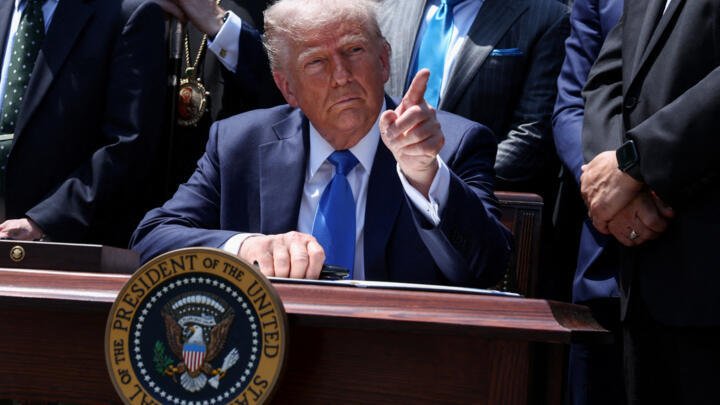
Markets reacted cautiously after Trump, speaking at the inaugural meeting of his “Board of Peace” initiative aimed at stabilising Gaza, said Tehran must reach a meaningful agreement with Washington. He warned that failure to secure a deal could trigger serious consequences.

“It’s proven to be over the years not easy to make a meaningful deal with Iran. We have to make a meaningful deal otherwise bad things happen,” Trump said, noting that the United States had deployed warships, fighter jets and other military assets to the Middle East. He added that Washington “may have to take it a step further” if talks collapse, suggesting developments could unfold within days.
The remarks followed renewed diplomatic engagement between the United States and Iran. Both sides recently held a second round of Omani-mediated talks in Geneva aimed at curbing Iran’s nuclear programme. Tehran maintains it is not pursuing a nuclear weapon.
Earlier, Israeli Prime Minister Benjamin Netanyahu issued his own warning, stating that any attack by Iran would be met with a response beyond expectation. The exchange of rhetoric has deepened investor concern over the stability of the crude-rich region.
Oil markets responded swiftly. Brent crude and West Texas Intermediate futures extended gains to reach their highest levels since June, reflecting fears that any conflict in the Middle East could disrupt global supply. Brent traded around $72 per barrel, while WTI hovered near $67 per barrel.
Read Also:
- 2027: Votes will count with President Donald Trump watching, says CRPP National Chairman
- Breaking News: Donald Trump captures Venezuelan President Nicolás Maduro after massive U.S. strike
- Femi Falana blasts Donald Trump over ‘False’ claims of Christian killings in Nigeria
Equity markets across Asia turned lower. Hong Kong shares fell as trading resumed after a three-day break, while Tokyo, Sydney, Wellington and Bangkok also recorded losses. In contrast, Seoul advanced to a fresh record, buoyed by continued demand for technology stocks. Markets in Singapore, Manila and Mumbai posted modest gains.
In Japan, the Nikkei 225 closed down 1.1 percent. Hong Kong’s Hang Seng Index slipped 0.7 percent. On Wall Street, the Dow Jones Industrial Average ended the previous session 0.5 percent lower, while London’s FTSE 100 dropped 0.6 percent.
Currency markets were relatively steady. The dollar edged higher against the yen, while the euro and pound weakened slightly against the US currency.
Analysts suggested that while military options are being highlighted, diplomacy remains active. Market participants are closely watching upcoming US economic data for further direction. Recent economic indicators have exceeded forecasts, strengthening confidence in the resilience of the American economy but also dampening expectations of additional interest rate cuts by the Federal Reserve.
Meanwhile, shares in Jakarta slipped despite a new trade agreement between Washington and Indonesia. President Trump and Indonesian leader Prabowo Subianto agreed to a revised tariff framework that sets a 19 percent levy on Indonesian exports to the United States, lower than the previously threatened 32 percent rate. Jakarta also committed to billions of dollars in purchases of US energy, agricultural goods and aircraft, including orders from Boeing.
Investors remain alert to developments in US-Iran nuclear talks, Middle East security risks and global oil supply dynamics, all of which are likely to shape market sentiment in the days ahead.