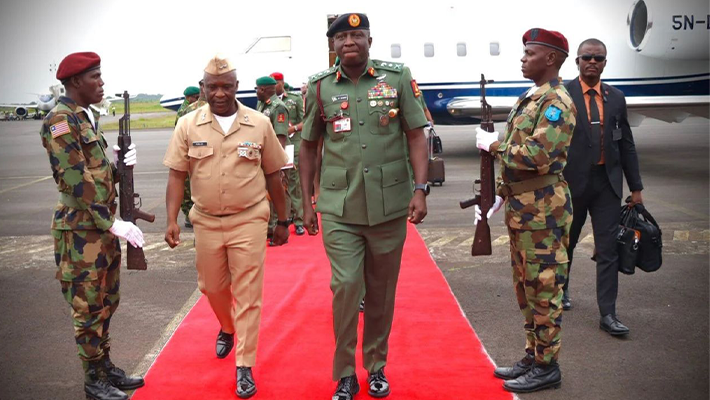
Nigeria’s Chief of Army Staff, Lieutenant General Waidi Shaibu, has arrived in Monrovia, Liberia, ahead of the country’s 69th Armed Forces Day celebrations, in a visit seen as a boost to defence diplomacy and regional security cooperation in West Africa.
The Nigerian Army said the visit followed a formal invitation by the Armed Forces of Liberia, with the main ceremony scheduled for Wednesday, February 11. Army spokesperson, Colonel Appolonia Anele, confirmed that General Shaibu was received on arrival with full military honours by the Chief of Staff of the Armed Forces of Liberia, Major General Davidson Forley.
According to the statement, the Nigerian Army chief inspected a guard of honour mounted by Liberian troops, a gesture that underscored the growing professional ties, mutual respect and long-standing defence collaboration between both countries.

During his stay in Monrovia, General Shaibu also paid a courtesy visit to the Nigerian Embassy, where he was welcomed by the Chargé d’Affaires, Ambassador Rahmat Muhammad. He commended embassy officials for their role in strengthening Nigeria–Liberia relations and for supporting Nigerians living and working in the country.
Read also:
- Army warns public against fake social media accounts impersonating Chief of Army Staff
- We’ll hold Benue killers accountable, Chief of army staff promises
- Chief of Army staff tasks clerks on professionalism, performance
Colonel Anele said the visit is aimed at deepening defence diplomacy, expanding bilateral military cooperation and reinforcing collective security efforts across the West African sub-region. She added that General Shaibu will take part in key events marking Liberia’s 69th Armed Forces Day, which traditionally highlights military heritage, operational achievements and the armed forces’ role in national development.
The Armed Forces Day celebration is also expected to provide a forum for high-level discussions among regional military leaders on peacekeeping, stability and coordinated responses to emerging security threats in West Africa, further positioning Nigeria as a central player in regional security architecture.