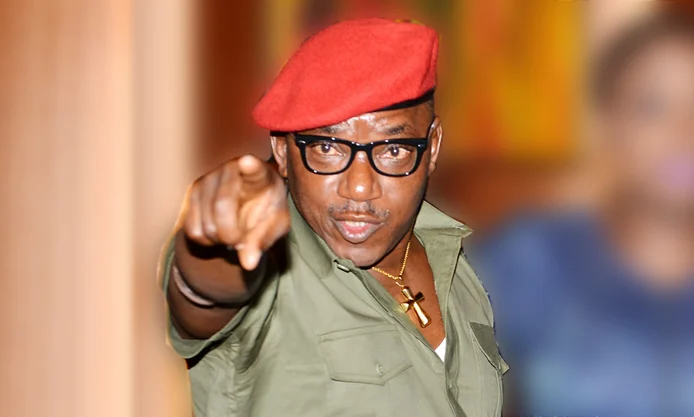
Former Minister of Youth and Sports, Solomon Dalung, has stirred controversy after boldly claiming that Nigeria has failed to qualify for the FIFA World Cup since his exit from office, a statement that has reignited debate over his record and the country’s football fortunes.
Speaking during an interview with journalists, Dalung defended his tenure and argued that the Super Eagles’ last appearance at the World Cup, the 2018 tournament in Russia, came under his watch. He insisted that the achievement remains unmatched in the years following his departure from the Sports Ministry.

Dalung stressed that Nigeria secured qualification for the 2018 World Cup without the heavy government intervention and financial backing that had characterised previous campaigns. According to him, earlier qualification efforts often relied on a presidential task force with massive funding, a structure he said was absent during his tenure.
He maintained that the Super Eagles qualified with a match to spare, describing the feat as evidence of effective administration rather than political influence or excessive spending. Turning to his critics, Dalung questioned why Nigeria has repeatedly fallen short of World Cup qualification since he left office, suggesting that his record speaks for itself.
Read also:
- Nimrod splashes N2.8m on Kaduna Volleyball talents, approves N30,000 monthly stipends for Elite players
- Rangers return to Champions League after 12 years
- AC Milan Leao confident ahead of Milan derby
The former minister went further to describe himself as Nigeria’s most successful Youth and Sports Minister, citing what he called lasting infrastructural achievements across the country. He pointed to the rehabilitation of long-neglected facilities at the Lagos National Stadium, including the national swimming pool, which he said had been abandoned for more than 20 years before being restored under his leadership.
Dalung also referenced the revival of the paralympic gymnasium and the indoor basketball court at the same stadium, presenting them as part of a broader effort to restore sporting infrastructure nationwide.
Beyond Lagos, he claimed responsibility for the initiation and completion of three national mini stadiums in Daura, Makurdi, and Kano, asserting that he was the only sports minister to complete projects he started within a single term.
Adopting a sarcastic tone, Dalung said he has come to terms with being labelled an underperformer by critics, despite what he described as tangible achievements and a World Cup qualification that Nigeria has yet to replicate.