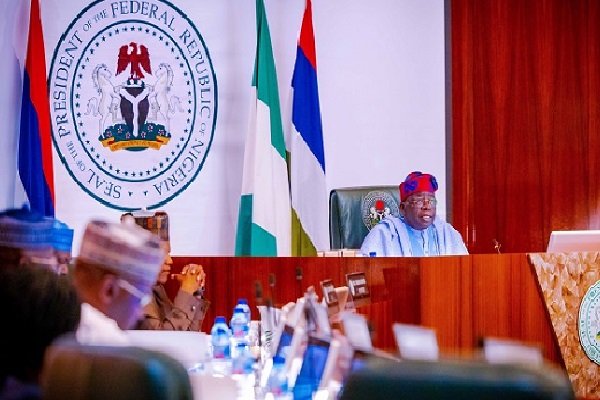
Nigeria’s National Economic Council (NEC), chaired by Vice President Kashim Shettima, approved the refinancing of the Nigerian National Petroleum Company Limited’s (NNPC Ltd) original $3.3 billion Project Gazelle oil-backed pre-export finance facility.

The new arrangement, dubbed Project Gazelle 2, totals $4.5 billion. It will clear roughly $1.5 billion still outstanding from the 2023 deal while unlocking an additional $3 billion in liquidity. Officials say the funds will strengthen external reserves and support fiscal priorities and infrastructure under President Bola Tinubu’s administration.
Finance Minister Taiwo Oyedele presented the case to NEC, stressing more favourable terms: pledged crude oil volumes dropped 12.5% from about 90,000 barrels per day (bpd) to roughly 78,750 bpd. This releases an extra 11,250 bpd for the federation to sell independently, lowering NNPC’s crude commitment while improving financing structures.
The original Project Gazelle, secured in 2023 largely via Afreximbank and structured through a special purpose vehicle, was designed as an emergency tool during severe dollar shortages, naira pressure, and early Tinubu-era reforms. It provided FX liquidity by pre-selling future crude. The refinancing comes amid ongoing efforts to attract investment, lift production, and manage fiscal strains.
The Case for Prudence
Supporters frame Gazelle 2 as sensible liability management. Refinancing existing debt on better terms, lower crude collateral for more liquidity, is standard practice when market conditions or a borrower’s position improve. Reducing the daily oil pledge frees barrels that can generate unrestricted revenue for the federation account. The extra $3 billion offers breathing room for reserves and capital projects without an equivalent increase in pledged production.
Oil-backed (or pre-export) financing has long been a tool for resource-rich countries facing limited conventional market access or high borrowing costs. In Nigeria’s context of FX scarcity and reform costs, accessing dollars against future production can bridge gaps more quickly than waiting for higher output or broader investor confidence.
Read Also:
Official statements emphasise optimisation of costs and structures rather than reckless new borrowing. The willingness of financiers to expand the facility suggests residual confidence in Nigeria’s production outlook despite past disruptions from theft, vandalism, and underinvestment.
If the improved terms materialise as described, lower effective burden, more free crude, and productive use of the new liquidity; the deal could ease short-term pressures and demonstrate better negotiating capacity after years of sector reforms.
Scepticism and Risk
Critics see continuity with a pattern of opaque, quasi-fiscal oil-backed deals that mortgage future production with limited public or legislative scrutiny. The original Gazelle faced sharp questions in 2024 from figures including former Vice President Atiku Abubakar over transparency, the Bahamas-registered SPV, repayment economics, National Assembly approval, and overall value.
Government and NNPC responses defended the structure as a forward-sale arrangement with conservative pricing assumptions and potential for faster repayment if oil prices rose, but the episode highlighted information asymmetries.
Broader concerns persist. Analyses of NNPC’s crude-backed facilities have pointed to hundreds of thousands of barrels per day pledged across multiple arrangements (Gazelle, Yield, Leopard and others), with states later demanding forensic audits of billions in such deals.
Critics argue these structures reduce inflows to the Federation Account, operate with inadequate disclosure, and create debt-like obligations without full parliamentary oversight. Forward sales can act like borrowing against future revenue, introducing production risk, price risk, and opportunity costs if oil is committed at terms less favourable than open-market sales.
NNPC itself has faced repeated governance questions, audits highlighting irregular payments, legacy liabilities, inter-company debts, and refinery-related issues, even as headline profits have improved in some periods.
Writing off large legacy obligations to the federation and expanding oil-collateralised facilities can look, to sceptics, like managing symptoms of deeper fiscal and operational weaknesses rather than curing them. Without granular public details on interest margins, full tenor, exact counterparties, strike prices, and how the new $3 billion will be tracked and spent, claims of “more favourable terms” remain difficult to independently verify.
In a country where oil revenue underpins budgets across federal, state, and local levels, committing future barrels carries intergenerational implications. If production disappoints or prices fall, repayment pressure intensifies. If the extra liquidity funds consumption or poorly executed projects rather than productive investment and reserve buffers, the net benefit erodes.
Historical patterns of opacity in Nigerian oil financing fuel legitimate worries that such deals can become vehicles for inefficiency or worse, even when individual transactions are not proven corrupt.
On available public information, the refinancing appears structured to improve on the 2023 terms by reducing the crude pledge while expanding liquidity, technically a step toward better liability management. That supports a “prudent” reading if execution matches the rhetoric and transparency improves.
Yet the broader context of limited disclosure around oil-backed facilities, past political controversy over Gazelle, state-level demands for audits, and NNPC’s governance record means the “corruption-laden” or at least high-risk characterisation cannot be dismissed out of hand.
Absence of evidence of outright graft in this specific approval does not equal robust accountability. True prudence would include full legislative scrutiny, independent audits of the original and new facilities, clear tracking of the new funds, and a strategy to reduce reliance on pledging future production.
Nigeria’s economic stabilisation requires both immediate liquidity tools and longer-term credibility. Gazelle 2 may deliver the former. Whether it advances the latter depends on transparency, results, and whether future barrels are treated as a strategic national asset rather than a revolving collateral pool.
The real test will be in the details that remain largely out of public view and in the impact on reserves, the naira, infrastructure delivery, and ordinary citizens’ welfare—the metrics Vice President Shettima himself highlighted.