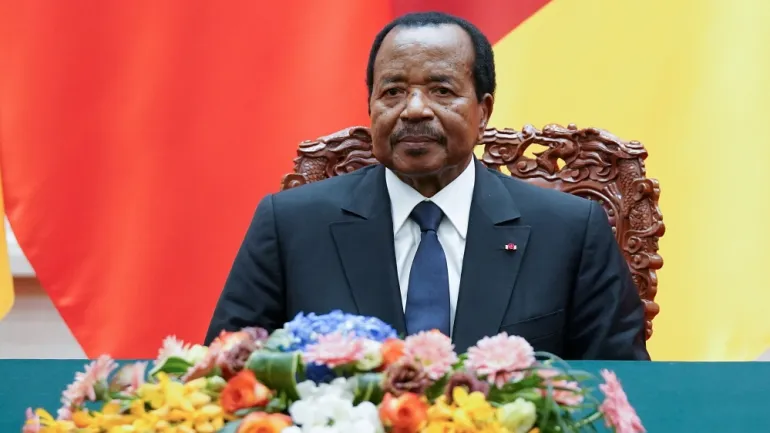
At 92, Cameroon’s President Paul Biya is once again seeking to extend his four-decade rule as the nation heads to the polls this Sunday. The world’s oldest sitting head of state, Biya appears determined to secure an eighth term in office, despite growing concern over his health and calls for political renewal.
Biya, who has governed since 1982, faces 11 opposition candidates, but their inability to unite has cast doubt on any real challenge to his power. Human rights groups have already questioned the credibility of the election, citing a long record of electoral fraud, intimidation, and media restrictions under his administration.

For most of Cameroon’s 7.8 million registered voters, Biya is the only leader they have ever known. Now in his tenth decade, questions about his fitness to lead have intensified, particularly after recent reports of declining health and frequent medical trips abroad.
Despite growing frustration over economic hardship, rising living costs, poor infrastructure, and limited access to healthcare and education, Biya continues to draw loyalty from some citizens who view him as a stabilizing force. “I still believe President Biya has something to offer,” said Giovanni, a 20-year-old student from Douala. “He’s a wise man with experience.”
Read also:
- FG commends Cameroon’s collaboration in fostering stability in West Africa
- Cameroon’s World Cup hopes hang in balance after stalemate with Eswatini
- Immigration arrest 85 Cameroonian, 5 Chadian illegal immigrants for cybercrime in Rivers
Biya’s campaign presence has been minimal. He recently made a rare appearance at a rally in Maroua, declaring, “My determination to serve you remains intact.” However, turnout was far below expectations, with only a few hundred attendees instead of the anticipated 25,000.
Since assuming power after the resignation of Ahmadou Ahidjo, Biya has consolidated control through constitutional changes, patronage networks, and the suppression of dissent. His previous electoral victories were marked by overwhelming margins, including 93 percent in 1997 and 71 percent in 2018, results widely disputed by international observers.
Analysts say the 2025 election is unlikely to bring change. “The electoral charade is unlikely to bring any reform but will instead reinforce the status quo,” said David Kiwuwa, of Nottingham University’s School of International Studies.
The vote comes amid armed conflict in Cameroon’s English-speaking regions, where clashes between separatists and government forces have disrupted daily life and are expected to depress voter turnout. Civic groups have vowed to monitor the polls independently, but the government has dismissed their involvement as an attempt to “manipulate public opinion.”
As Cameroon prepares for another election under Biya’s shadow, the question dominating public debate is whether the country’s aging leader will once again outlast his rivals, and how much longer the nation can endure under his unbroken rule.