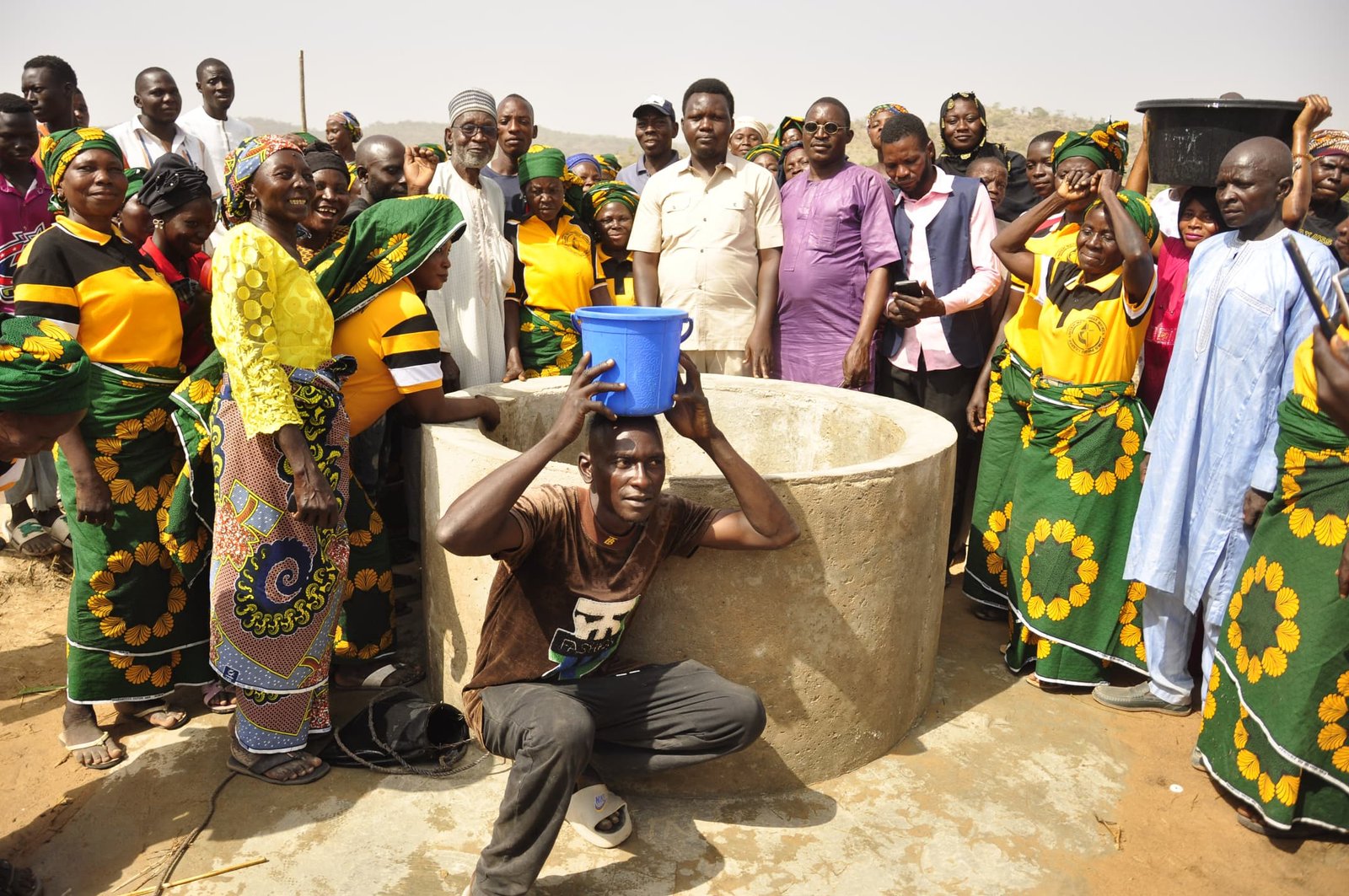
For the people of Piribi community in Kwanchi Ward, Karim II Constituency of Karim-Lamido Local Government Area, Taraba State, the long daily struggle for clean and safe water has finally come to an end. What was once a routine hardship has now turned into shared relief, renewed dignity, and fresh hope following the successful commissioning of a new community water well.
The commissioning ceremony, witnessed over the weekend, drew community leaders, women, youths, and stakeholders who gathered in quiet celebration of a project many described as long overdue. For residents, the well represents more than access to water; it signals a turning point in everyday life, health, and productivity.

Speaking at the event, the Special Assistant on Videography to the Governor of Taraba State, Jude Nuhu Gundale, expressed gratitude to Governor Agbu Kefas for the opportunity to serve under his administration. He said the appointment had given him a platform to give back directly to his people and address critical needs at the grassroots.
Read also:
- Police foil robbery attempt in Abuja, recover arms, vehicle
- NDLEA intensifies drug sensitization, surveillance in Delta
- Imo to honour 50 indigenes, friends at golden jubilee anniversary
Gundale described the water project as a clear reflection of the state government’s people-centred approach to governance, noting that true public service lies in delivering tangible impact to communities. He also commended the Member representing Karim II Constituency in the Taraba State House of Assembly, Anas Shuibu Didango, describing him as a responsive and committed lawmaker whose support for rural development continues to yield practical results.
As the ceremony progressed, attention shifted to the broader development agenda of the state. Gundale urged residents of Karim II Constituency and Taraba State to critically assess the leadership style, developmental strides, and grassroots-focused policies of both the governor and their representative as the 2027 general elections draw nearer.
Community leaders who spoke with our correspondent said the newly commissioned well has already begun to ease the burden on families, especially women and children who previously travelled long distances in search of water. They described the project as a restoration of dignity, improved public health, and a catalyst for better living conditions.
For Piribi community, the water well is not just infrastructure but a symbol of responsive governance and what targeted, community-driven interventions can achieve. Residents say it stands as evidence of a growing commitment by the Taraba State Government to prioritize practical projects that directly improve lives across rural communities.