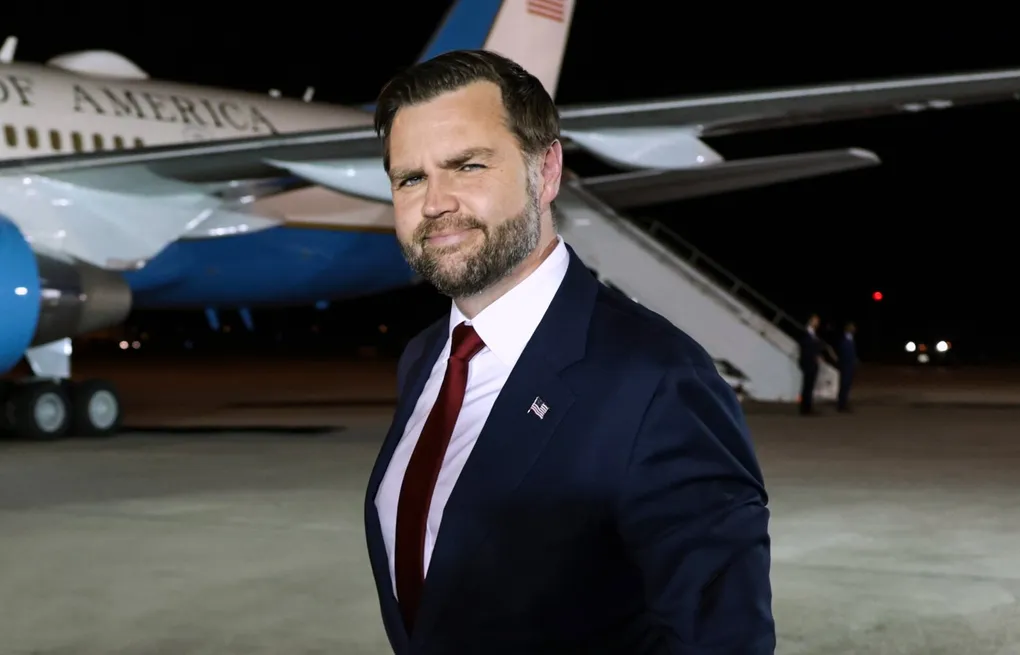
US Vice President JD Vance has warned Iran against attempting to “play” the United States as he departed Washington for high-stakes peace talks in Pakistan, even as diplomatic efforts intensify to stabilise a fragile ceasefire in the Middle East.
Speaking to reporters before boarding Air Force Two, Vance said he was “looking forward to negotiations” with Iranian officials expected to arrive in Islamabad for weekend discussions. He stressed that the United States remains open to engagement, but only if Tehran acts in “good faith.”

“We’re willing to extend an open hand if they are serious,” Vance said. “But if they try to play us, we won’t be receptive.”
The talks come under a conditional two-week ceasefire framework previously announced by US President Donald Trump, which is aimed at halting escalating hostilities involving Iran and Israel. However, uncertainty continues to cloud the agreement, with key details still unresolved.
US officials confirmed that Vance will lead the American delegation alongside special envoy Steve Witkoff and senior adviser Jared Kushner. Pakistani authorities have stepped up security in Islamabad, where checkpoints and paramilitary deployments have increased ahead of the expected arrival of foreign delegations.
Despite preparations, there has been no official confirmation that Iranian representatives have arrived in the capital.
A parallel diplomatic track is also being discussed involving Lebanon and Israel, though Beirut has indicated it will only engage in separate talks if a ceasefire is firmly in place. Confusion persists over whether Lebanon is included in the current ceasefire arrangement, with conflicting interpretations from mediators and key stakeholders.
Meanwhile, tensions remain high in the region. Israel has reported continued rocket fire from Hezbollah positions in southern Lebanon, prompting retaliatory strikes, even as the broader ceasefire framework is said to be in effect.
Analysts say the situation remains highly fragile, with competing narratives over the scope of the ceasefire and enforcement mechanisms.
Read also:
- U.S. Marine Daniel Montano fatally stabbed in Wilmington Street fight, Police response questioned
- Israel rejects Lebanon ceasefire calls, vows continued strikes as death toll rises
- Bill Gates Hiring Strategy: Explains why he hires ‘Lazy’ People for hard jobs to boost innovation
“This is a ceasefire in name only,” one security correspondent noted, pointing to ongoing strikes and unresolved political disagreements.
Economic repercussions are also emerging. European aviation authorities have warned that prolonged disruption in the Strait of Hormuz could trigger jet fuel shortages within weeks, potentially affecting global air travel and driving up costs for consumers.
The Strait, a vital oil shipping route, remains a key point of contention in the negotiations, with shipping activity still limited despite the ceasefire announcement.
As diplomatic delegations prepare for talks in Islamabad, global attention remains fixed on whether the negotiations can move beyond a fragile truce toward a lasting agreement—or whether the region risks sliding back into deeper instability.