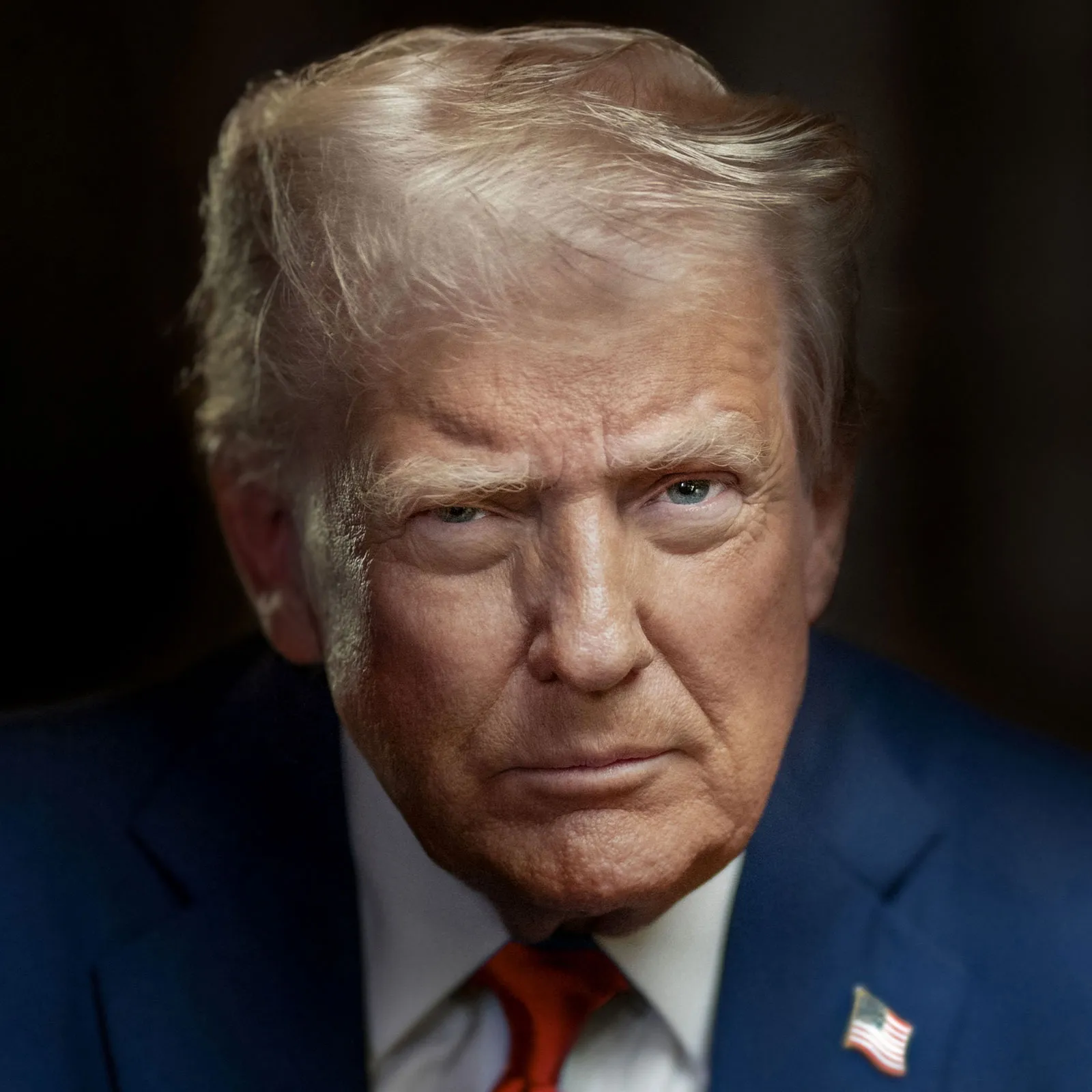
For President Trump, it’s decision time. Ten days ago, he said the US was prepared to go to the “rescue” of Iranian protesters if their government used violence against them.
The US was, the president said, “locked and loaded and ready to go.”

That was before the violent crackdown in Iran had really begun. Now, with its full extent being shockingly revealed, the world waits to see how Trump will respond.
“Nobody knows what President Trump is going to do except for President Trump,” White House Press Secretary Karoline Leavitt said.
“The world can keep waiting and guessing.”
Senior officials are due to brief the president on Tuesday on possible courses of action.
Speaking to reporters on Air Force One on Sunday, Trump said he was looking at “some very strong options.”
Flushed with success in Venezuela, the president described the capture of Nicolas Maduro as one of the most successful operations in US history.
The temptation to deploy the military must be considerable.
As events last summer demonstrated, the US is perfectly capable of mounting attacks from a distance.
B-2 stealth bombers flew 30-hour round-trip missions from Whiteman Air Force Base in Missouri to drop bunker-busting bombs on two of Iran’s most important nuclear sites.
Whether the US opts for more of the same or pinpoint attacks on elements of the regime responsible for the current repression, it is reasonable to assume Washington has a lengthy target list to draw on.
Pentagon officials, quoted by the BBC’s US partner CBS News, say the response could include a variety of other, more covert methods, including cyber operations and covert psychological campaigns intended to disrupt and confuse Iran’s command structures.
Read also:
- War Against Drug Abuse: NYCN urges community leaders to work with Pharmacies in Warri
- Army cautions against speculation as probe begins into death of teenage boy in Akwa Ibom
- Stop your actions or face the repercussions, defence minister warns sponsors, backers of terrorism, banditry
One scenario that can almost certainly be ruled out, however, is anything remotely resembling what unfolded in Caracas on January 3.
Even in its weakened state, and battered by recent American and Israeli strikes, Iran is not Venezuela.
The Islamic Republic is a battle-hardened regime. The removal of a single figure is unlikely to bend the entire country to Washington’s will.
Trump’s recent reference to Jimmy Carter’s disastrous 1980 attempt to rescue American hostages held in Iran also shows that he is aware of the pitfalls that could accompany any attempt to put US boots on the ground.
Eight American servicemen died when a helicopter and an EC-130 transport aircraft collided on the ground in Iran’s eastern desert.
That botched operation, coupled with the humiliation felt at the spectacle of hooded American hostages being paraded in front of cameras in Tehran, was a significant factor in Carter’s electoral defeat later that year.
“I don’t know that he would have won the election,” Trump told journalists from the New York Times last week, “but he certainly had no chance after that disaster.”