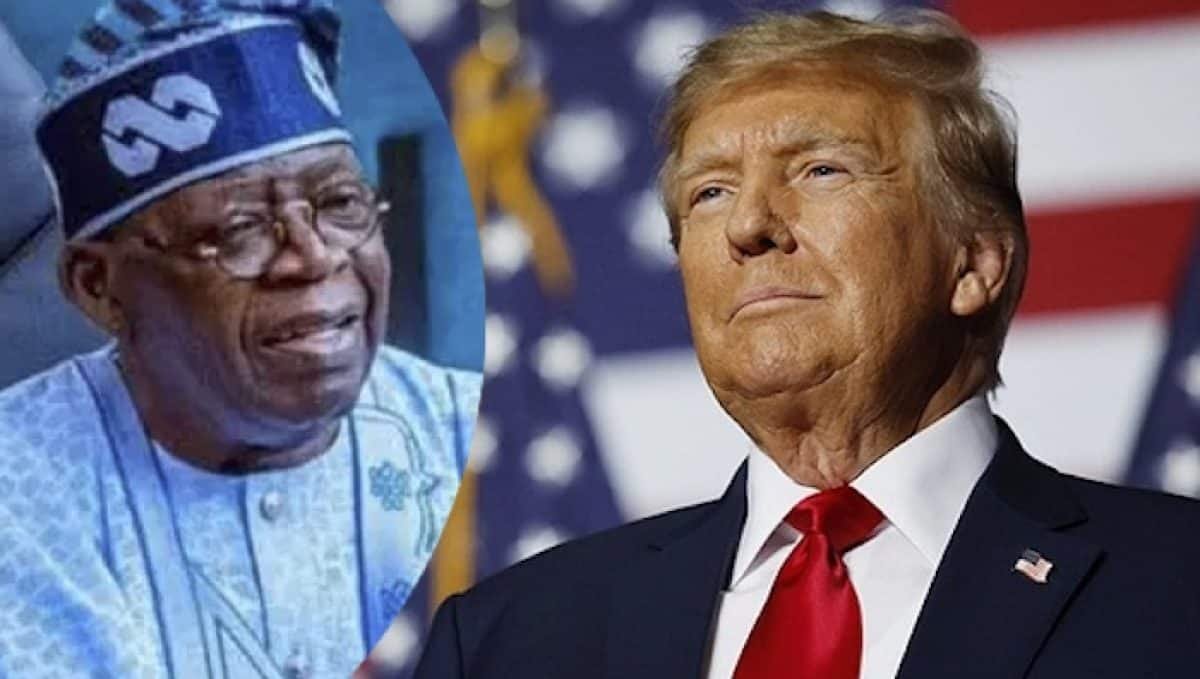
The United States has placed Nigeria on a list of countries facing partial travel restrictions, citing security challenges and visa overstay concerns, in a move that has reignited diplomatic and policy debates between both countries.
The decision was announced on Tuesday through a presidential proclamation released by the White House, updating America’s travel restriction framework for several countries. Nigeria was listed among 15 nations, most of them in Africa, affected by a partial suspension of entry into the United States. Others on the list include Angola, Benin, Côte d’Ivoire, Senegal, Tanzania, Zambia, and Zimbabwe.

According to the White House, Nigeria’s inclusion was driven by what it described as screening and vetting difficulties linked to insecurity and immigration compliance issues. The statement specifically referenced the activities of extremist groups such as Boko Haram and the Islamic State in parts of the country, arguing that their presence complicates identity verification and risk assessment for visa applicants.
US authorities also pointed to visa overstay figures as part of the justification. The White House said Nigeria recorded a B-1 and B-2 visitor visa overstay rate of 5.56 percent, while students and exchange visitors under F, M, and J visa categories had an overstay rate of 11.90 percent.
While Nigeria was placed under partial restrictions, several countries were subjected to full travel suspensions. Burkina Faso, Mali, and Niger were among those hit with complete entry bans, alongside South Sudan and Syria. The White House cited the presence and operations of terrorist organisations in those countries as the primary reason for the tougher measures.
Full travel restrictions already in place for nationals of Afghanistan, Haiti, Iran, Libya, Somalia, Sudan, Yemen, and several others remain unchanged. Laos and Sierra Leone, which previously faced partial restrictions, were upgraded to full bans. Turkmenistan, however, was removed from the list after what US officials described as significant improvements in identity management and information sharing.
Defending the decision, the White House said the president has a responsibility to protect Americans by ensuring that those seeking entry into the country do not pose security risks. It added that the restrictions were necessary in cases where the US lacks sufficient information to properly vet travellers or enforce immigration and counterterrorism laws.
The latest move follows months of growing tension over visa policy and security concerns between Washington and Abuja. In June, President Donald Trump signed an executive order imposing a full travel ban on nationals of 12 countries and heightened restrictions on seven others, though Nigeria was not included at the time. A 60-day window was given to affected countries to meet new security and documentation requirements.
Read also:
- Ghanaian president fires chief justice
- Ex-French president Sarkozy out of prison after 3 weeks
- How to deliver housing for low, medium income groups – AHCN President
Concerns over Nigeria’s status escalated later in the year amid claims by some US lawmakers and advocacy groups alleging widespread persecution of Christians. In October, Trump formally redesignated Nigeria as a country of particular concern, blaming radical Islamist violence for what he called mass killings.
On Monday, US congressman Riley Moore said Nigeria and the United States were close to finalising a strategic security framework aimed at combating terrorism. Moore, who recently visited Nigeria on what he described as a fact-finding mission, met with National Security Adviser Nuhu Ribadu and said security cooperation between both countries was improving.
Earlier this month, the US announced new visa restrictions targeting Nigerians accused of undermining religious freedom. Secretary of State Marco Rubio said the policy would affect individuals who knowingly authorise, fund, or carry out violations of religious rights, adding that Nigeria was among the countries covered by the measure.
This is not the first visa dispute between both nations in 2025. In July, the US embassy reduced the validity and entry allowance for most non-immigrant visas issued to Nigerians, limiting stays to three months with a single entry. The move was officially attributed to visa reciprocity concerns, though diplomatic sources said Nigeria’s refusal to accept asylum seekers from the US also played a role.
TheCable learnt that US officials had pushed for broader access to Nigeria’s visa system and criminal database, including electronic applications for long-term visas and cooperation on deportation of Nigerians with criminal records.
On Monday, Nigeria’s Minister of Foreign Affairs, Yusuf Tuggar, met with US Ambassador Richard Mills in Abuja. While details of the meeting were not disclosed, the US embassy said Washington looked forward to continued engagement with Nigeria on matters of mutual interest.