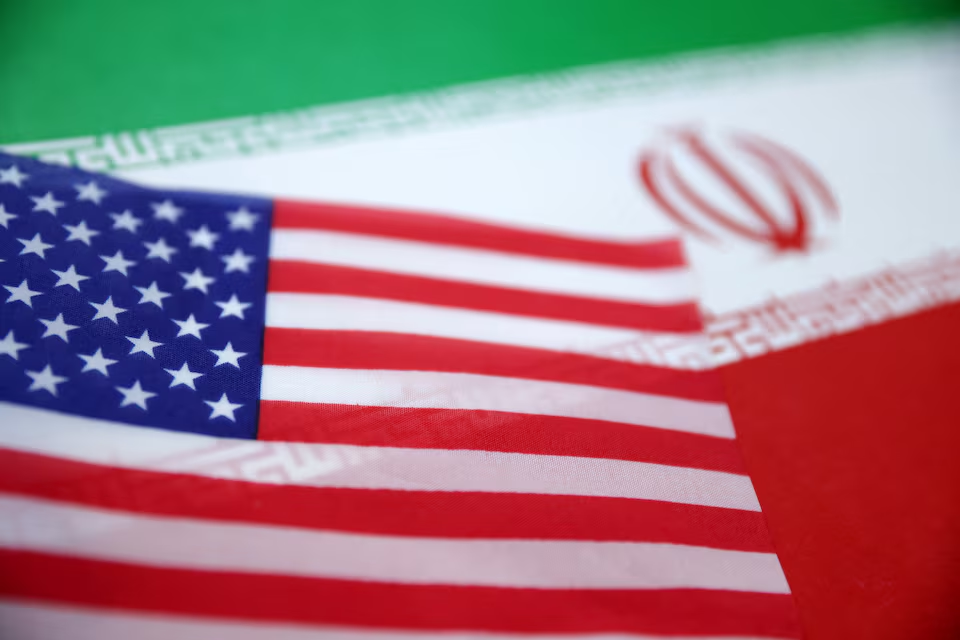
Iran and the United States will hold the latest round of talks in Geneva today aimed at resolving their longstanding nuclear dispute and averting new U.S. strikes on Iran following a large-scale military buildup.
The two countries renewed negotiations this month, seeking to break a decades-long impasse over Tehran’s nuclear programme, which Washington, other Western states, and Israel believe is aimed at building nuclear arms, an allegation Tehran denies.

U.S. Special Envoy Steve Witkoff and U.S. President Donald Trump’s son-in-law, Jared Kushner, will attend the indirect talks with Iran’s Foreign Minister Abbas Araqchi, a U.S. official told Reuters.
The meeting follows discussions in Geneva last week and will again be mediated by Oman’s Foreign Minister Badr Albusaidi.
Trump briefly laid out his case for a possible attack on Iran in his State of the Union speech on Tuesday, stressing that while he preferred a diplomatic solution, he would not allow Tehran to obtain a nuclear weapon.
He has deployed fighter jets, aircraft carrier strike groups, as well as destroyers and cruisers in the region, hoping to pressure Iran into concessions.
Read Also:
- Asia Stocks slide, Oil prices surge as Donald Trump warns Iran over nuclear deal
- Netanyahu to meet Trump as Iran nuclear talks reach critical stage
- Iran’s supreme leader warns of regional war if US attacks
While the talks will focus on Iran’s nuclear programme, U.S. Secretary of State Marco Rubio said Iran’s refusal to discuss its ballistic missile programme was a “major problem” that would have to be addressed eventually, as the missiles are “designed solely to strike America” and pose a threat to regional stability.
“If you can’t even make progress on the nuclear program, it’s going to be hard to make progress on the ballistic missiles as well,” Rubio told reporters in Saint Kitts late on Wednesday.
On Wednesday evening, Araqchi and Albusaidi discussed the proposals Iran will put forward to reach an agreement, according to a statement posted on X by Oman’s foreign ministry.
Albusaidi is scheduled to meet on Thursday morning with the U.S. negotiating team to convey Iran’s views and hear those of the United States, the statement added.
Oil prices inched up on Thursday as investors gauged whether U.S.-Iran talks could avert a military conflict that risks supply disruptions, though gains were capped by a build in U.S. crude inventories.
Saudi Arabia is increasing its oil production and exports as part of a contingency plan in case any U.S. strike on Iran disrupted supplies from the Middle East, two sources said on Wednesday.