US Central Command has said the blockade will “not impede” ships sailing through the Strait of Hormuz to or from other countries
Weekend peace talks between the US and Iran ended without a deal.
Trump said they failed because Iran wouldn’t “give up its nuclear ambitions,” while Iran’s foreign minister blames “shifting goalposts” from the US.
In response to the blockade, Iran’s parliament speaker said the country will not “surrender under threats” and the IRGC says any military vessels approaching the Hormuz strait will be “dealt with severely”
Iran’s armed forces have threatened to retaliate against the proposed US blockade of its ports, calling Washington’s threats illegal and describing them as an act of piracy.
In a statement published by the state IRIB news agency, Iran said it will continue to control the Strait of Hormuz, even after the war ends, and that enemy-affiliated vessels do not have the right to pass through Iranian territorial waters.
Meanwhile, the UK has said it will not be involved in enforcing the US military blockade of Iran, the BBC understands.
British naval ships and soldiers will not be used to block Iranian ports, while UK minesweepers and anti-drone capabilities will continue operating in the region.
A spokesperson for the UK government said: “We continue to support freedom of navigation and the opening of the Strait of Hormuz, which is urgently needed to support the global economy and the cost of living back home.”
The US Central Command (Centcom) later confirmed its forces would enforce the blockade “impartially” on vessels leaving and entering Iranian ports, including those located in the Arabian Gulf and Gulf of Oman.
Centcom added that US forces would not impede the freedom of vessels transiting to and from non-Iranian ports, and that additional information would be provided to commercial mariners via a formal notice before the blockade starts.
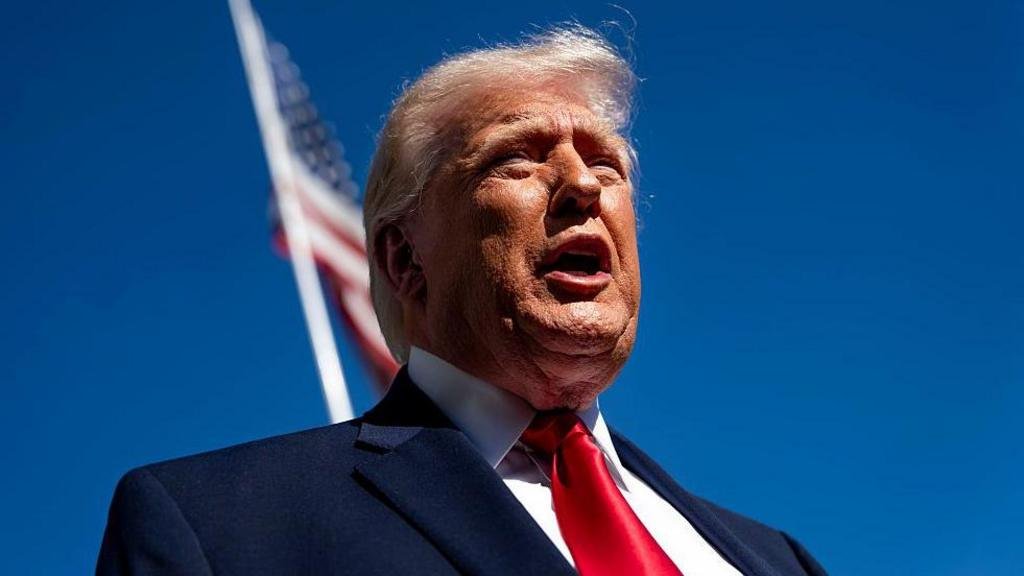
Trump told Fox News that other countries would be involved in blockading the strait, but did not say which ones.

US Central Command has said the blockade will “not impede” ships sailing through the Strait of Hormuz to or from other countries
Weekend peace talks between the US and Iran ended without a deal.
Trump said they failed because Iran wouldn’t “give up its nuclear ambitions,” while Iran’s foreign minister blames “shifting goalposts” from the US.
In response to the blockade, Iran’s parliament speaker said the country will not “surrender under threats” and the IRGC says any military vessels approaching the Hormuz strait will be “dealt with severely”
Iran’s armed forces have threatened to retaliate against the proposed US blockade of its ports, calling Washington’s threats illegal and describing them as an act of piracy.
In a statement published by the state IRIB news agency, Iran said it will continue to control the Strait of Hormuz, even after the war ends, and that enemy-affiliated vessels do not have the right to pass through Iranian territorial waters.
Meanwhile, the UK has said it will not be involved in enforcing the US military blockade of Iran, the BBC understands.
British naval ships and soldiers will not be used to block Iranian ports, while UK minesweepers and anti-drone capabilities will continue operating in the region.
A spokesperson for the UK government said: “We continue to support freedom of navigation and the opening of the Strait of Hormuz, which is urgently needed to support the global economy and the cost of living back home.”
The US Central Command (Centcom) later confirmed its forces would enforce the blockade “impartially” on vessels leaving and entering Iranian ports, including those located in the Arabian Gulf and Gulf of Oman.
Centcom added that US forces would not impede the freedom of vessels transiting to and from non-Iranian ports, and that additional information would be provided to commercial mariners via a formal notice before the blockade starts.
Trump told Fox News that other countries would be involved in blockading the strait, but did not say which ones.