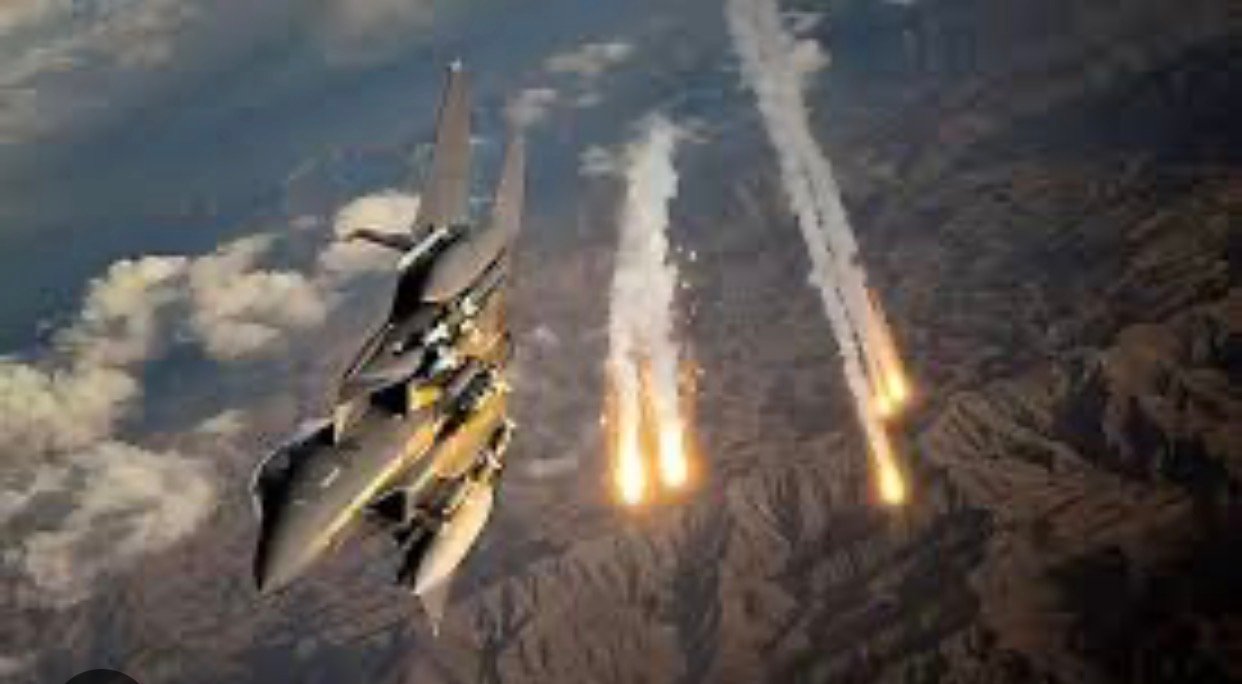
On Christmas Day 2025, the United States carried out targeted airstrikes against Islamic State militants in northwest Nigeria’s Sokoto State, a development that marked a sharp escalation in international counterterrorism involvement in the country. U.S. President Donald Trump announced the operation via social media, describing it as a decisive and deadly blow against ISIS elements he accused of orchestrating attacks on Christian communities.
The strikes, executed by the United States Africa Command in coordination with Nigerian security agencies, immediately reignited debate over Sokoto’s place in Nigeria’s long and complex security crisis. While some commentators described the state as the “headquarters” of terrorism in Nigeria, security analysts and regional reports suggest a more layered reality shaped by geography, criminal networks, and cross-border instability rather than a single command center.

Background on Terrorism in Nigeria
Nigeria has faced sustained insurgency for more than a decade, largely driven by Boko Haram and its offshoot, the Islamic State West Africa Province, which pledged allegiance to ISIS in 2015. These groups have historically concentrated their operations in the northeast, especially in Borno State, where bombings, mass abductions, and attacks on civilians, security forces, and religious sites have been frequent.
In recent years, violence has expanded into the northwest, affecting states such as Sokoto, Zamfara, and Katsina. This surge has been fueled by a dangerous mix of banditry, farmer herder conflicts, and the infiltration of jihadist factions exploiting weak border controls and poor governance. A key actor in this region is the Lakurawa group, believed to have links with ISIS Sahel Province and operating along the Nigeria Niger border.
Unlike the northeast, where insurgency is openly ideological, the northwest presents a hybrid threat where criminal enterprise overlaps with extremist agendas. Kidnapping for ransom, village raids, and extortion dominate the violence, complicating attempts to label any single location as the operational heart of terrorism in Nigeria.
The Christmas Day Airstrikes: What Happened?
According to U.S. and Nigerian officials, the Christmas Day operation targeted two ISIS camps in Tangaza Local Government Area of Sokoto State. Precision guided munitions were reportedly used, including Tomahawk missiles launched from a U.S. Navy platform offshore.
AFRICOM stated that multiple ISIS fighters were killed and said initial assessments showed no civilian casualties. Nigeria’s Minister of Foreign Affairs, Yusuf Tuggar, confirmed that the strikes were jointly coordinated, adding that Nigeria shared intelligence to ensure the operation did not occur without Abuja’s consent.
President Bola Tinubu was said to have approved the strikes, stressing that the targets were terrorists and not members of any religious group. Trump, however, framed the action largely as retaliation for attacks on Christians, accusing Nigerian authorities of failing to protect religious minorities. That claim was echoed by some U.S. lawmakers but strongly disputed by Nigerian officials and independent analysts, who note that some victims of northwest violence are Muslim villagers.
Reports of debris landing in parts of neighboring Kwara State, causing minor injuries and property damage, underscored the wide operational footprint of the strikes. U.S. officials later hinted that further action could follow, signaling deeper military cooperation between Washington and Abuja.
Is Sokoto the Headquarters of Terrorism in Nigeria?
The airstrikes revived long standing claims on social media and in activist circles that Sokoto functions as the nerve center of terrorism in Nigeria. These arguments often draw on the state’s historical role as the seat of the Sokoto Caliphate and cite incidents such as the 2022 killing of Christian student Deborah Samuel over alleged blasphemy.
Some commentators argue that Sokoto hosts administrative, funding, and coordination structures for extremist groups, pointing to documented ISIS linked camps and bandit enclaves in border communities. A Premium Times investigation detailed how insurgent groups operate in remote areas of the state, though it also showed that most victims are local Muslim populations.
Others suggest the U.S. strike was symbolic, aimed at weakening a perceived ideological stronghold rather than the traditional frontlines of insurgency in the northeast. Former Sokoto State governor Aminu Tambuwal has urged caution, warning that excessive reliance on foreign military power could undermine Nigeria’s long term security capacity.
This narrative remains highly contested. Federal officials and northern leaders reject claims that Sokoto is a terrorist headquarters, describing them as exaggerated and politically motivated. Security experts consistently note that the core leadership and operational base of Boko Haram and ISWAP remain in the Lake Chad basin.
Read also:
- UPDATE: U.S. Airstrike in Nigeria eliminates multiple ISIS Terrorists with no reported civilian casualties
- Many worshippers feared dead as IED explosion rocks Maiduguri mosque
- Fake Christmas Alert: Opay slams viral ₦5,000 giveaway claim, warns Nigerians of festive scammers
The Sultan of Sokoto, Muhammadu Sa’ad Abubakar III, has repeatedly condemned terrorism and distanced the caliphate from any form of extremism. International media outlets, including Al Jazeera, have reported the strikes as operations against ISIS targets in northwest Nigeria without endorsing claims that Sokoto serves as terrorism’s central command.
Human rights groups have also raised concerns about the risks of civilian harm, noting reports of secondary explosions at what were described as terrorist logistics sites, a reminder of the challenges of conducting air operations near populated communities.
Broader Implications and Responses
The strikes carry significant diplomatic and political consequences. While some Nigerians view them as a welcome reinforcement of counterterrorism efforts, others see them as a troubling breach of sovereignty that could inflame anti Western sentiment.
Local media have accused the federal government of playing down the scale of the operation, while international outlets emphasize the complexity of Nigeria’s security crisis, which involves jihadist groups, criminal gangs, and deep rooted socio economic problems. Critics argue that foreign military intervention does little to address poverty, governance failures, and unemployment, factors that continue to drive recruitment into armed groups.
U.S. officials maintain that ISIS affiliates in Africa pose a global threat and suggest further action remains on the table. Within Nigeria, reactions remain divided along regional and political lines, reflecting long standing tensions over security narratives and national unity.
The U.S. airstrikes in Sokoto highlight the growing international dimension of Nigeria’s fight against terrorism and the increasing focus on ISIS activity in the northwest. While claims that Sokoto is terrorism’s headquarters resonate in public debate, available evidence points to a fragmented and decentralized threat rather than a single command center.
As Nigeria deepens cooperation with international partners, the challenge will be to balance military action with policies that address root causes and protect civilians. The Christmas Day strikes may mark a turning point, but lasting security will depend on sustained local capacity, credible governance, and inclusive peace efforts across all regions of the country.