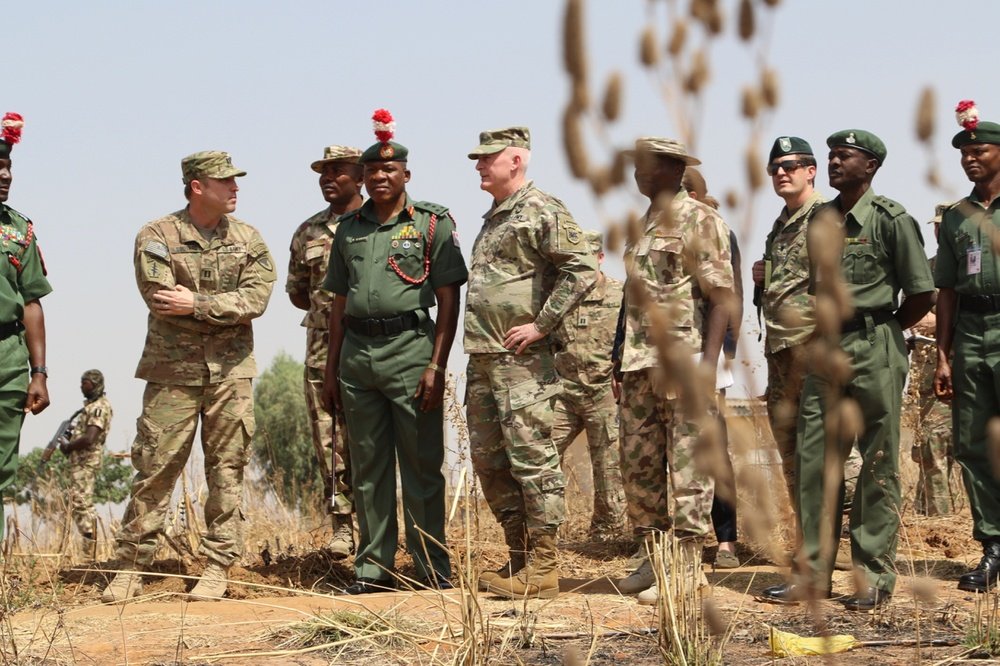

The arrival of United States military personnel in Nigeria marks a turning point in a long and complicated relationship shaped by years of insecurity, missed opportunities, and diplomatic caution. For many Nigerians, it is a moment that has been anticipated for more than a decade, tracing back to the administrations of former presidents Goodluck Jonathan and the late Muhammadu Buhari, when discussions around deeper U.S. military cooperation first gained momentum.
The urgency of such cooperation became clear between 2014 and 2018, as Boko Haram intensified its insurgency across Borno, Yobe, and Adamawa states. Entire communities were displaced, families were torn apart, and thousands of lives were lost. Survivors fled their ancestral homes, carrying trauma that continues to define daily life in the North-East. The insurgency crippled local economies, destroyed infrastructure, and left a generation struggling with loss and uncertainty.
Beyond the physical devastation, the conflict carried a deep religious dimension. Many Christians were reportedly forced to renounce their faith under threat of death. One of the most enduring symbols of this tragedy is Leah Sharibu, the Christian schoolgirl abducted during the Dapchi kidnapping. While others were released, Leah remains in captivity years later, reportedly because she refused to abandon her faith. Her case continues to resonate globally as a reminder of the human cost of terrorism.
During the height of the Boko Haram crisis, the United States offered various forms of military assistance to Nigeria, especially after the Chibok schoolgirls’ abduction in 2014. These offers included intelligence support, counter-terrorism training, and strategic advisory teams. However, relations between both countries deteriorated later that year after the U.S. declined to supply lethal weapons, citing human rights concerns. In response, the Jonathan administration suspended several U.S.-backed programmes, effectively freezing deeper military cooperation.
As a result, Washington shifted focus to supporting the Multinational Joint Task Force involving Chad, Niger, and Cameroon, while Nigeria’s direct engagement with the U.S. remained limited. This cautious stance persisted into the Buhari era, despite continued attacks by Boko Haram and its splinter groups. By 2020, growing concern in the United States over religious violence and civilian casualties led to Nigeria being placed on the U.S. list of Countries of Particular Concern for religious freedom violations.
President Bola Ahmed Tinubu’s administration has taken a different approach. His openness to international partnerships and renewed security cooperation has paved the way for the current U.S. military presence. While critics argue that the move reflects external pressure rather than independent policy, many Nigerians see it as a pragmatic response to years of unchecked violence and insecurity.
With U.S. military personnel now on Nigerian soil, expectations are high. Citizens hope the collaboration will strengthen intelligence gathering, improve counter-terrorism operations, and help restore a sense of safety in communities that have lived under fear for far too long. Whether this partnership delivers lasting peace remains to be seen, but for millions of Nigerians, it represents a renewed chance for stability, accountability, and finally, peaceful nights of sleep.