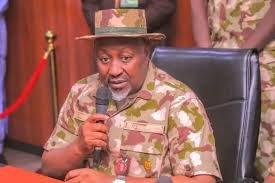
The departure of Defence Minister Mohammed Badarau Abubakar on Monday evening has stirred a fresh national debate. His resignation follows months of public criticism, ongoing allegations and a growing sense of unease about the direction of the nation’s security leadership.
Badarau had faced questions for a long period about his business dealings and the possible security implications of maintaining private interests while occupying a sensitive public office. His performance as Defence Minister had also been a source of concern among citizens who believed that the security challenges confronting the country were not being met with the urgency required. Some critics went further, raising claims that his activities could damage the Tinubu administration and complicate its plans ahead of the 2027 political season.
In April 2025, the Civil Rights and Anti-Corruption Network urged President Bola Tinubu to set up a special investigative panel to examine allegations of misconduct and conflict of interest linked to the minister. The organisation said that the fight against corruption must be conducted without favour and stressed that the government could not treat any official as exempt from scrutiny.
Read also:
BREAKING: Defence minister Mohammed Badaru resigns
Buhari swears in Muazu Sambo as Minister of State, Works/Housing
Policewomen to dorn headscarf, ear rings
The Young Guardians of Accountability later added their voice, accusing the minister of violating federal laws by keeping active business interests while in office. They alleged that he continued to run private companies, including a Bureau de Change, despite legal restrictions. Both groups warned that ignoring the complaints would weaken public trust in the government’s commitment to transparency.
CRACON noted that the public had been repeatedly assured that no official would be shielded. The group argued that failing to examine the allegations against Badarau with the same intensity applied to others accused of wrongdoing would give the impression that the anti-corruption campaign was uneven. They insisted that alongside investigations by the EFCC and ICPC, the Presidency should create a committee to ensure that the entire process was open and credible. The Defence Ministry, they said, holds responsibilities vital to national security and requires leadership that is free of doubt.
Despite the warnings, the Presidency chose not to confront the allegations directly. When the minister eventually resigned, the official explanation was that health concerns had forced his withdrawal from office. The announcement raised questions across the country and gave rise to widespread speculation that his exit was part of a managed political arrangement.
Reactions quickly spread across social media. Haruna Yaknan wrote that the development seemed expected and reasonable. Yusuf Ibrahim questioned why an individual with no basic security background had been appointed to such a demanding role. Another user, Nelson Abiodun, dismissed suggestions that the resignation was linked to international politics but argued that global military partnerships require capable and trusted figures at the top of Nigeria’s defence structure. He noted that America remains a central force in global security cooperation and that countries often align with partners they believe can deliver stable outcomes.
As the discussion widened, reports from The Trumpet suggested that the Presidency may be considering the former Chief of Defence Staff, General Christopher Musa, who was recently relieved of his duties. His name has now surfaced among those believed to be under consideration to replace Badarau.
The latest developments point to a significant moment for the Tinubu administration. With security concerns rising across several regions of the country, the next appointment to the Defence Ministry will be closely watched. Many Nigerians hope that the reshuffle signals a stronger and more focused response to the threats that continue to challenge the nation’s stability.