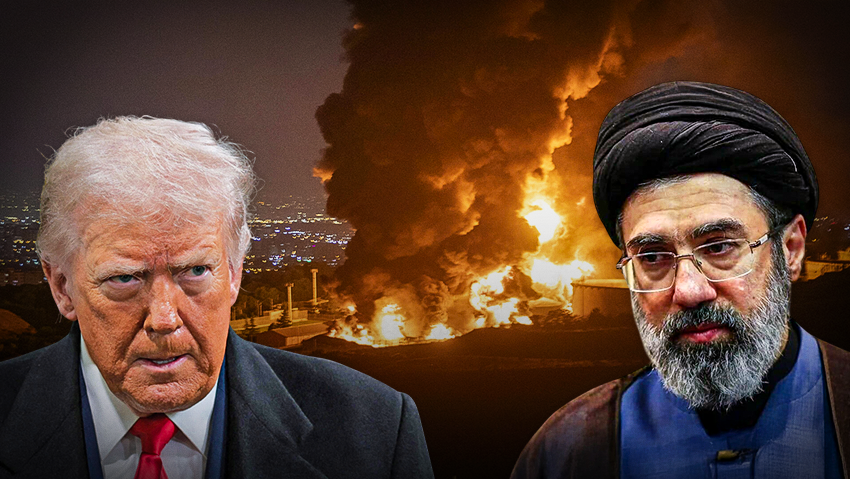
As the clock ran out on April 6, 2026, the ultimatum that had gripped global diplomacy for days expired without resolution. The warning, issued with characteristic bluntness by U.S. President Donald Trump, was stark: reopen the Strait of Hormuz or face consequences so severe that, in his own words, “all hell will rain down.”
Now, with no confirmed deal in place and tensions at their highest point in decades, the world finds itself suspended between escalation and restraint. The question is no longer whether the crisis is serious—it clearly is—but whether it is about to spiral into something far more destructive.
This is not merely another episode of brinkmanship in the Middle East. It is a convergence of military confrontation, economic vulnerability, and political miscalculation, unfolding at speed and with limited room for error.

The Anatomy of an Ultimatum
The expiration of the 48-hour deadline marks the culmination of a series of rolling threats and postponements. Initially framed as a 10-day pause on attacks targeting Iran’s energy infrastructure, the timeline shifted repeatedly as negotiations faltered and battlefield developments intensified.
What distinguishes this moment is not just the deadline itself, but the escalation in tone and substance. The ultimatum was not couched in diplomatic ambiguity. It was explicit, public, and tied to a concrete demand: Iran must reopen the Strait of Hormuz—a narrow but critical maritime corridor through which roughly 20 percent of global oil supply flows.
The strategic significance of the strait cannot be overstated. Any disruption reverberates instantly across global markets, energy supply chains, and geopolitical alignments. By linking military action directly to its closure, Washington effectively transformed a regional dispute into a global economic flashpoint. Yet Tehran has refused to yield.
Iran’s Calculated Defiance
Iran’s response has been neither conciliatory nor impulsive. Instead, it reflects a calibrated strategy of resistance shaped by both domestic imperatives and regional considerations.
Officials in Tehran have dismissed the ultimatum as coercive and illegitimate, framing it as an extension of what they describe as a broader campaign of aggression. Public statements from Iranian leadership have emphasized sovereignty, deterrence, and the willingness to absorb short-term costs in pursuit of long-term strategic autonomy.
But beyond rhetoric, Iran’s actions suggest a deliberate effort to signal capability without triggering uncontrollable escalation.
Missile strikes on Israeli territory, drone attacks targeting Gulf infrastructure, and continued interference with maritime traffic all serve a dual purpose: they demonstrate reach while avoiding a direct, large-scale confrontation with U.S. forces—at least for now.
This is a familiar pattern in asymmetric warfare. Iran is leveraging proxies, geography, and economic chokepoints to offset conventional military disadvantages. The closure—or partial closure—of the Strait of Hormuz is perhaps the most potent tool in this arsenal.
It is not merely a tactical move. It is strategic leverage.
The Military Dimension: Controlled Chaos
On the ground and in the air, the conflict has already crossed multiple thresholds.
Airstrikes have intensified across Iranian territory, with key infrastructure—industrial zones, transport nodes, and energy facilities—coming under repeated attack. Reports of casualties continue to mount, though precise figures remain difficult to verify in real time.
Iranian retaliation has been swift and dispersed. Ballistic missiles have struck urban centers in Israel, while drones have targeted installations across the Gulf. The geographic spread of these attacks underscores the regionalization of the conflict.
This is no longer a contained bilateral confrontation. It is a multi-theater conflict involving state and non-state actors, each with its own calculus and red lines.
One particularly telling development has been the downing of a U.S. fighter jet over Iranian territory and the subsequent rescue operation. Such incidents carry enormous escalation risk. The recovery of personnel in hostile territory often involves complex, high-risk missions that can quickly spiral if misjudged.
For now, both sides appear to be operating within a framework of “controlled chaos”—escalating incrementally while avoiding actions that would trigger an immediate, all-out war. But this balance is inherently unstable.
Economic Shockwaves: The Oil Factor
While missiles and airstrikes dominate headlines, the most immediate global impact of the crisis is economic.
The disruption of the Strait of Hormuz has sent oil markets into turmoil. Prices have surged past $100 per barrel, with volatility reflecting both actual supply constraints and speculative anxiety.
For energy-importing countries, the implications are severe. Higher fuel costs translate into inflationary pressure, currency instability, and fiscal strain. For developing economies already grappling with post-pandemic recovery challenges, the timing could hardly be worse.
Even for energy-exporting nations, the benefits of higher prices are offset by uncertainty. Prolonged instability threatens shipping routes, investment flows, and broader economic confidence.
The interconnected nature of global markets means that a localized disruption can have cascading effects. Supply chains tighten, insurance premiums rise, and risk assessments shift overnight.
In this sense, the Strait of Hormuz is not just a physical chokepoint—it is a systemic vulnerability.
Diplomacy on the Edge
Despite the escalation, diplomatic channels have not entirely collapsed. Backchannel negotiations involving regional intermediaries—reportedly including Pakistan, Egypt, and Turkey—continue to explore the contours of a potential ceasefire. A proposed 45-day truce has been floated, aimed at creating space for broader de-escalation.
However, the gap between the parties remains significant. For Washington, the reopening of the strait is non-negotiable. It is framed as a matter of global economic stability and freedom of navigation.
For Tehran, compliance without concessions would be politically untenable. Iranian officials have hinted at conditions, including compensation for war-related damages and guarantees against future attacks.
These positions are not easily reconciled.
Moreover, trust is in short supply. Previous ceasefires in the region have often proven fragile, with violations and unilateral actions undermining their credibility. Iran, in particular, appears wary of entering into agreements that could leave it vulnerable to renewed strikes. This skepticism complicates mediation efforts.
The Role of External Powers
The crisis has also drawn in external actors, each seeking to shape outcomes in line with their strategic interests.
Russia has called for restraint and a return to negotiations, while reportedly evacuating personnel from sensitive sites in Iran. Its position reflects both concern over escalation and a desire to maintain influence in the region.
European powers, though less vocal, are likely engaged in quiet diplomacy, balancing alliance commitments with economic interests.
China, heavily dependent on Middle Eastern energy supplies, has a strong incentive to push for stability, though its approach tends to favor behind-the-scenes engagement over public intervention.
The involvement of these actors adds another layer of complexity. While they may act as stabilizing forces, their competing interests can also complicate consensus-building.
The Rhetoric Factor
One of the defining features of this crisis has been the intensity of political rhetoric.
Statements from both sides have been unusually blunt, even by the standards of contemporary geopolitics. The language of “hell,” “obliteration,” and “war crimes” reflects not just anger but a strategic choice to communicate resolve.
However, such rhetoric carries risks. It narrows the space for compromise, raises domestic expectations, and increases the likelihood of misinterpretation. In high-stakes environments, words can be as consequential as actions.
Leaders may find themselves boxed in by their own statements, compelled to follow through on threats to maintain credibility. This dynamic is particularly evident in the current standoff.
Read also:
- Trump issues fresh warning to Iran over the Starit of Hormuz
- US will leave Iran in 2 to 3 weeks, Trump says
- Trump tells the UK, other nations to get their oil from Strait of Hormuz
What Comes Next?
With the deadline expired, the immediate future hinges on a series of critical decisions.
One possibility is a limited but highly visible military strike by the United States, aimed at demonstrating resolve without triggering full-scale war. Such an action could target specific infrastructure, such as energy facilities or military installations.
Another scenario involves a last-minute diplomatic breakthrough, facilitated by intermediaries and driven by mutual recognition of the risks of escalation.
A third, more concerning outcome is a gradual slide into broader conflict, marked by escalating tit-for-tat actions, widening geographic scope, and increasing casualties.
Each path carries its own risks and uncertainties. What is clear is that the margin for error is shrinking. A World Holding Its Breath. As the situation stands, the world is in a state of suspended anticipation.
Financial markets are volatile. Governments are issuing travel advisories and contingency plans. Military forces across the region are on heightened alert.
Yet, despite the intensity of the moment, there is also a sense of déjà vu. The Middle East has seen crises before—moments when escalation seemed inevitable, only for diplomacy to intervene at the last possible moment. Whether this will be one of those moments remains uncertain.
Between Threat and Reality
The expiration of the 48-hour ultimatum does not, in itself, determine the course of events. It is a marker—a point in time that underscores the seriousness of the situation.
What happens next will depend on choices made in Washington, Tehran, and capitals across the world.
Will threats translate into action? Will diplomacy regain momentum? Or will the crisis evolve into a conflict of far greater magnitude?
For now, the answers remain elusive. But one thing is certain: the stakes are extraordinarily high, and the consequences of miscalculation could be profound.
In this precarious balance between restraint and escalation, the world waits—watchful, wary, and acutely aware that the next move could change everything.