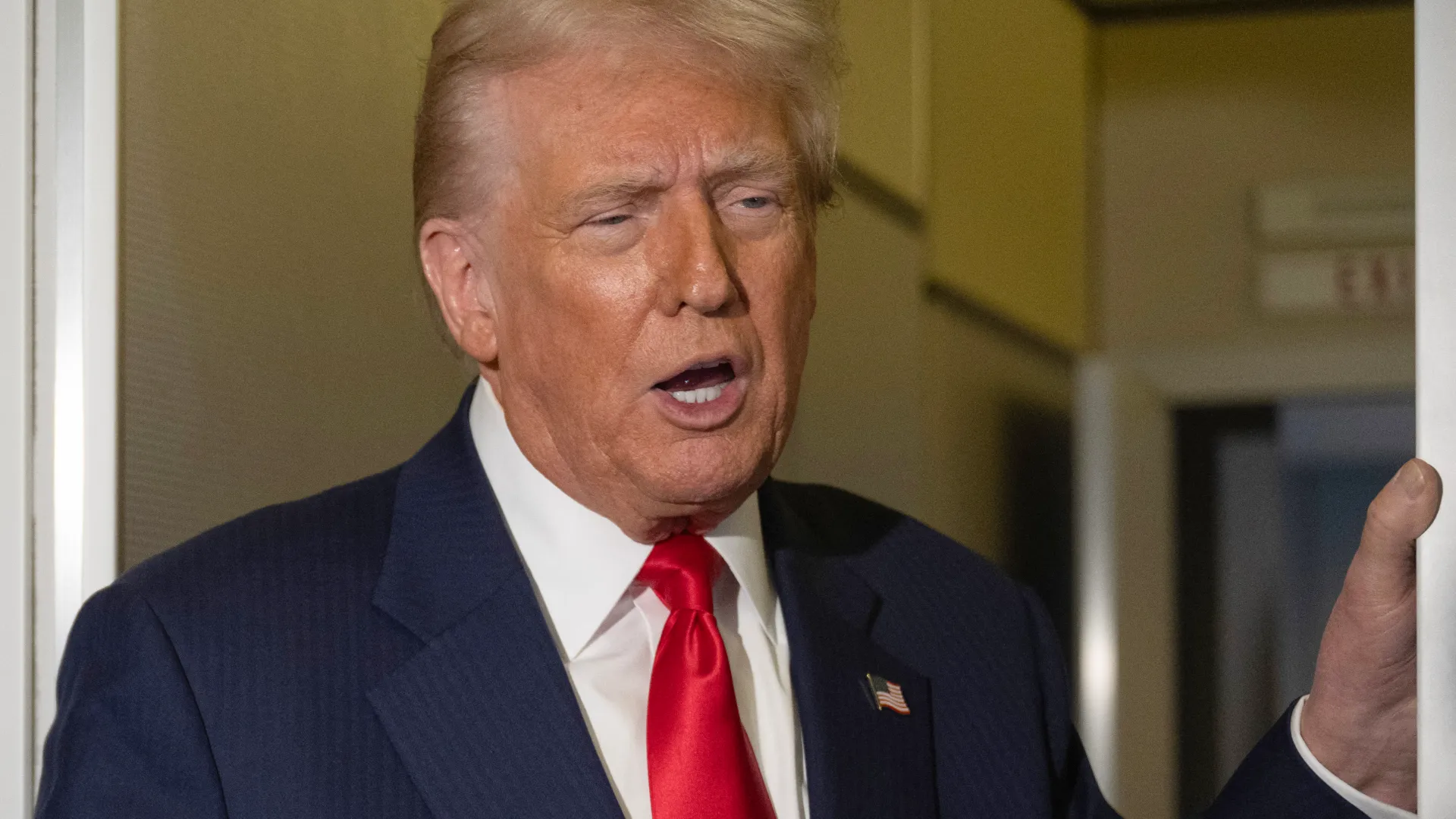
United States President Donald Trump has issued a fresh warning that American air strikes in Nigeria could continue if the killing of Christians does not stop, a statement that has reignited international debate over religion, security, and foreign military intervention in Africa’s most populous nation.
Trump made the remarks while speaking with reporters on Thursday, responding to questions about the US military air strike carried out in northwest Nigeria on Christmas Day. The strike, according to the US military, targeted Daesh militants and was executed at the request of the Nigerian government.

While Nigerian authorities described the operation as a joint counterterrorism effort against armed groups, insisting it was not directed at any religious community, Trump framed the issue differently. He suggested that future strikes would depend on the fate of Christians in the country.
“I would prefer it to be a one-time strike. But if they keep killing Christians, it will become a repeated action,” Trump was quoted as saying, a comment that has drawn sharp reactions both locally and internationally.
Pressed on claims by his Africa adviser that extremist groups such as Boko Haram and Daesh have killed both Muslims and Christians in Nigeria, Trump acknowledged that Muslims are also victims of violence but maintained that Christians bear the brunt of the attacks. “I believe Muslims are also being killed in Nigeria, but the majority are Christians,” he said.
Read Also:
- Trump Warns Republicans: Win 2026 Midterms or I get impeached
- Trump’s Housing Revolution: Banning corporate giants from single-family homes, restoring American dream
- Trump orders US withdrawal from 66 international organisations, says they no longer serve American interests
Nigeria, with a population exceeding 230 million people, is almost evenly divided between Christians, who are predominantly in the south, and Muslims, who are mainly in the north. The country has for years battled insurgency, banditry, kidnappings, and communal violence, particularly in northern and central regions.
Despite these challenges, successive Nigerian governments have consistently rejected claims of systematic persecution of Christians. Officials argue that extremist groups target civilians regardless of faith and that both Muslims and Christians have suffered heavy casualties.
Foreign Affairs Minister Yusuf Tuggar recently confirmed that intelligence provided by Nigeria supported the Christmas Day strike, describing it as part of an ongoing collaborative effort with the United States. He stressed that the operation was purely security-driven and not motivated by religion.
“It is an ongoing situation,” Tuggar told journalists when asked whether additional US strikes were expected. He added that the action should be clearly understood as a joint counterterrorism operation and not one aimed at protecting or attacking any religious group.
Trump’s comments followed his earlier description of the air strikes as a “Christmas present” to Daesh, a remark that drew attention to the symbolic timing of the operation and further fueled controversy around Washington’s growing military role in Nigeria’s internal security crisis.