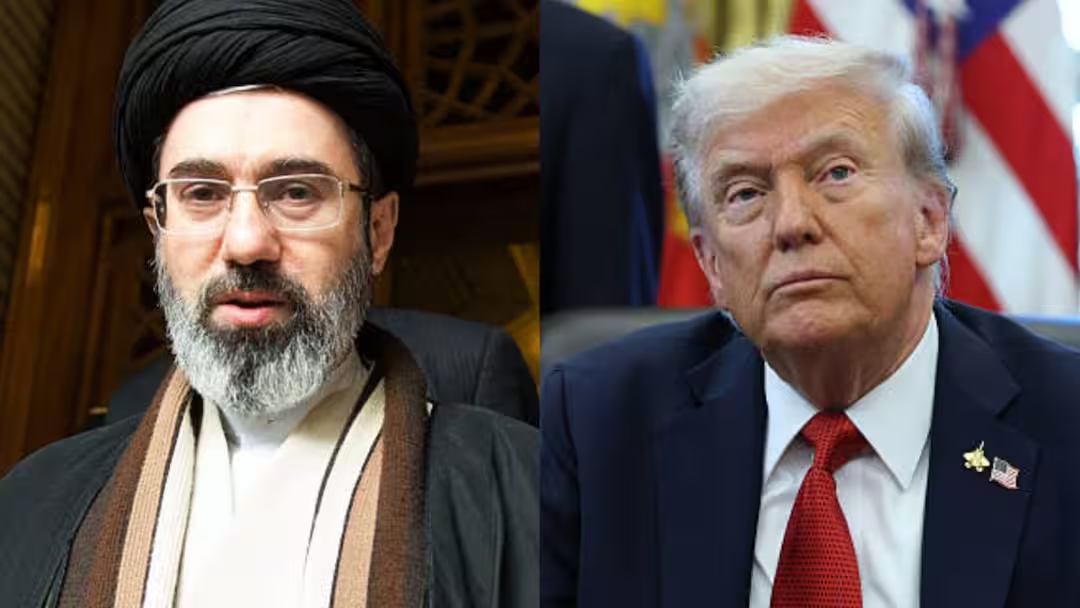
U.S. President Donald Trump has said he believes Iran’s newly appointed supreme leader, Mojtaba Khamenei, is still alive but may have been seriously affected by recent developments linked to the ongoing conflict involving Iran, Israel and the United States.
Trump made the remark during an interview on The Brian Kilmeade Show on Fox News, where he spoke about the latest developments in the escalating war in the Middle East. According to Trump, while there is uncertainty surrounding the Iranian leader’s condition, he believes Khamenei remains alive.

“I think he probably is alive. I think he is damaged, but I think he’s probably alive in some form,” Trump said during the interview broadcast on Thursday.
The comments come days after Mojtaba Khamenei was selected as Iran’s new supreme leader by a clerical assembly following the reported death of his father, Ali Khamenei, who had led the country for decades before being killed during the first day of the conflict between the United States, Israel and Iran.
Read Also:
- Trump will welcome Iran at the World Cup – Infantino
- Oil prices dip to $90 as Trump says Iran war is ahead of schedule, will end soon
- Trump honors fallen Soldiers as first US Troops killed in Iran War return home
Since his selection on Sunday, Mojtaba Khamenei has not appeared publicly. His first remarks were delivered through a televised statement read by a presenter on Iranian state television, raising questions about his whereabouts and health.
In the statement, the new Iranian leader vowed that Iran would maintain the closure of the strategic Strait of Hormuz, a vital shipping route for global oil supplies. He also warned neighbouring countries hosting U.S. military bases to shut them down or face potential retaliation from Iran.
The war began on February 28 when the United States and Israel launched coordinated attacks on Iranian targets. Iran has since responded with missile and drone strikes targeting Israel and several Gulf states that host American military installations.
As the conflict moves toward the two-week mark, the fighting has reportedly resulted in thousands of casualties and triggered volatility across global financial markets. Leaders in Tehran, Washington and Tel Aviv have continued to exchange strong warnings, signalling that neither side is ready to back down.
Security analysts warn that the continued escalation could further disrupt global energy supplies, particularly if tensions around the Strait of Hormuz intensify.