The United States has urged the Nigerian government to do more to protect Christians following a series of violent attacks and mass kidnappings, as senior officials from both countries met in Abuja on Thursday for high-level security talks.
The call came amid renewed diplomatic pressure from Washington, with the administration of US President Donald Trump framing the violence as targeted persecution of Christians, a claim disputed by Nigerian authorities and several independent analysts.

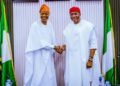
Speaking during the meeting, Allison Hooker, the US State Department’s Undersecretary for Political Affairs and the most senior American official to visit Nigeria under the Trump administration, said Abuja must strengthen efforts to safeguard Christian communities and guarantee their right to worship freely and safely. Her remarks referenced the recent abduction of more than 170 people from multiple churches in Kaduna State.
“The Nigerian government must enhance its efforts to protect Christians and ensure their right to practice their faith freely and safely,” Hooker said in prepared remarks to the Nigerian delegation.
The comments followed Sunday’s mass kidnapping in Kaduna, the latest in a wave of abductions linked to armed groups commonly described as bandits. The incident sparked controversy after police initially denied that any attack had occurred, drawing criticism from local leaders and rights groups.
Hooker’s remarks did not reference Muslim victims of violence, despite Nigeria’s complex security challenges affecting communities across religious lines. Nigeria has been under sustained scrutiny from Washington, with Trump previously describing the situation as “genocide” against Christians and at one point threatening unilateral military action.
The Nigerian government has rejected that characterisation, arguing that insecurity in the country cuts across religion and ethnicity. Analysts also note that banditry in the northwest, jihadist insurgency in the northeast, and communal conflicts in central Nigeria have affected both Christians and Muslims.
Read also:
- Trump signs controversial “Board of Peace” deal in Davos, touts global conflict resolution role
- Breaking: Federal High Court removes Abure Labour Party national chairman
- Renewed Israeli Airstrikes in Southern Lebanon raise fears of ceasefire collapse
Still, Hooker’s focus on Christian victims signals that Abuja may need to carefully manage Washington’s priorities as both countries deepen security cooperation. The talks follow joint counterterrorism operations carried out late last year.
“We are here to explore ways to collaborate in preventing violence against Christian communities,” Hooker said, adding that US priorities include combating terrorism, investigating attacks, holding perpetrators accountable, and reducing killings, forced displacement, and abductions of Christians in north-central Nigeria.
Nigeria continues to battle multiple armed threats. Bandit groups regularly raid villages and kidnap residents for ransom in the northwest, while a jihadist insurgency that began in 2009 has destabilised the northeast. In the central region, long-running clashes between largely Christian farming communities and Muslim Fulani herders persist, though experts say these conflicts are driven mainly by land and resource pressures rather than religion.
The renewed US pressure comes months after another high-profile kidnapping at St Mary’s Catholic school in Niger State, where more than 250 students were abducted. On Thursday, Hooker inaccurately stated that all victims of that attack were Christians, later noting that the Nigerian government had recently secured the release of 38 Christians.
As security talks continue in Abuja, observers say Nigeria faces the challenge of strengthening cooperation with the United States while pushing back against narratives that oversimplify a deeply complex national security crisis.