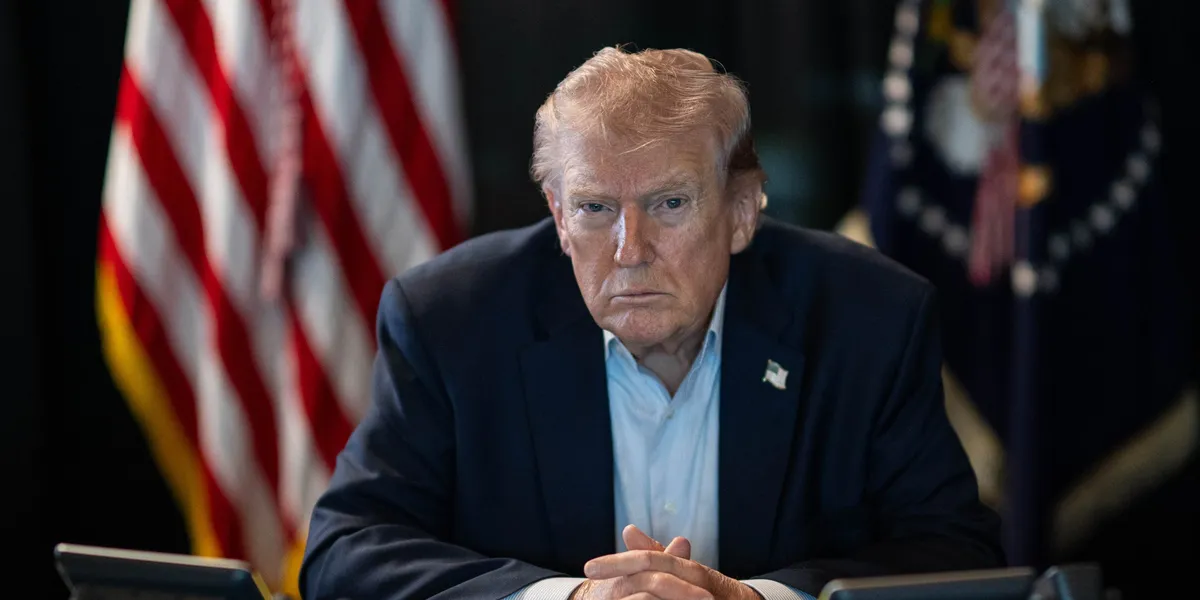
U.S. President Donald Trump has announced plans to impose a sweeping naval blockade on the Strait of Hormuz following the collapse of high-level negotiations between Washington and Iran in Islamabad.
In a forceful statement, Trump said the United States Navy would begin blocking vessels attempting to pass through the critical shipping corridor, marking a major escalation in tensions across the Middle East.
The Strait of Hormuz remains one of the world’s most important energy transit routes, with about one-fifth of global oil and gas supplies moving through it each day. Analysts warn that any disruption could trigger immediate shocks to international energy markets and global trade.

The decision follows nearly 20 hours of failed negotiations between U.S. and Iranian officials. President Donald Trump blamed the breakdown on Tehran’s refusal to abandon its nuclear programme, stating that while progress was made on several issues, the central dispute remained unresolved.
U.S. Vice President JD Vance, who led the American delegation, said Washington had presented its “best and final offer,” but Iranian officials declined to accept the terms.
Iran’s chief negotiator, Mohammad Bagher Ghalibaf, accused the United States of failing to build trust, pointing to past conflicts as a major barrier to agreement.
Trump also revealed that U.S. forces had been directed to intercept vessels suspected of paying tolls to Iran and to remove naval mines allegedly deployed in the waterway. He warned that any attempt to challenge U.S. or allied ships would be met with decisive military action.
Read also:
- Strait of Hormuz Oil route shut down despite ceasefire, global shipping, energy markets disrupted
- Iran accuses U.S. of ceasefire violation as tensions rise over Strait of Hormuz
- UAE backs US-led coalition to protect Strait of Hormuz as tension rises in Iran
The move has heightened fears of a wider military confrontation, with regional and global powers closely monitoring developments. The United Arab Emirates has already cautioned that restricting access to the strait could threaten global energy supplies, food security, and economic stability, stressing that the route remains an international waterway.
Tensions across the region continue to rise, with reports of ongoing conflict involving Israel and southern Lebanon, alongside increasing casualties in Iran since hostilities escalated earlier this year.
Despite the diplomatic setback, observers believe back-channel talks could still resume, particularly if current ceasefire efforts hold. However, with the United States moving toward a naval blockade, uncertainty now clouds the prospects for de-escalation.