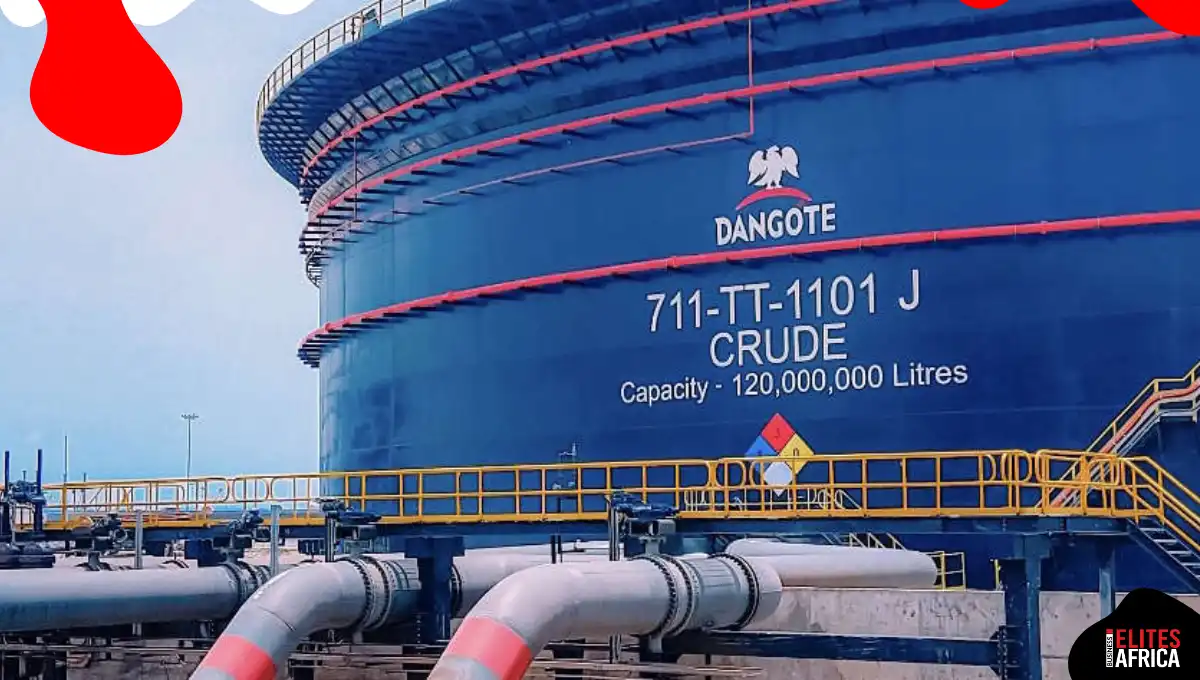
President of the Dangote Group, Alhaji Aliko Dangote, has dismissed claims that the United States, under President Donald Trump, is opposed to the operations of the Dangote Petroleum Refinery, saying the American leader is “more than happy” with the facility.
Dangote said the U.S. is, in fact, a major beneficiary of the refinery’s operations, as it remains one of the largest suppliers of crude oil to the 650,000 barrels-per-day facility.

Speaking on Sunday during a press briefing at the Dangote Petroleum Refinery in Lekki, Lagos State, the billionaire industrialist explained that Nigeria’s inability to produce sufficient crude oil has compelled the refinery to rely heavily on imports from the United States, Ghana and other African countries.
“We are not getting enough crude locally, which is why we buy from Ghana and a few other African countries. We also buy from the U.S.,” Dangote said.
He described the United States as one of Nigeria’s major crude oil suppliers and rejected suggestions that Washington is uncomfortable with the refinery or its funding structure.
Read also:
- ‘Farouk Must Go’ Protest enter day two in Abuja over NMDPRA CEO $5m Scandal
- FG provides VIP team shelter in Abuja Stadium
- Shareholders laud NASCON over impressive performance
“The U.S. has been one of our major suppliers of crude. So when people say President Trump is not happy with our refinery, that is not true. Trump is more than happy with our refinery because of the sheer scale of business involved,” he said.
Dangote disclosed that Nigeria currently imports no fewer than 100 million barrels of crude oil annually from the United States, adding that the figure could rise to about 200 million barrels per year if supply volumes are increased.
He also revealed that Nigeria exports aviation fuel and gasoline to the U.S., underscoring what he described as a mutually beneficial energy trade relationship between both countries.
Dangote reiterated that despite Nigeria being Africa’s largest oil producer, domestic crude supply remains insufficient to meet refining demand, a situation he said must be urgently addressed to maximise the benefits of local refining and reduce dependence on imports.