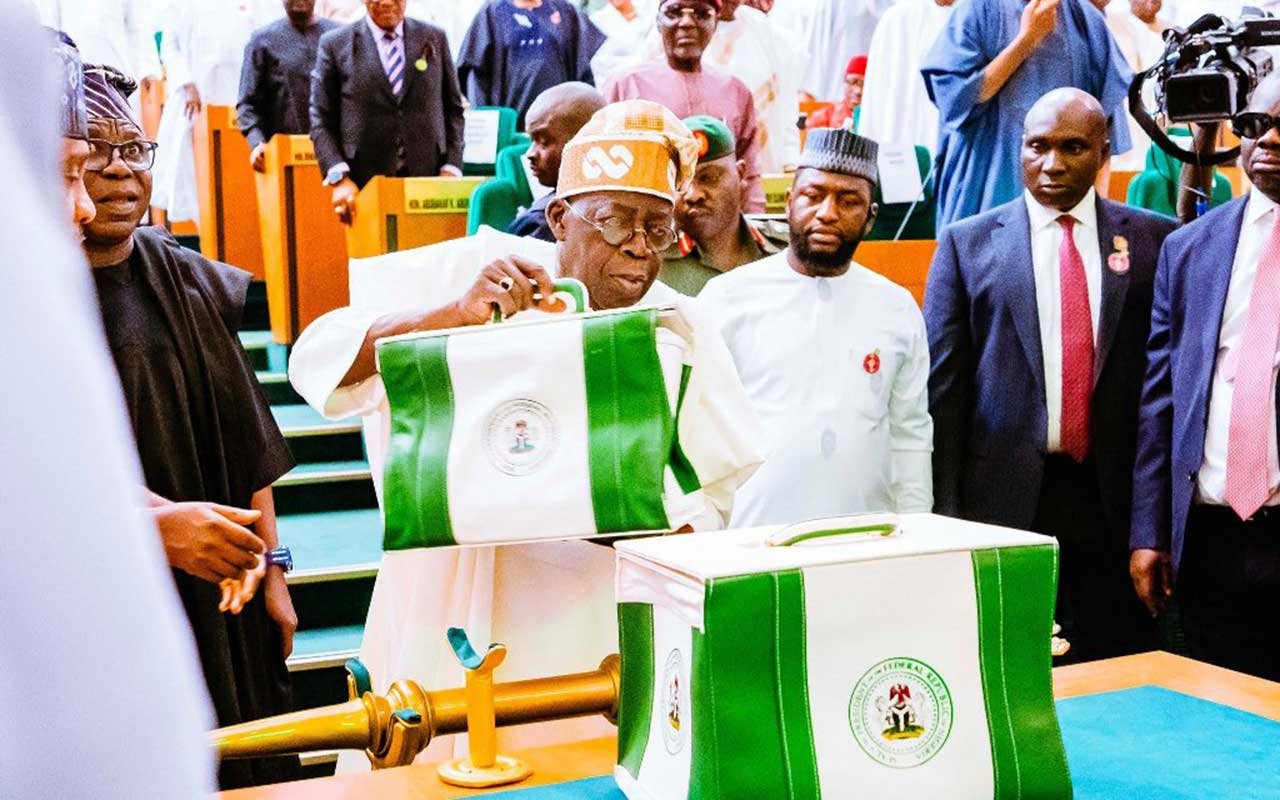
President Bola Ahmed Tinubu has transmitted the 2026 statutory budget proposal for the Federal Capital Territory Administration to the Nigerian Senate for legislative consideration and approval.
The proposal was presented during plenary on Tuesday following the resumption of the National Assembly of Nigeria from a three-week recess. Senate President Godswill Akpabio read the president’s letter to lawmakers, formally notifying the chamber of the executive’s request for approval of the spending plan for the Federal Capital Territory.
Under Nigeria’s constitutional arrangement, the National Assembly exercises legislative oversight over the finances of the Federal Capital Territory. As a result, the budget must receive approval from both chambers of the legislature before implementation.

In his communication to the Senate, Tinubu outlined key spending priorities aimed at boosting socio-economic development in Abuja. The president said the proposed budget focuses on improving healthcare services, strengthening the education sector, expanding youth empowerment initiatives, promoting job creation and enhancing social welfare programmes.
The spending plan also places emphasis on accelerating infrastructure development across the capital city to support economic growth and improve public services for residents.
Tinubu noted that the proposal aligns with projections contained in the federal government’s Medium-Term Expenditure Framework and Fiscal Strategy Paper, which guide Nigeria’s fiscal planning and economic development agenda.
Read also:
- Reps resume plenary, receive FCTA 2026 budget after three-week break
- Senate grills Finance Minister Edun over oil revenue shortfalls, N152trn debt in 2026 budget
- Hope, doubt trail Tinubu’s 2026 budget proposal as President pushes for continuous implementation of 2025 appropriation
In addition to the FCT budget submission, the president also forwarded several nominations to the Senate for confirmation. Among them are Taiwo Oyedele as Minister of State for Finance and Magnus Abe as Chairman of the Nigeria Upstream Petroleum Regulatory Commission.
The transmission of the budget signals the start of the legislative review process, which will involve committee scrutiny, public hearings and detailed deliberations before final approval by lawmakers.
Policy observers say the move reflects the administration’s effort to align fiscal policy with development priorities in the Federal Capital Territory while strengthening cooperation between the executive and legislative arms of government ahead of the 2026 fiscal year.