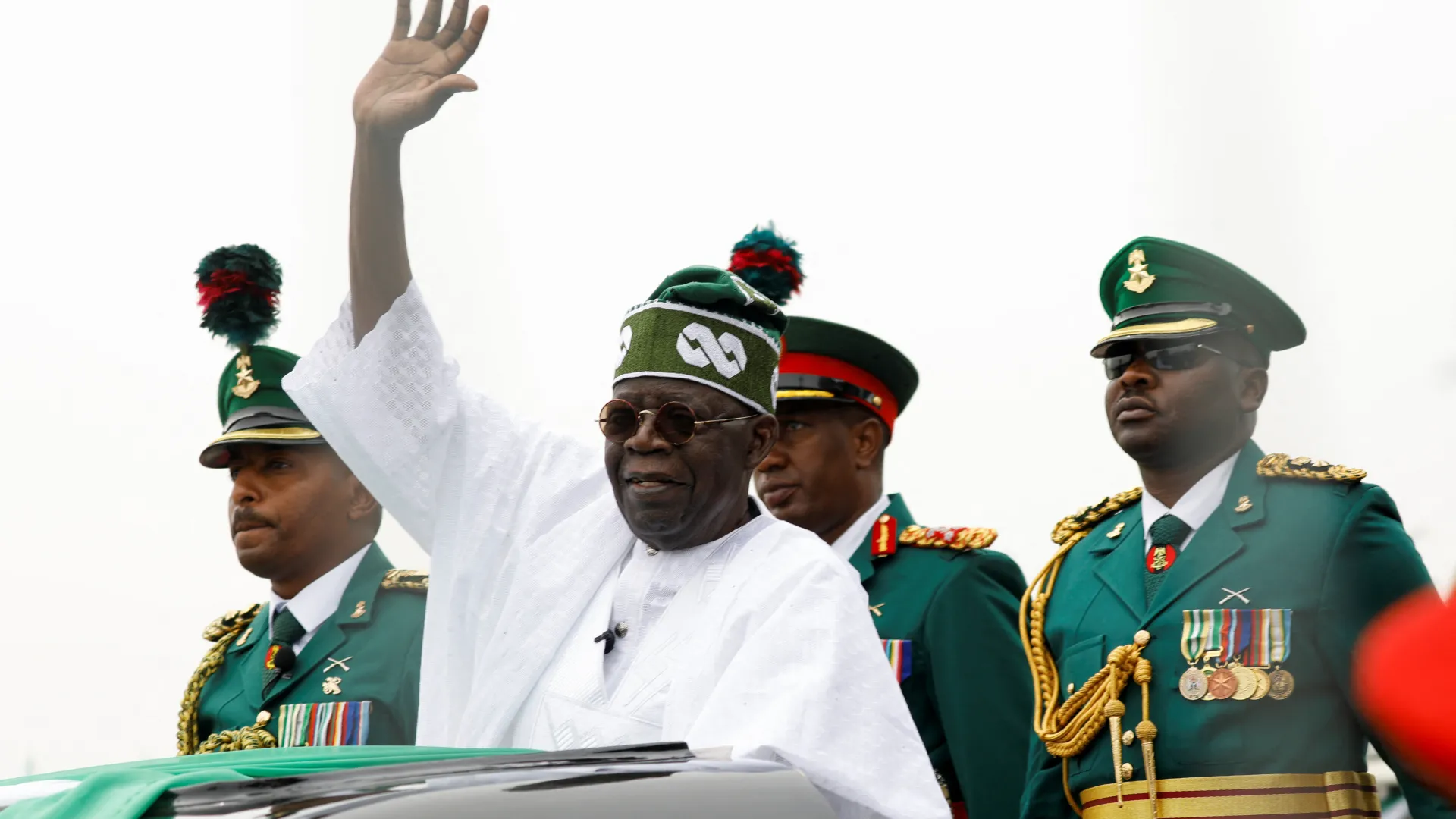
President Bola Tinubu on Monday convened an emergency security meeting at the State House, Abuja, bringing together top military commanders, intelligence chiefs, and the inspector-general of police amid growing concerns over Nigeria’s worsening security situation.
The high-level closed-door meeting, held on the first floor of the Presidential Villa, was attended by Tinubu, alongside the Chief of Defence Staff, General Olufemi Oluyede, and the service chiefs: Lt. Gen. Waidi Shaibu, Vice Admiral Idi Abbas, and Air Marshal Sunday Anele.

Also in attendance were the Director-General of the Department of State Services (DSS), Oluwatosin Ajayi, the Director-General of the National Intelligence Agency (NIA), Mohammed Mohammed, the Inspector-General of Police, Tunji Disu, and National Security Adviser Nuhu Ribadu.
The meeting is coming in the wake of renewed attacks on military formations in Borno State, as well as controversy surrounding an air force operation in Yobe State, that reportedly resulted in significant civilian casualties.
While the air force described the operation as precision strikes against terrorist targets, authorities did not confirm civilian deaths, insisting the area had been compromised by insurgent activity.
The Presidency defended the operation, with officials arguing that the affected location had become a logistics hub for insurgents, making it a legitimate military target.
Read also;
- Military personnel exchange blows during Tinubu’s visit to Bayelsa
- Military personnel condemnable assault on citizen sparks outrage
- Nigerian Navy arrests 2 suspected Military impersonators in Calabar, hands them over to Police
The security consultations also follow a recent advisory issued by the United States Department of State, which approved voluntary evacuation of non-emergency personnel from its Abuja embassy and placed several Nigerian states under a Level 4 “Do Not Travel” warning due to escalating insecurity risks.
The US advisory cited threats ranging from insurgency in the North-East to banditry in the North-West and North-Central regions, as well as ongoing violence in parts of the South and South-East.
However, the federal government has dismissed the warning, describing it as a routine precaution based on internal US assessments rather than an accurate reflection of Nigeria’s overall security situation.
Minister of Information and National Orientation, Mohammed Idris, maintained that most parts of the country remain stable despite isolated security challenges.