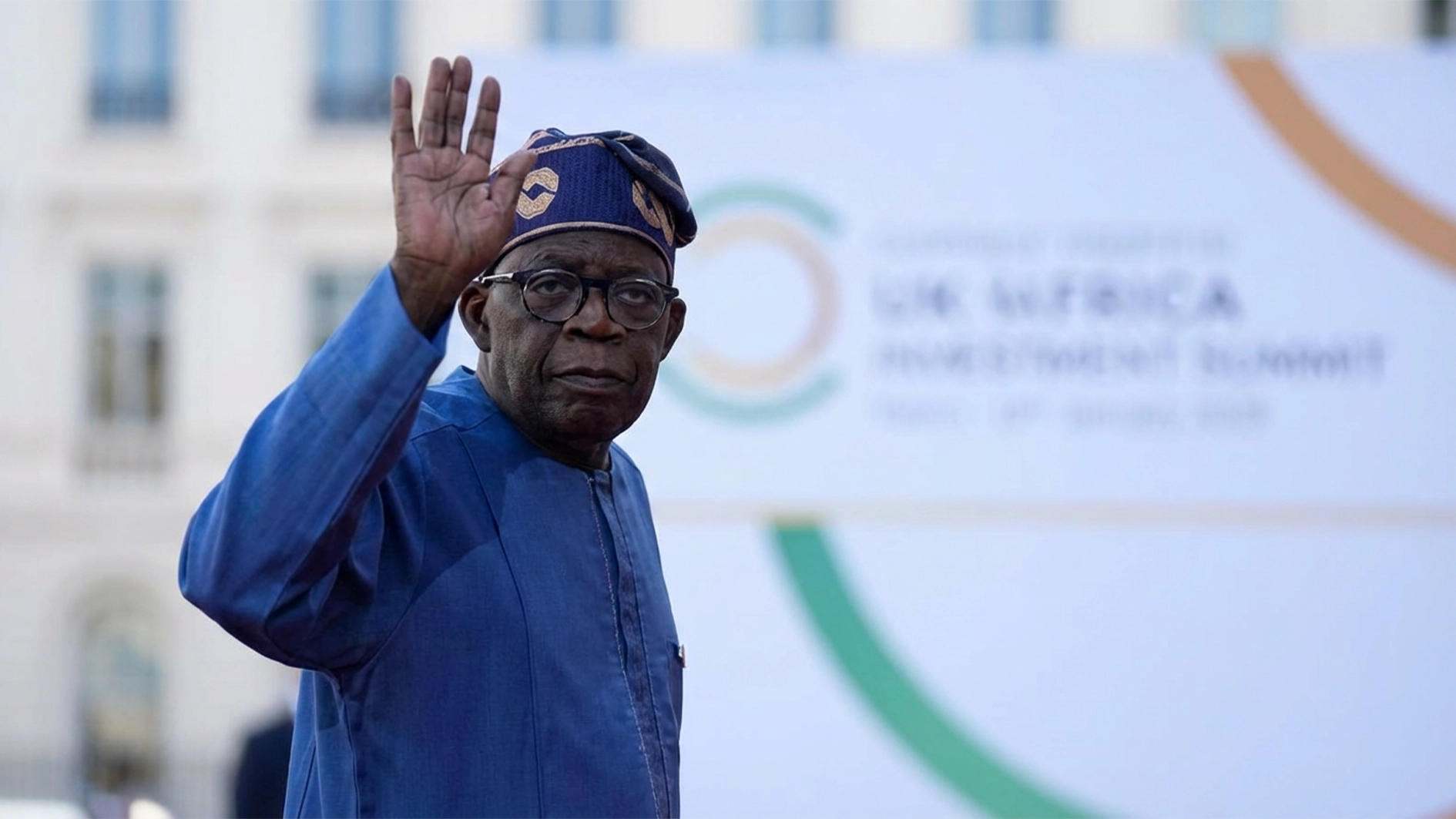
President Bola Tinubu arrived in London for a historic state visit hosted by King Charles III, marking the first formal visit by a Nigerian president to the United Kingdom in 37 years. The visit highlights the enduring diplomatic, trade, and defence ties between Africa’s most populous nation and its former colonial power.
Tinubu, accompanied by his wife Oluremi Tinubu, is expected to meet with Prince William and Catherine, Princess of Wales, on Wednesday, followed by an audience with the king at Windsor Castle and a state banquet in his honour. On Thursday, Tinubu is scheduled to hold talks with British Prime Minister Keir Starmer and members of the Nigerian diaspora in the UK.

The state visit provides a platform to discuss major Nigerian infrastructure projects, including a $700 million port rehabilitation programme at Apapa and Tin Can Island ports, partially guaranteed by UK Export Finance. Trade between Nigeria and the UK reached £8.1 billion ($11 billion) in the year to September 2025, an 11.4 percent increase year-on-year. Analysts say the visit may also address governance, defence cooperation, and security issues ahead of Nigeria’s 2027 presidential election.
Read Also:
- 2027 Election: Tinubu will lose if Atiku forms joint ticket with Obi or Amaechi, says Dele Momodu
- Tinubu ordered nationwide Rice distribution to support Ramadan, Lent
- ADC blasts Tinubu’s economic reform, says it has worsened poverty in Nigeria
The visit also highlights the strong presence of Nigerian businesses in the UK and ongoing bilateral agreements, including a strategic partnership concluded in November 2024 and an economic cooperation agreement signed in 2024. Defence collaboration has become increasingly important following attacks in central Kwara and the ongoing jihadist insurgency in northern Nigeria.
Potential diplomatic sensitivities include engagements with the Church of England, where First Lady Oluremi Tinubu, a Christian pastor, is expected to preach at services, and broader discussions about colonial-era reparations, including a £420 million court-ordered payout for families of miners killed in 1949. The visit also occurs amid debates over restitution of African artefacts held by British museums.
This landmark trip, the first formal Nigerian state visit in nearly four decades, signals a renewed phase of UK–Nigeria relations and a strategic opportunity to strengthen trade, security, and diplomatic cooperation.