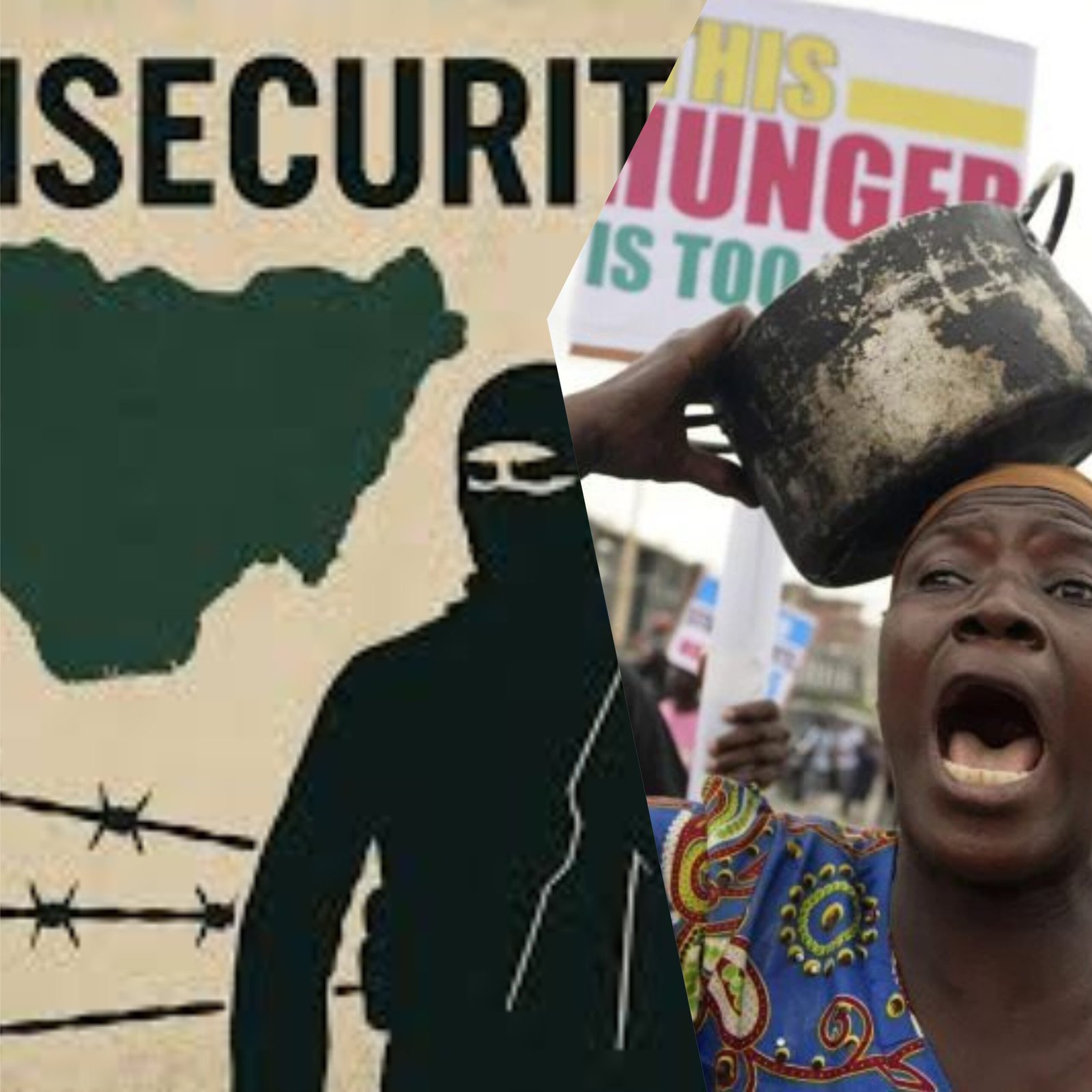
As Africa’s most populous nation grapples with deepening economic hardship, experts warn that the convergence of hunger, soaring youth unemployment, and entrenched corruption among elites is accelerating security threats across Nigeria.
From the insurgency-ravaged northeast to the kidnapping hotspots of the northwest and oil-rich but restive Niger Delta, a pattern is emerging: economic desperation and governance failures are creating fertile ground for instability.
In recent months, food prices across Nigeria have surged dramatically, placing basic staples beyond the reach of millions. Urban and rural communities alike report shrinking meals and rising malnutrition.

Security analysts argue that food insecurity does more than strain households it erodes social order.
“When people cannot feed themselves or their families, frustration builds. That frustration can easily be mobilized by violent actors,” said a Lagos-based conflict researcher. “Hunger becomes a recruitment tool.”
In northeastern states, insurgent groups such as Boko Haram have historically exploited economic vulnerability, offering cash, food, or protection to young men with few alternatives. Though weakened from its peak, the group’s splinter factions continue to stage attacks, relying on local grievances to sustain their networks.
Nigeria’s demographic structure compounds the crisis. With a median age under 20, the country’s youth population is both a potential dividend and a looming risk.
High rates of youth unemployment and underemployment have left millions without stable income. Graduates roam city streets in search of scarce jobs, while rural youths migrate to urban centers only to encounter similar hardship.
Security agencies have increasingly linked this idle workforce to rising criminality from cyber fraud and armed robbery to organized kidnapping rings. In northwestern states, bandit groups have recruited unemployed young men, offering them income through ransom operations.
A senior security official, speaking on condition of anonymity, described unemployment as “the oxygen feeding insecurity.”
“When young people lose hope in legitimate systems, they become vulnerable to radicalization or criminal enterprise,” he said.
Compounding economic hardship is the persistent perception of corruption among political and economic elites. Despite repeated anti-corruption pledges, allegations of public fund mismanagement and opaque procurement processes continue to surface.
Public trust in institutions has eroded significantly, particularly following subsidy reforms and currency policy shifts that triggered inflationary shocks. Critics argue that while citizens bear the burden of austerity, accountability for misused funds remains elusive.
Transparency advocates warn that corruption undermines not only economic growth but also national security.
“When public resources meant for infrastructure, job creation, and social welfare are diverted, you weaken the state’s ability to respond to crises,” said an Abuja-based governance analyst. “It creates resentment and delegitimizes authority.”
In the northeast, the long-running insurgency has displaced millions. In the northwest, armed banditry has forced communities off farmlands, further worsening food shortages.
In the southeast, separatist tensions occasionally flare into violent confrontations. Meanwhile, oil theft and pipeline vandalism continue to plague the Niger Delta.
Security experts emphasize that while these conflicts differ in origin, they share underlying economic drivers.
“The common thread is marginalization,” said a professor of political economy at a leading Nigerian university. “Where governance fails and opportunity is absent, insecurity thrives.”
The federal government has rolled out social intervention programs and youth employment initiatives, while intensifying military operations against armed groups. Officials maintain that reforms aimed at stabilizing the economy will yield long-term benefits.
Read also:
- Cardoso tasks African central banks on supporting industries, job creation, poverty alleviation
- FG launches RHGEEP 3.0, rolls out FarmerMonie to boost financial inclusion, support Farmers, cut poverty
- Over 141 Million Nigerians living in poverty as politicians struggle for power – Obi
However, critics argue that without structural reforms including transparent governance, agricultural investment, and scalable job creation security gains may remain temporary.
Nigeria stands at a pivotal moment. Its vast human and natural resources position it for regional leadership, yet internal vulnerabilities threaten that potential.
Security analysts warn that unless hunger is addressed, youth employment expanded, and corruption curbed, the cycle may deepen: economic hardship fueling insecurity, which in turn discourages investment and development.
“The relationship is circular,” one expert noted. “Break the chain at hunger, jobs, or corruption — and you improve security. Ignore them, and the threats multiply.”
For millions of Nigerians navigating daily uncertainty, the stakes could not be higher.