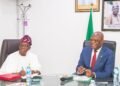
The Taraba State Ministry of Agriculture and Food Security has reiterated its commitment to the One Health initiative and the effective implementation of the Livestock Productivity and Resilience Support (L-PRES) project in the state.
The assurance was given over the weekend by the Commissioner for Agriculture and Food Security, Professor Nicolas Oliver Namessan, during a One Health stakeholders’ engagement meeting organized by the state L-PRES office.
Represented by the Permanent Secretary of the ministry, Mrs. Sarah Ali, Professor Namessan praised the L-PRES project for convening key stakeholders from diverse sectors to address issues affecting human health, agriculture, animal health, public health, and the environment. He emphasized that these sectors are closely interconnected and require coordinated action.

Highlighting the importance of livestock production to food security, income generation, and overall economic development in the state, Professor Namessan noted that sustainability in the sector depends on effective disease control, safe food systems, and environmental protection.
He further explained that the One Health approach provides a practical framework for addressing these challenges through collaboration, coordination, and shared responsibility among relevant sectors.
He added that the ongoing efforts of the L-PRES project in strengthening animal health services, improving disease surveillance, and promoting intersectoral coordination align with the ministry’s broader development goals.
Speaking at the meeting, the State Coordinator of L-PRES, Mr. Hananiah G. Albert, represented by the Communication/ICT Officer, Mr. Artimas Ezra, said the One Health approach recognizes the close link between human health, animal health, and environmental sustainability.
Albert observed that in Taraba State, with its abundant livestock resources, frequent human-animal interactions, cross-border movements, and environmental challenges, this connection is evident daily. He identified pressing issues such as zoonotic diseases, antimicrobial resistance, climate-related shocks, and environmental degradation as challenges that require coordinated, multi-sectoral responses rather than isolated interventions.
Read also:
- Masisi urges Agriculture led growth as path to Africa’s economic diversification
- POLITICAL INTERVIEW: Nigeria as a nation can become great if every potentials of agriculture could be harnessed – Senator (Prof) Nora Daduut
- Edo to upgrade College of Agriculture to degree-awarding institution with triplex campus
He explained that the World Bank-supported L-PRES project aims to strengthen livestock productivity, resilience, and livelihoods, but emphasized that achieving these goals requires strong collaboration with public health, environmental protection, food safety, and disaster risk management sectors.
According to Albert, the stakeholders’ engagement meeting offered a platform to review progress on One Health interventions, share experiences and lessons learned, identify emerging risks, strengthen coordination among ministries, departments, and agencies, as well as development partners, and agree on priority actions for the coming year.
He added that unlike technical working group meetings, the engagement adopted a broader, strategic approach to ensure alignment, ownership, and collaboration across sectors. Albert commended line ministries, development partners, non-governmental organizations, and community actors for their sustained commitment, saying their collective efforts are contributing to the development of a stronger and more resilient health system in the state.