By late September 2025, Nigeria stood closer to the edge than the public knew. What appeared on the surface as routine military reshuffles and a suddenly cancelled Independence Day parade concealed a far darker reality: a clandestine plan to assassinate the country’s elected leadership and install a military government.
According to multiple security and government sources, the alleged conspiracy targeted President Bola Ahmed Tinubu, Vice President Kashim Shettima, Senate President Godswill Akpabio, and Speaker of the House of Representatives Tajudeen Abbas. The plot, investigators say, was neutralised only after converging intelligence from within the armed forces and the State Security Service (SSS) triggered a discreet, nationwide counter-operation.

What follows is a reconstruction of how the alleged coup plot unfolded, how it was uncovered, who was implicated, and why the Nigerian military’s initial denials now raise troubling questions about transparency, civil–military relations, and the fragility of democratic control.
Whispers in uniform
The first crack in the alleged plot did not come from surveillance technology or foreign intelligence partners. It came from a serving officer.
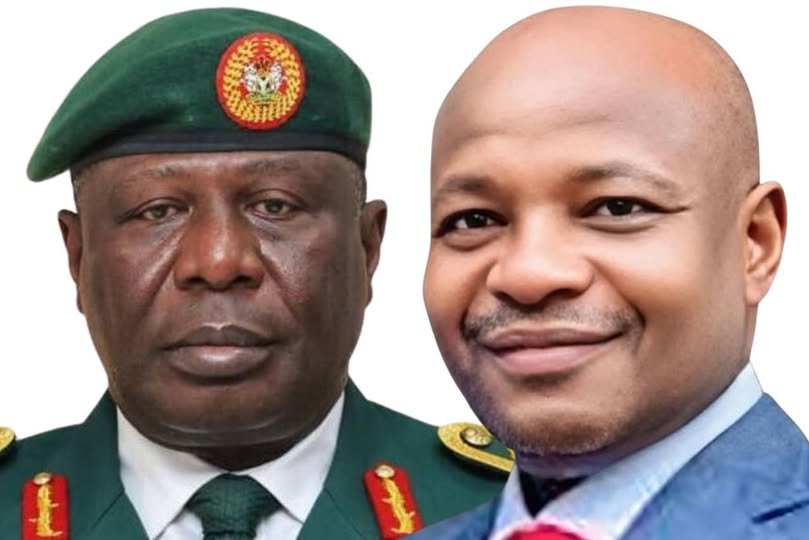
In the final week of September 2025, an unnamed military officer reportedly contacted the then Chief of Army Staff, Lieutenant General Olufemi Oluyede. According to senior administration insiders, the officer claimed to have direct knowledge of a plan by fellow officers to destabilise the government and ultimately remove it by force. His motivation, sources say, was fear: fear of being implicated in treason by association if the plan succeeded or was later exposed.
Read Also:
- Former Edo attorney general urges review of judicial appointments to strengthen judiciary
- CBN publishes report: shaping future of fintech in Nigeria
- Sowore exposes Tinubu calling Obasanjo, Jonathan unprintable names in explosive vdeo in court
Almost simultaneously, the SSS was arriving at similar conclusions through its own channels. Intelligence reports compiled by the domestic spy agency suggested that a network of serving and retired officers, supported by civilian collaborators, was discussing coordinated action against the Tinubu administration. The Director-General of the SSS, Oluwatosin Ajayi, personally briefed Oluyede, according to officials familiar with the exchange.
Two independent streams of intelligence, neither aware of the other at first, converged on the same conclusion. For Nigeria’s security chiefs, the overlap was decisive.
A joint operation in silence
Faced with what appeared to be an existential threat to the constitutional order, Army Headquarters and the SSS agreed to move quickly—and quietly. Rather than a public sweep that might alert suspects, they opted for staggered arrests across multiple locations.
On 30 September 2025, as President Tinubu travelled to Imo State for an official engagement, the joint operation went live. He was not informed beforehand, a decision insiders attribute to fears of leaks within the system.
By the end of the day, several serving officers and civilian suspects had been taken into custody. The alleged principal architects of the plot were neutralised before any visible action could be taken. Those arrested were transferred to secure facilities, with key suspects detained at an underground holding centre operated by the Defence Intelligence Agency (DIA).
The Chief of Defence Intelligence, Lieutenant General Emmanuel Undiandeye, and the then Chief of Defence Staff, General Christopher Musa, were subsequently briefed. A special investigative panel, led by Undiandeye, was constituted to widen the net and interrogate the full scope of the conspiracy.
A shaken presidency
President Tinubu was formally briefed only after the initial arrests. Officials who witnessed the meeting describe a visibly shaken commander-in-chief. Within hours, he ordered the cancellation of Nigeria’s 1 October Independence Day parade—a highly symbolic event rarely disrupted since the end of military rule in 1999.
Publicly, no explanation was offered beyond vague references to “logistical reasons.” Privately, the message was unmistakable: the state was under threat.
Additional arrests followed in the days and weeks that came after. One detained soldier reportedly escaped custody but was later rearrested by SSS operatives in Bauchi State. Others remained at large, including a retired senior officer identified as Major General Adamu and a prominent political figure accused of financing the operation.
The long list
By early 2026, security sources confirmed that at least 40 suspects had been detained or identified in connection with the alleged plot. They included brigadier generals, colonels, lieutenant colonels, majors, junior officers, non-commissioned officers, a serving police inspector attached to the Presidential Villa, and several civilians.
Investigators categorised roles within the network: planners, financiers, logisticians, reconnaissance operatives, and propagandists. Some were allegedly tasked with monitoring the movements of political leaders. Others were assigned to seize strategic locations in Abuja, including the Presidential Villa, Niger Barracks, the Armed Forces Complex, and the Nnamdi Azikiwe International Airport.
According to sources close to the investigation, the conspirators planned to assassinate their political targets simultaneously. The intention was to decapitate the civilian leadership in one stroke, creating confusion that would justify a military takeover.
Senior military officers, including service chiefs, were also to be detained. “They did not intend to kill them,” one source said. “They wanted to neutralise them.”
Money trails and political shadows
Perhaps the most explosive aspect of the investigation centred on alleged financing. Security reports traced large sums of money—ranging from hundreds of millions to tens of billions of naira—to accounts linked to a former governor and ex-minister, Timipre Sylva.
Investigators alleged that funds, some reportedly diverted from public institutions, were laundered through Bureau De Change operators and channelled to support logistics, arms procurement, and mobilisation. Sylva has denied any involvement, and no court has yet tested the allegations. Nonetheless, security agencies reportedly raided properties linked to him, arresting associates and family members while he remained outside the country.
A managing director of a federal agency in the South-South was also questioned over transfers allegedly connected to the plot. According to intelligence officers, the working theory was that public funds were repurposed to finance an unconstitutional change of government.
The implications were profound: if true, the alleged coup was not merely a military mutiny but a hybrid conspiracy blending political ambition, financial power, and armed force.
Weapons, vehicles, and intent
The material evidence recovered during the investigation further deepened concerns. Security sources say investigators seized assault rifles, machine guns, rocket-propelled grenade components, ammunition, tactical gear, and multiple vehicles—including SUVs and trucks—allegedly acquired for covert movement and reconnaissance.
“These were not random weapons,” one investigator said. “They were configured for coordinated action.”
The scale of preparation suggested long-term planning. Investigators concluded that an earlier version of the plot had been contemplated around the May 29, 2023 inauguration but was shelved due to inadequate funding and logistics. The plan, they believe, was revived in 2024 and refined through 2025.
Official denial, then admission
Despite mounting reports by investigative media, the military initially denied that a coup plot existed. Statements issued in early October 2025 described the arrests of 16 officers as a “routine internal investigation” into indiscipline and breaches of service regulations, allegedly linked to career stagnation and failed promotion exams.
The framing was widely criticised as implausible. The detention of senior officers, the cancellation of the Independence Day parade, and the secrecy surrounding the investigation all suggested something far more serious.
On 26 January 2026, the denial finally collapsed. The Defence Headquarters publicly acknowledged that officers had indeed plotted to illegally overthrow the government. It confirmed that those indicted would be arraigned before a military judicial panel under the Armed Forces Act.
The investigation, the military said, was comprehensive and revealed conduct “inconsistent with the ethics, values and professional standards required of members of the Armed Forces of Nigeria.”
Fallout at the top
The institutional consequences were swift and telling. President Tinubu fired and retired General Christopher Musa as Chief of Defence Staff, along with the chiefs of the navy and air force. Olufemi Oluyede was promoted and appointed Chief of Defence Staff. Weeks later, Musa returned to government as Minister of Defence, a move that sparked debate about accountability and continuity.
For critics, the reshuffles raised uncomfortable questions. Was the purge sufficient? Did it go far enough? Or did it merely paper over deeper structural issues within the armed forces?
Democracy’s narrow escape
Nigeria has lived under military rule for nearly half of its post-independence history. Since 1999, civilian governments have struggled to assert firm control over a powerful security establishment shaped by decades of intervention in politics.
The alleged 2025 coup plot, if accurately described by investigators, represents the most serious challenge to that civilian supremacy in a generation. It also exposes vulnerabilities: insider threats, politicised grievances within the ranks, opaque military justice, and the persistent allure of power through force.
That the plot was reportedly uncovered by insiders who chose to speak up is a reminder that institutions, however fragile, still contain individuals committed to constitutional order. That it progressed as far as it did before being stopped is a warning.
Nigeria did not wake up to tanks on the streets in October 2025. There was no radio announcement, no suspension of the constitution. The danger passed quietly, behind closed doors. But the silence should not be mistaken for safety.
If anything, the episode underscores how close the country came—and how much remains unresolved.
The unanswered questions
As court-martial proceedings loom, several issues remain unsettled. How deep did the conspiracy go? Were there political patrons yet to be named? Why did the military leadership initially mislead the public? And what reforms are necessary to prevent a recurrence?
Until those questions are answered transparently, the foiled coup will remain more than a closed security file. It will stand as a case study in how democracies fail—and how narrowly Nigeria avoided joining that list once again.
For now, the republic stands. But the events of September 2025 have left an indelible mark on its institutions, its politics, and its sense of security.