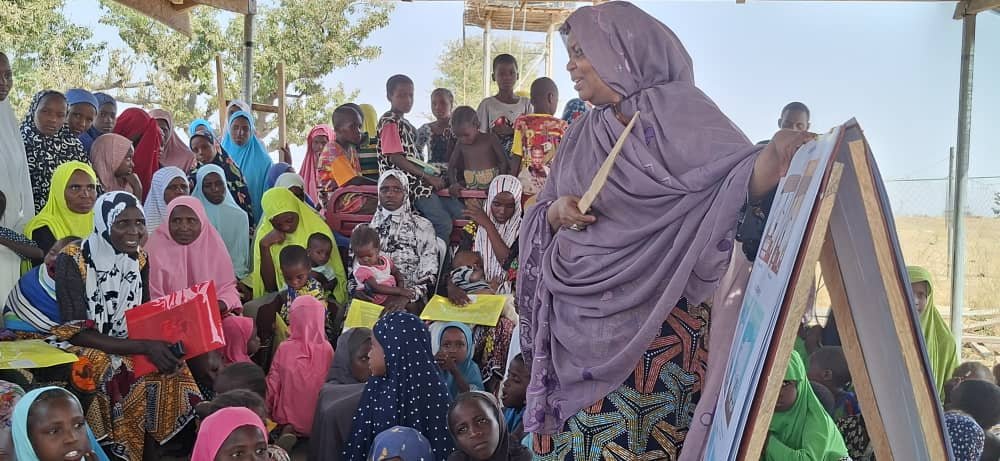
Under the soft hum of early morning activity at Pomi-Kareje, a rural community in Ardo-Kola Local Government Council, a quiet transformation is taking place, one that is reshaping how milk is produced, handled, and valued across Taraba State. Governor Agbu Kefas’ commitment to revitalising the state’s dairy sector is beginning to take root, as women and youths engaged in small-scale milk production gather for hands-on training aimed at improving hygiene, productivity, and organisation within the dairy value chain.
The capacity-building programme, organised by the State Livestock Productivity and Resilience Support Project (L-PRES) in collaboration with the Ministry of Agriculture and Food Security, kicked off on Monday in northern Taraba and is expected to extend to the central and southern geopolitical zones in the coming weeks. For many participants, the training represents more than a routine workshop. It is a practical response to long-standing challenges poor milk handling, post-harvest losses and limited access to profitable markets that have constrained the growth of local dairy enterprises.

Held within the Pomi-Kareje community, the programme drew participants from rural and semi-urban settlements where milk production and processing remain largely informal. As observed, the sessions were designed to strengthen dairy clusters while equipping participants with essential skills to improve milk quality and income generation.
Leading the session on milk hygiene and collection protocols, Aishatu Ardo emphasised that cleanliness is the foundation of safe and profitable dairy production. With practical demonstrations, she guided participants through best practices in hygienic milk collection, safe handling and storage, as well as basic quality control measures. Beyond hygiene, the training also focused on organisation and sustainability.
Read Also:
- APC stakeholders back Lau as Taraba State chairman
- Taraba state selected for $20 million World Bank Livestock Project
- Simon assumes duty as Taraba State Commissioner of Police
In a related presentation, facilitator on group strengthening and dynamics, Mr. Solomon Jesse, encouraged participants to form cooperatives of between 10 and 12 members. According to him, cooperative structures would not only improve coordination and bargaining power but also ensure continuity after the eventual exit of the livestock productivity and resilience support project. “The strength of this programme lies in unity,” he told participants, stressing that well-organised cooperatives can attract support, access markets, and sustain gains made through the intervention.
Speaking on the broader objectives of the initiative, the state Project Coordinator of L-PRES, Mr. Hananiah Albet, said the programme was deliberately designed to empower women and youths, who play a central role in milk production and handling at the household and community levels. Represented by the state L-PRES ICT Officer, Mr. Artimas Ezra, Albet noted that improved dairy practices would reduce post-harvest losses, enhance nutrition, and strengthen livelihoods.
Milk, he explained, is not only vital to household nutrition, especially for children, but also a reliable source of income for many families. Proper handling, he added, increases its value and safety. “This training is specially designed for women and youths because of the critical role they play in milk production and handling in our communities. What you learn here will improve your health, skills, and livelihoods,” he said, noting that the programme enjoys the support of the World Bank.
Participants who spoke with our correspondent described the training as timely and impactful, particularly at a time when rising costs and limited opportunities continue to challenge rural livelihoods. Many called for sustained engagement and follow-up training to consolidate the gains already recorded.
As the programme prepares to move into other parts of Taraba State, the early signs from Pomi-Kareje suggest that with the right skills, organisation and support, local dairy production can evolve from subsistence activity into a resilient and profitable enterprise, one training session at a time.