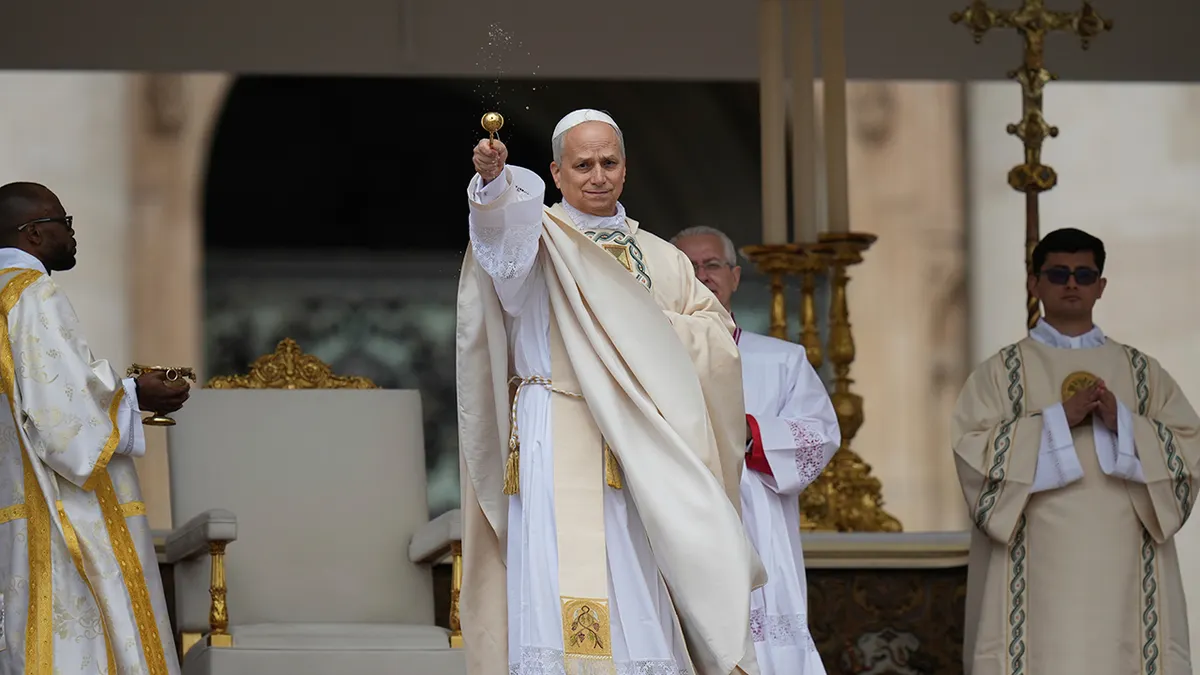
Pope Leo, who became pontiff in May, delivered his inaugural Christmas address to the crowds in St. Peter’s Square.
In his remarks, he urged both Ukraine and Russia to summon the “courage” needed to engage in direct negotiations to resolve the ongoing conflict.

His appeal was part of his Urbi et Orbi address, a traditional message delivered on Christmas Day to attendees in Vatican City.
Regarding the situation in Ukraine, the Pope stated: “May the sound of weapons come to an end, and may the involved parties, with the backing and dedication of the international community, muster the courage to participate in genuine, direct, and respectful dialogue.”
His call for peace comes amid ongoing US-led efforts to broker a deal to halt the fighting, although direct discussions between Ukraine and Russia have not occurred in this latest diplomatic initiative.
Pope Leo also condemned the unrest and violence affecting other regions, such as Thailand and Cambodia, where deadly border conflicts have erupted despite a ceasefire established in July.
He expressed a desire for these Southeast Asian nations to restore their “ancient friendship” and strive for reconciliation and peace.
In an earlier Christmas sermon at St. Peter’s Basilica, Pope Leo expressed concern for the plight of homeless individuals worldwide and the destruction caused by wars.
He remarked that “the vulnerable flesh of defenseless populations is fragile, tested by numerous ongoing or concluded conflicts, leaving behind devastation and open wounds.”
Read also:
- Allegations of irregularities rock Nigeria’s newly enacted tax laws
- Toronto fire tragedy: Philanthropist puts smiles on faces of traders, doles out N15 million
- Telegram founder Pavel Durov offers his sperm to fund IVF for women
He reflected on the birth of Jesus, noting that God had “pitched his fragile tent” among humanity.
The Catholic pontiff, then turned his thoughts to the conditions in Gaza, asking “how can we not consider the tents in Gaza, exposed for weeks to rain, wind, and cold?”
Gaza has suffered extensive devastation from Israeli airstrikes during a two-year conflict that began after Hamas’s attack on Israel on October 7, 2023.
Winter storms have worsened the situation for the territory’s 2.1 million residents, most of whom have been displaced, with many homes damaged or destroyed.
Aid organizations have urged Israel to permit the entry of more tents and essential supplies into Gaza.
The Israeli military body responsible for controlling Gaza’s border crossings, Cogat, has rejected claims of intentional aid restrictions, stating that nearly 310,000 tents and tarpaulins have been delivered since the ceasefire began in October.