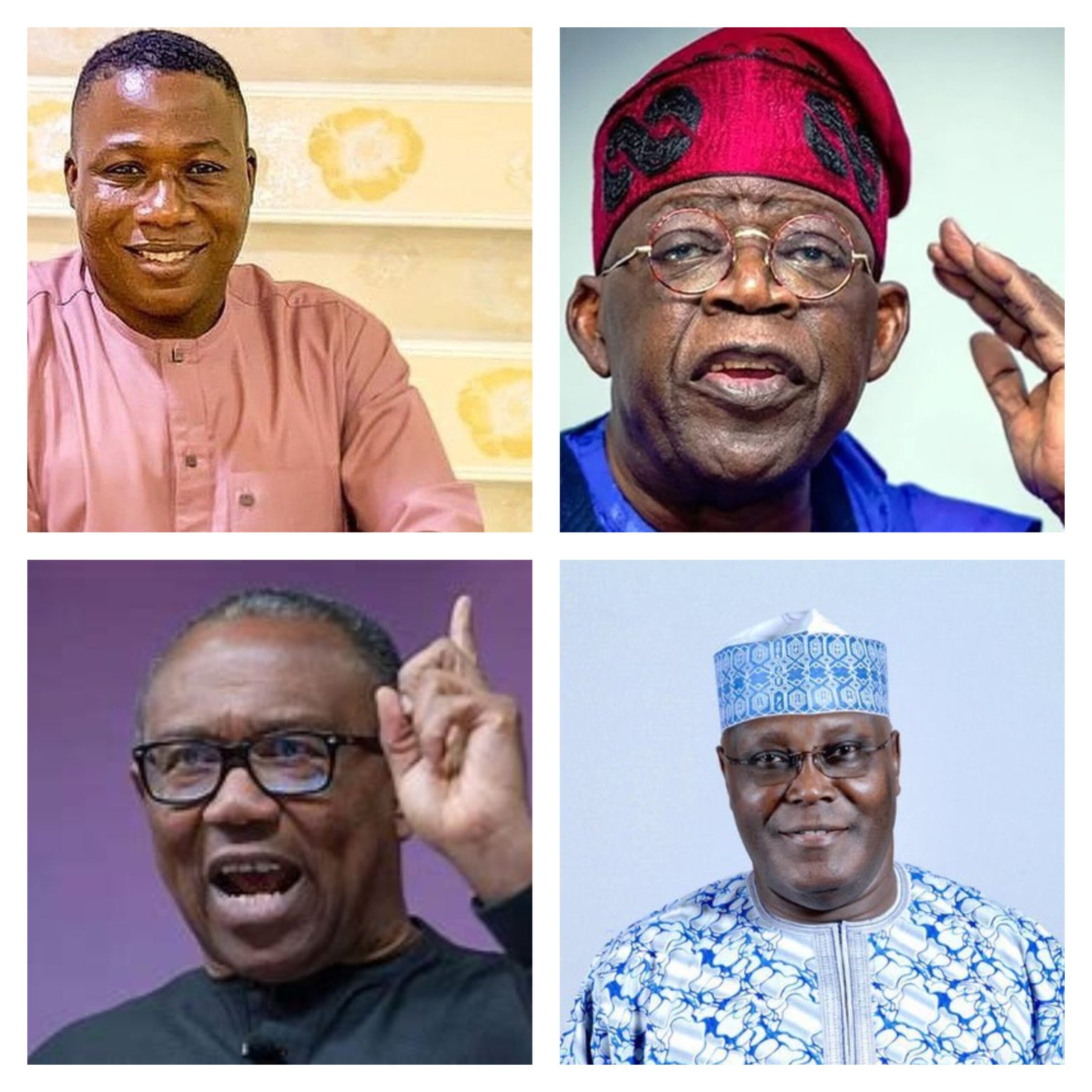
Nigeria’s fragile democratic fabric is once again under strain following controversial remarks by Yoruba Nation agitator, Sunday Adeyemo, popularly known as Sunday Igboho. His recent comments warning opposition figures against campaigning in the South-West have sparked a broader national conversation—one that cuts to the core of political intolerance, ethnic identity, and the limits of democratic participation in Africa’s largest democracy.
The issue is not merely about one man’s rhetoric. It reflects deeper structural tensions in Nigeria’s political ecosystem: the persistent entanglement of ethnicity with electoral politics, the weaponisation of regional loyalty, and the enduring question of whether Nigeria’s democracy can accommodate dissent without sliding into exclusion.
A Statement That Struck a Nerve

In a viral video that quickly circulated across social media platforms, Igboho issued a stark warning to supporters of former presidential candidates Atiku Abubakar and Peter Obi. His message was blunt and provocative: the South-West, he implied, was politically reserved territory, and any attempt to campaign for opposition candidates there would be resisted.
He went further, declaring unwavering support for President Bola Tinubu—not just for a second term in 2027, but even suggesting that Tinubu should continue beyond the constitutionally mandated eight years.
The implications of such remarks are significant. At face value, they challenge the constitutional right of Nigerians to freely associate, campaign, and vote across the country. At a deeper level, they raise concerns about the normalization of exclusionary political rhetoric in a nation already grappling with ethnic divisions.
Constitutional Democracy Versus Political Reality
Nigeria’s 1999 Constitution guarantees freedom of movement, expression, and political participation. These provisions are foundational to any functioning democracy. In theory, every Nigerian has the right to campaign for any candidate in any part of the country.
However, the political reality often diverges sharply from constitutional ideals. Igboho’s comments expose a recurring tension: the gap between formal democratic rights and the informal power structures that shape political behavior. In many parts of Nigeria, politics remains deeply rooted in identity—ethnic, religious, and regional.
The South-West, predominantly Yoruba, has historically demonstrated a degree of political cohesion, particularly in recent election cycles. Tinubu’s political machinery, built over decades, has entrenched a strong regional base. Igboho’s remarks can be interpreted as an attempt to reinforce that dominance by discouraging opposition penetration.
But such rhetoric risks undermining democratic pluralism. When political spaces are framed as ethnically exclusive, elections cease to be contests of ideas and instead become expressions of identity politics.
The Ethnicisation of Political Loyalty
Nigeria’s political history is inseparable from its ethnic composition. From the First Republic to the present Fourth Republic, electoral alignments have often mirrored ethnic and regional divides.
Igboho’s intervention fits into this pattern. His framing of the South-West as a political stronghold that must be defended against “outsiders” echoes longstanding narratives of ethnic territoriality. This is not unique to the South-West. Similar dynamics exist in other regions: The North has often rallied around candidates perceived to represent northern interests; The South-East has shown strong support for candidates aligned with Igbo identity and aspirations; The South-South has historically mobilised around resource control and regional equity.
What makes Igboho’s comments particularly contentious is their explicitness. While ethnic voting patterns are often implicit, his remarks openly advocate for political exclusion based on regional identity.
The Shadow of Secessionist Politics
Igboho’s background adds another layer of complexity. As a prominent figure in the Yoruba Nation movement, his political rhetoric has long been shaped by grievances around marginalisation, security, and federalism.
His emergence gained traction during a period of heightened insecurity in the South-West, particularly clashes involving farmers and armed herders. At the time, his activism resonated with many who felt that the federal government had failed to protect local communities.
However, his current alignment with the political establishment—particularly his support for Tinubu—marks a notable shift. Critics argue that this evolution reflects a broader trend in Nigerian politics, where agitational movements are often co-opted into mainstream political structures.
This transition raises questions about credibility and consistency. Can a figure who once championed regional autonomy now advocate for the political dominance of a single national figure? And what does this mean for the broader movement he once represented?
Reactions and Counter-Narratives
The backlash to Igboho’s comments was swift. The Obidient Movement, a grassroots support network for Peter Obi, condemned the remarks as undemocratic and dangerous. In a strongly worded statement, the group asserted that no individual has the authority to declare any part of Nigeria off-limits for political activity.
Their response highlights a key fault line in Nigerian politics: the clash between established political structures and emerging citizen-driven movements.
The Obidient Movement, which gained prominence during the 2023 elections, represents a shift away from traditional patronage politics. Its emphasis on issue-based campaigning and cross-regional appeal challenges the entrenched logic of ethnic political blocs.
Igboho’s remarks, therefore, are not just an attack on specific candidates—they are perceived as an attempt to suppress a new political paradigm.
The “Third Term” Controversy
Perhaps even more controversial than Igboho’s regional warning is his suggestion that Tinubu should continue beyond the constitutional limit of two terms.
Nigeria has a fraught history with third-term ambitions. In 2006, an attempt to amend the constitution to allow then-President Olusegun Obasanjo to seek a third term was met with widespread opposition and ultimately failed.
That episode remains a defining moment in Nigeria’s democratic evolution—a rare instance where institutional resistance and public pressure successfully checked executive overreach.
By invoking the possibility of a third term, Igboho’s comments reopen old wounds. They also raise concerns about the erosion of democratic norms, particularly in a context where institutions are often perceived as weak.
Even if his remarks are dismissed as rhetorical exaggeration, they contribute to a climate in which constitutional limits are treated as negotiable.
Political Intolerance and Democratic Backsliding
At its core, the controversy speaks to a broader issue: the rise of political intolerance in Nigeria.
Political intolerance manifests in various forms: Threats against opposition supporters; Restrictions on campaign activities; Violence during elections; and The use of state and non-state actors to suppress dissent.
Igboho’s comments, while not accompanied by immediate action, fall within this spectrum. They signal a willingness to delegitimise opposition participation—a dangerous precedent in any democracy.
Read also:
- Sunday Igboho backs Tinubu, warns Atiku, Obi over South-West campaign plans
- Igboho urges Kanu to embrace dialogue with Tinubu government
- Igboho’s Lawyer Dismisses Alleged Elimination Plan of the Yoruba Activist
When political competition is framed as a zero-sum ethnic contest, the stakes become existential. Opponents are no longer seen as rivals but as threats to collective identity. This dynamic increases the risk of conflict, particularly in a country with Nigeria’s complex social fabric.
The Role of Influential Non-State Actors
Another critical dimension is the influence of non-state actors in shaping political discourse. Igboho is not an elected official, yet his statements carry weight due to his visibility and grassroots following. This reflects a broader trend in which informal power brokers—activists, religious leaders, traditional rulers—play significant roles in political mobilisation.
While such actors can contribute positively to democratic engagement, they can also amplify divisive narratives. In contexts where state institutions are weak or distrusted, these figures often fill the vacuum. Their rhetoric, therefore, has real-world implications.
Media, Virality, and Amplification
The rapid spread of Igboho’s remarks underscores the role of digital media in contemporary politics. Social media platforms have transformed how political messages are disseminated. Statements that might once have remained local now reach national and global audiences within hours.
This amplification has both benefits and risks: It enables greater political awareness and participation
It also accelerates the spread of inflammatory rhetoric; In Nigeria, where misinformation and polarisation are already significant challenges, viral content can quickly escalate tensions.
Implications for 2027
Looking ahead to the 2027 elections, the controversy offers a preview of potential fault lines.
Several key questions emerge: Will ethnic mobilisation intensify as political actors seek to consolidate regional bases? Can emerging movements sustain cross-regional appeal in the face of entrenched identity politics? Will institutions be strong enough to ensure free and fair elections across all regions?
Igboho’s comments suggest that the battle for political space will be fiercely contested—not just at the ballot box, but in the realm of narrative and perception.
The Way Forward
Addressing political intolerance in Nigeria requires a multi-layered approach: Strengthening Institutions. Electoral bodies, security agencies, and the judiciary must be empowered to enforce constitutional rights without bias.
Promoting Civic Education: Citizens need a deeper understanding of their rights and responsibilities in a demoocratic system.
Encouraging Issue-Based Politics
Shifting the focus from identity to policy can reduce the salience of ethnic divisions. Public figures must be challenged when their rhetoric undermines democratic norms.
Sunday Igboho’s remarks are more than a fleeting controversy. They are a symptom of deeper structural challenges within Nigeria’s democracy.
At stake is not just the ability of Atiku Abubakar or Peter Obi to campaign in the South-West. It is the broader question of whether Nigeria can sustain a political system in which all citizens, regardless of identity, can participate freely.
Democracy is not merely about elections; it is about inclusion, tolerance, and the rule of law. When any of these pillars is weakened, the entire system is at risk.
As Nigeria moves toward another electoral cycle, the choices made by political actors, institutions, and citizens will determine whether the country moves toward greater democracy maturity—or deeper fragmentation.