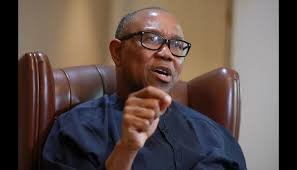
Former presidential candidate Peter Obi has raised serious concerns about the worsening poverty crisis in Nigeria, pointing out that while politicians continue to compete for power, over 141 million Nigerians struggle to survive below the poverty line.
In a post on X on Thursday, Obi highlighted that while other nations are lifting millions of citizens out of poverty, Nigeria is moving in the opposite direction. According to him, about 62 percent of Nigerians, equivalent to 141 million people, now live in extreme poverty, underscoring that more than half of the population is affected.
Obi cited World Bank data showing a sharp rise in poverty over recent years. He noted that the number of Nigerians living in poverty surged from 81 million in 2019 to 139 million by 2025. Between 2023 and 2024 alone, poverty increased from 115 million to 129 million, a jump of 14 million people. Projections from the World Bank and PwC suggest this number could reach 141 million by 2026, with an additional 26 million Nigerians falling into poverty between 2023 and 2026.
The Nigeria Economic Outlook 2026 report, titled “Turning Macroeconomic Stability into Sustainable Growth,” supports these alarming projections, warning that weak real income growth and persistently high living costs will continue to exacerbate poverty across the country. Obi explained that while overall inflation may moderate, sustained high prices driven by energy, logistics, and exchange-rate fluctuations will continue to strain households.
Low-income Nigerians are especially vulnerable, with food often accounting for up to 70 percent of household expenditures. Obi stressed that this rising poverty threatens purchasing power, depresses domestic demand, and places pressure on micro, small, and medium-sized enterprises that rely on local consumers. Without substantial job creation, productivity improvements, and robust social protection programs, he warned, Nigeria risks destabilizing public finances, eroding human capital, and stalling economic recovery.
Obi contrasted Nigeria’s trajectory with that of countries like India and Indonesia. India has reduced extreme poverty from 35–40 percent in 2000 to just 5.3 percent today, while Indonesia has cut poverty from around 30 percent in 2000 to 8 percent, largely through investments in education, health, and social welfare. Meanwhile, Nigeria has seen poverty rise from approximately 40 percent in 2000 to 62 percent today.
Read also:
- Dele Momodu: Atiku won’t step aside for Obi in 2027 race
- Obi reiterates commitment to Nigeria youth’s development
- Obi meets with Southern leaders
“The reality is stark,” Obi said. “A child born in Nigeria today faces one of the highest risks of being born into poverty globally. This is unacceptable, and Nigerians can no longer tolerate a system where political ambition takes precedence over human survival.”