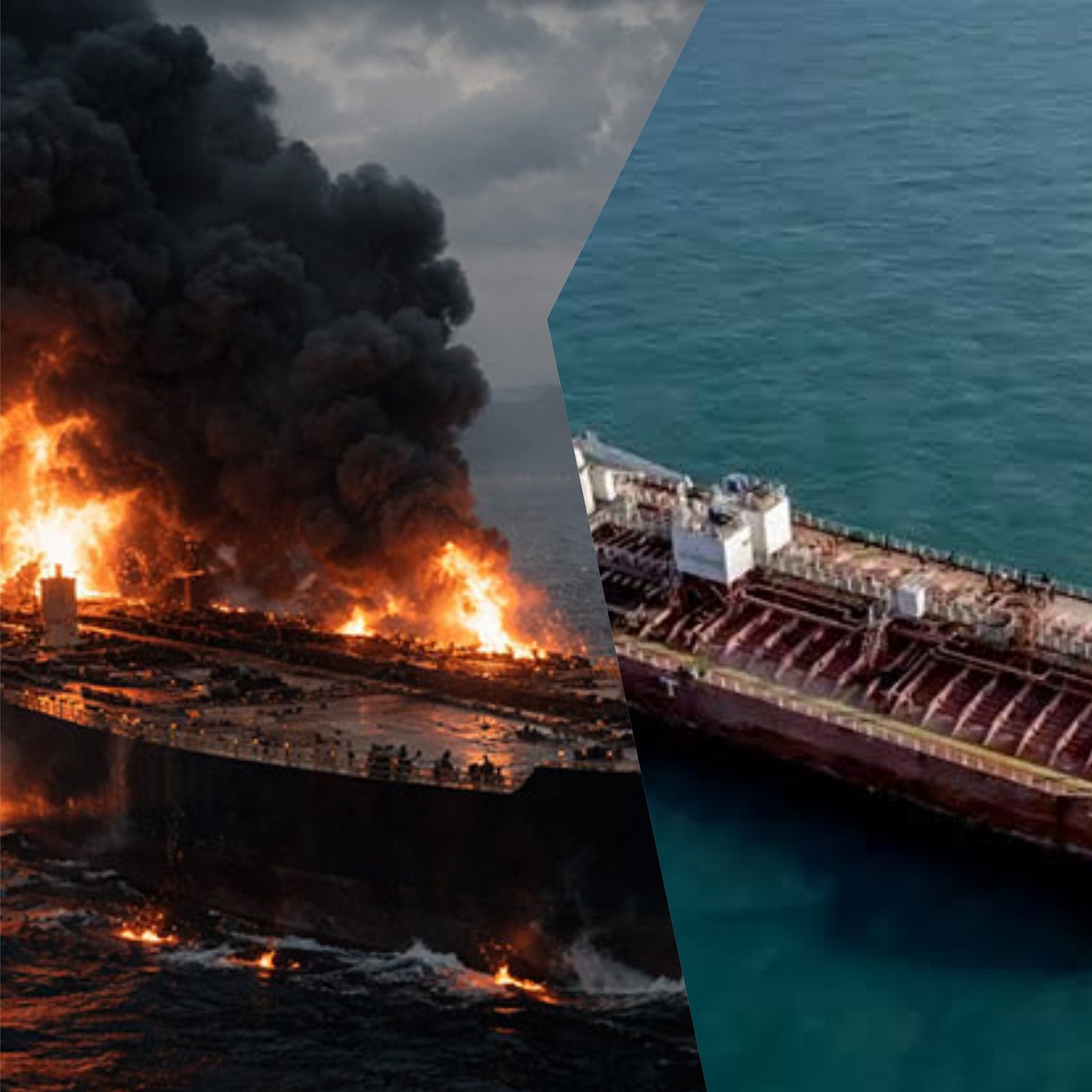
Global oil prices have risen after at least three ships were attacked near the Strait of Hormuz, as Iran continues to launch strikes across the Middle East in response to ongoing attacks by the US and Israel.
Two vessels have been struck, and an “unknown projectile” was reported to have “exploded in very close proximity” to a third, the UK Maritime Trade Operations Centre (UKMTO) said.
Iran has warned ships not to pass through the strait, which carries about 20 percent of the world’s oil and gas.

International shipping has almost come to a standstill at the strait’s entrance, with analysts warning that a prolonged conflict could push energy prices even higher.
In early trade in Asia on Monday, global oil prices jumped by more than 10 percent before those gains eased during the morning.
At a little before 07:00 GMT, Brent crude was more than 8 percent higher at $78.72 (£58.82) a barrel, while US-traded oil was up by around 7.6 percent at $72.20.
“The market isn’t panicking”, Saul Kavonic, head of energy research at MST Marquee, told the BBC.
“There is more clarity that so far, oil transport and production infrastructure hasn’t been a primary target by any side,” he added.
“The market will be watching for signs that traffic through the Strait of Hormuz returns, which would see oil prices subside again.”
But some analysts have warned it could jump above $100 in the event of a prolonged conflict.
Read also:
- Crude Oil Refinery Owners urge peace as Dangote, DAPPMAN rift threatens Nigeria’s refining breakthrough
- Nigerian Navy cracks down on illegal Refinery, seizes 19,000 liters of stolen crude oil in Rivers
- Army, Tantita Security arrest truck laden with crude oil in Delta
On Sunday, the OPEC+ group of oil producing nations agreed to increase their output by 206,000 barrels a day to help cushion any price rises, but some experts doubt this would help much.
Edmund King, president of the AA, warned the disruption could drive up petrol prices around the world.
“The turmoil and bombing across the Middle East will surely be a catalyst to disrupt oil distribution globally, which will inevitably lead to price hikes,” he said.
“The magnitude and duration of pump price increases depend on how long the conflict goes on.”
Iran’s Islamic Revolutionary Guards Corps (IRGC) said three tankers from the UK and US had been “struck by missiles and are burning”. The UK and the US have not commented.