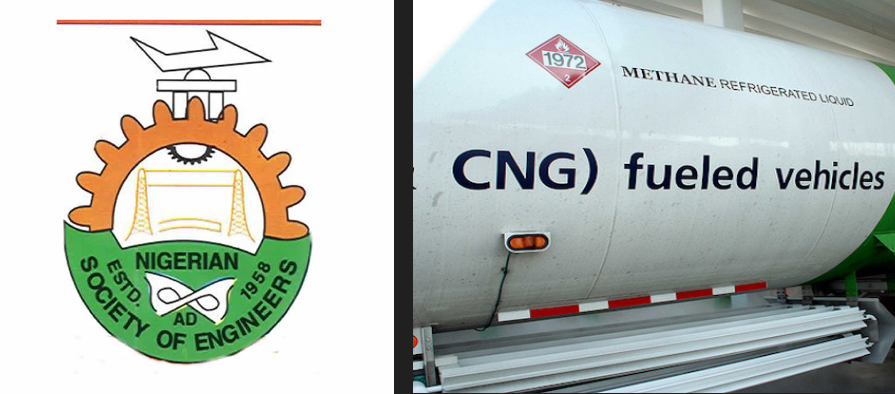
The Bwari Area Council branch of the Nigerian Society of Engineers (NSE) has urged a faster adoption of Compressed Natural Gas (CNG) as part of Nigeria’s long-term energy transition plan, stating that the country stands to gain economically and environmentally from its vast gas reserves.
In a statement issued on Wednesday after a public lecture titled: “Future of CNG: Emerging Trends and Technology in the Energy Sector,” the branch Chairman, Funbi Alonge, described the shift toward the CNG as both urgent and strategic for national development.

Alonge noted that global energy systems are evolving rapidly due to technological innovation, environmental pressures, and the demand for more affordable energy solutions.
She said Nigeria, endowed with significant natural gas reserves, is well-positioned to harness CNG as a cleaner, safer, and more cost-effective alternative to petrol and diesel.
“Today’s event is not only timely but strategic, as it focuses on a subject that is shaping the future of our nation’s energy landscape, the future of Compressed Natural Gas,” she said.
Read Also:
- FG targets additional 500 CNG stations nationwide within 3 years
- Innoson to build CNG plant In Bayelsa
- Dangote reiterates commitment to combat high youth unemployment in Nigeria, provides attractive benefits for CNG Drivers
According to her, transitioning to CNG extends beyond energy diversification.
It presents opportunities for job creation, technological advancement, and reduced carbon emissions, while strengthening energy security.
“The transition to CNG presents significant opportunities for economic growth, job creation, technological innovation, and environmental sustainability.
“It aligns with the federal government’s drive towards energy diversification, reduction of carbon emissions, and improved energy security,” she added.
Alonge stressed that engineers and industry stakeholders must lead the transformation through research, innovation, collaboration, and skills development.
“As engineers and stakeholders, we have a crucial role to play in driving this transition through research, innovation, capacity building, and collaboration.
“Sustainable engineering practices must form the backbone of this transformation,” she said.
The lecture, she explained, was designed to deepen public understanding and build technical capacity around emerging CNG technologies, promote partnerships among government, academia, and industry, and support sustainable national development.
Alonge encouraged participants to use the platform to develop practical strategies that could position Nigeria as a leader in CNG adoption.
“As we deliberate today, I encourage everyone to actively participate and network.
“Let us use this platform to generate ideas, strengthen collaborations, and develop actionable strategies that will position Nigeria as a leader in the adoption of CNG and emerging energy technologies,” she said.