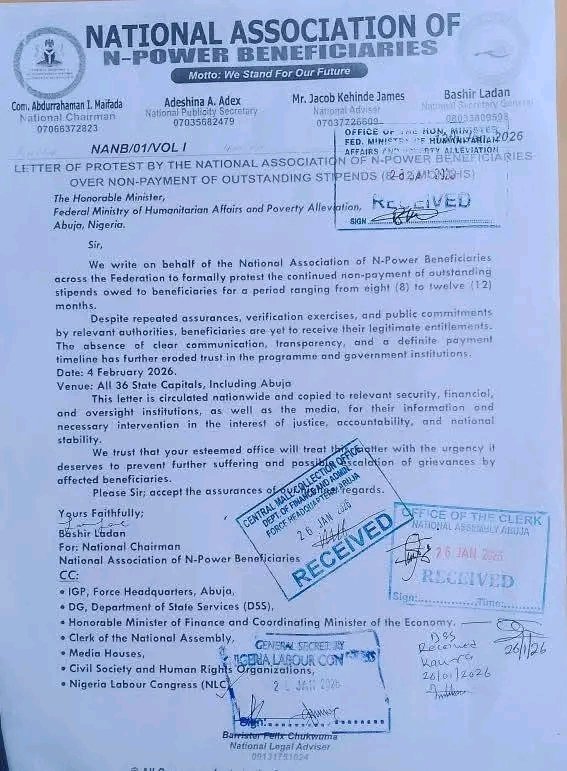
Amid rising frustration, hardship, and public discontent over unpaid stipends, the Association of Npower Beneficiaries has notified the federal government of its intention to hold peaceful protests across the country.
This decision follows the beneficiaries’ unsuccessful attempts to make the Tinubu administration address their grievances through official government channels and online platforms.

The protests are set to take place across the 36 states, including the FCT, on February 4 and have already received significant support from beneficiaries across all batches, including Batch A, B, C1, and C2.
Beneficiaries under Batch A and B who concluded their program duration without any monthly stipends owed also claim they are owed exit packages by the federal government.
They assert that funds for their exit packages were approved after they completed their one-year engagement, but that the funds were not remitted into their individual accounts as stipulated.
For beneficiaries under Batch C Stream 1 and 2, they alleged that their monthly allowances were delayed for nine to 12 months, both during and after their participation in the program.
N-Power was a youth empowerment and employment generation initiative launched by the federal government on June 8, 2016, as part of the National Social Investment Program (NSIP).
Read Also:
- Npower beneficiaries insist “no going back” on February 4 protest
- Activist Dan Bello to lead Npower beneficiaries in massive nationwide protest over unpaid stipends
- Npower beneficiaries drag FG back to Court over 2-year unpaid stipends
The program aimed to combat youth unemployment by providing stipends for a two-year period, which was later adjusted to accommodate more youths for one year with the same monthly stipends in the graduate category.
It is designed to offer on-the-job training for graduates and non-graduates (aged 18–35) in various sectors, including education, health, agriculture, technology, and creative industries, with the beneficiaries receiving ₦30,000 monthly.
Following the initial batches, subsequent groups faced numerous challenges due to alleged corruption within the federal agency overseeing the program.
Allegations against former ministers, including Sadia Faruq under the Buhari administration and Betta Edu under Tinubu’s government, led to investigations and dismissals.
The upcoming protests by the affected beneficiaries are anticipated to serve as a wake-up call for the federal government to address their long-overdue payments.